


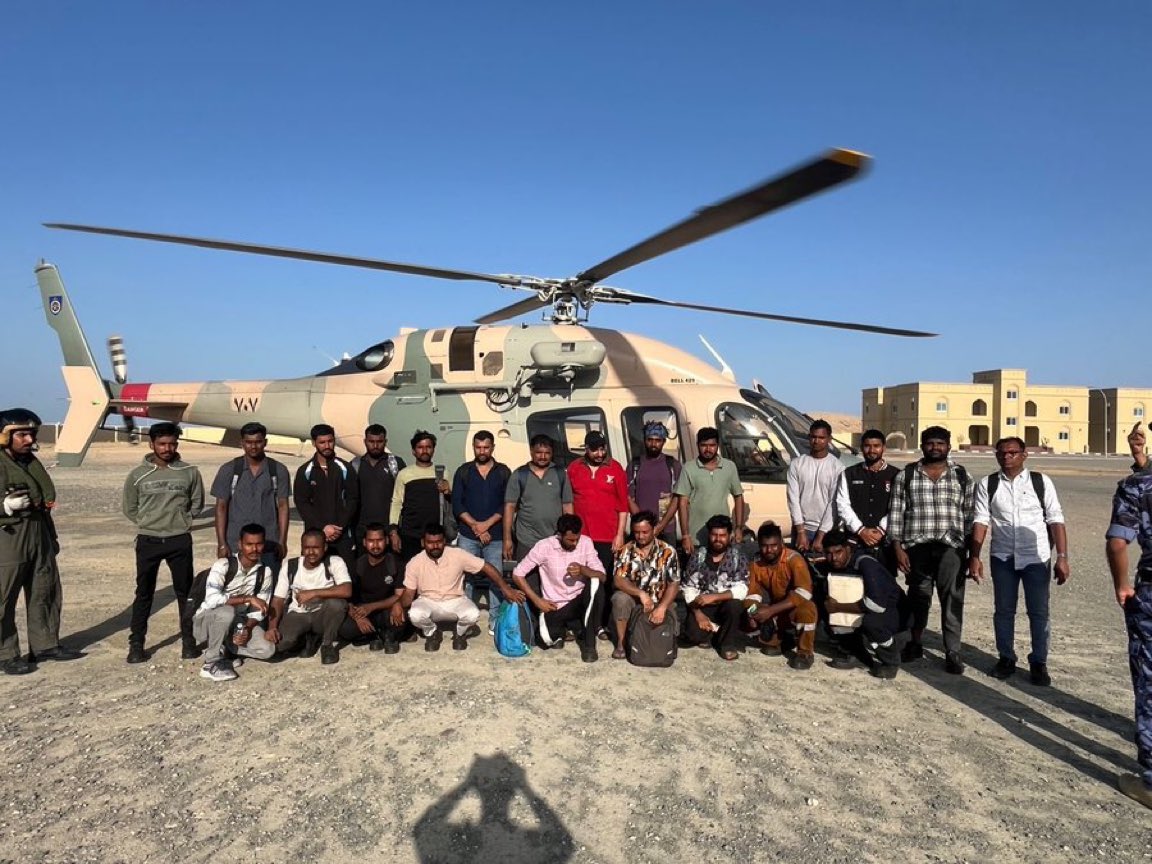
The rescue of 24 Indian seafarers from the burning product tanker Marivex off the coast of Oman serves as a stark reminder of the persistent dangers facing maritime professionals in one of the world’s most strategically sensitive shipping corridors.
Although all crew members were safely evacuated—a testament to effective emergency response and international maritime cooperation—the incident raises broader concerns about maritime safety, geopolitical tensions, sanctions enforcement, and the vulnerability of seafarers operating in high-risk regions.
The 12,000-deadweight-ton tanker, built in 2009, reportedly caught fire south of the Strait of Hormuz on Monday of June 8, 2026. The cause of the blaze remains unknown, and authorities have yet to confirm whether it resulted from mechanical failure, a cargo-related issue, or an external attack. What is clear, however, is that the incident unfolded in a region synonymous with maritime insecurity and geopolitical uncertainty.
The Strait of Hormuz is one of the world’s most critical maritime chokepoints. Roughly one-fifth of global petroleum trade passes through these waters, making the region indispensable to international energy security. Any tanker incident in or near the Gulf immediately draws global attention due to its potential implications for trade, energy markets, and regional stability.
The Marivex incident is particularly notable because the vessel was sanctioned by the United States in December 2025 for allegedly transporting Iranian petroleum products. Such sanctions have become increasingly common in maritime trade, creating a complex operational environment for shipowners, charterers, insurers, financiers, and crews. While sanctions are designed to exert economic and political pressure, seafarers serving aboard these vessels often find themselves on the frontline of risks beyond their control.
The safe rescue of all 24 crew members is welcome news. Indian Shipping Minister Opesh Kumar Sharma confirmed that the seafarers were unharmed, underscoring the professionalism of emergency responders and the effectiveness of maritime search-and-rescue frameworks in the region.
Their survival should not be taken for granted. Fires aboard tankers rank among the most dangerous emergencies at sea, especially when vessels carry petroleum products or other hazardous cargoes. Such incidents can escalate rapidly, threatening not only the vessel but also the marine environment and nearby shipping traffic.
Over the past two decades, the maritime industry has invested heavily in safety management systems, crew training, firefighting equipment, and emergency preparedness. These efforts have significantly reduced accident rates across much of the global fleet. Yet incidents like the Marivex fire demonstrate that risk can never be entirely eliminated. Mechanical failures, human error, cargo-related hazards, and external security threats continue to pose serious challenges.
The uncertainty surrounding the fire’s cause is also instructive. In today’s geopolitical climate, every maritime incident in the Gulf is scrutinized through the lens of regional security tensions. Over the past decade, tankers have been subjected to sabotage, drone attacks, missile strikes, and other hostile acts linked to broader geopolitical rivalries.
Until a thorough investigation is completed, speculation should be avoided. Nevertheless, the incident highlights the need for vigilance and robust maritime domain awareness throughout the region.
For seafarers, this event is another reminder of the extraordinary responsibilities they shoulder. More than 90 percent of global trade moves by sea, yet the men and women who operate ships remain largely invisible to the wider public. Whether transporting energy supplies, food, manufactured goods, or raw materials, seafarers work in demanding conditions and frequently navigate some of the world’s most volatile maritime environments. Their contribution to the global economy is immense, but their welfare and safety do not always receive the attention they deserve.
The Marivex fire should therefore prompt renewed discussions on crew protection and welfare. Governments, shipowners, maritime administrations, insurers, and international organizations must continue investing in training, safety standards, emergency preparedness, and mental health support for seafarers. Equally important is ensuring that crews are not placed in situations where commercial pressures compromise safety.
This incident also reinforces the importance of international maritime cooperation. Search-and-rescue operations, maritime security information sharing, and coordinated emergency response mechanisms have become essential pillars of modern shipping. No single nation can effectively manage the risks associated with global maritime trade alone. The successful rescue of the Marivex crew demonstrates the value of collaborative approaches that transcend political and commercial differences.
As investigators work to determine the cause of the fire, the maritime community should focus on the lessons emerging from the incident. Whether the blaze resulted from technical failure, operational factors, or external interference, understanding its origins will be critical to preventing similar occurrences in the future.
For now, the most important outcome is that 24 seafarers returned home safely. In an era marked by increasing geopolitical uncertainty and evolving maritime threats, that outcome represents both a relief and a reminder: relief because lives were saved; reminder because the sea remains an unforgiving workplace where vigilance, professionalism, and international cooperation are indispensable.
The burning of the Marivex may ultimately become another entry in the long record of Gulf maritime incidents. Yet behind every vessel are human lives, families, and communities whose futures depend on the safe return of those who work at sea. Their safety must remain at the centre of every maritime policy, security initiative, and commercial decision. The rescue of the Marivex crew is a success story—but it is also a warning that the risks confronting global shipping are far from over.