


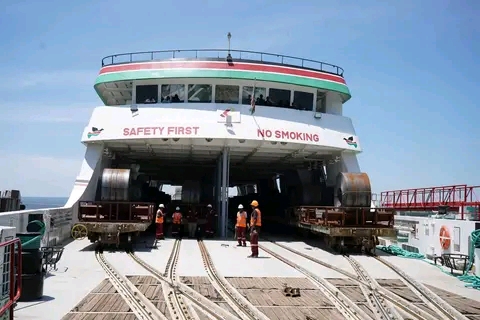
For years, Lake Victoria’s vast economic potential remained largely untapped—overshadowed by road transport and constrained by chronic underinvestment in lake infrastructure.
Today, however, a remarkable transformation is underway at Kisumu Port, reshaping regional trade dynamics and restoring the lake’s role as a strategic transport corridor.
Recent cargo projections underscore this shift. Kisumu Port is on track to handle approximately 700,000 metric tonnes of cargo in 2026, a significant jump from 459,601 tonnes in 2025. This extraordinary growth signals the revival of inland water transport as a critical pillar of East Africa’s logistics and trade ecosystem.
The surge in cargo volumes reflects changing trade patterns among Kenya, Uganda, and Tanzania. Businesses are increasingly recognizing the economic advantages of Lake Victoria routes, which offer cost-effective and environmentally friendlier alternatives to congested roads. As regional trade expands under the East African Community (EAC) and the African Continental Free Trade Area (AfCFTA), efficient multimodal systems have become more vital than ever.
One of the most encouraging developments is the diversification of cargo moving through Kisumu Port. Traditionally dominated by petroleum products—which remain the backbone of port operations—the port is now broadening its base.
Twice-weekly tanker voyages to Uganda continue to fuel regional energy demand, but recent coal shipments from Songea in southern Tanzania, transiting Kisumu for the first time, mark an important milestone. This new commodity flow signals growing confidence among shippers in the efficiency and reliability of Lake Victoria transport.
Rising vessel traffic further confirms the trend. In March 2026, Kisumu Port recorded 26 vessel calls, up from just 18 in the same month the previous year. Cargo throughput between January and March 2026 reached 145,753 tonnes—a remarkable 46% increase over the same period in 2025. These figures are clear indicators of a thriving maritime corridor steadily regaining strategic significance.
Behind this resurgence lies deliberate, sustained investment by the Kenya Ports Authority (KPA). Infrastructure modernization has been pivotal in enhancing competitiveness and operational efficiency. Key improvements include:
Quay extension from 262 to 392 metres, increasing berthing capacity and enabling simultaneous vessel handling; dredging to improve draft levels, allowing larger vessels and expanded cargo handling; new cargo storage facilities strengthening logistics infrastructure.
· A new passenger terminal under construction, expected to boost regional connectivity and tourism across the lake basin; and a dedicated access road nearing completion, improving cargo movement between the port and hinterland markets.
Modern cargo-handling equipment introduced by KPA has further improved performance. Reduced vessel turnaround times translate directly into lower transport costs, greater reliability, and increased attractiveness for shipping companies and cargo owners.
These achievements demonstrate what is possible when infrastructure investment aligns with market demand and regional integration goals. Kisumu Port is no longer a secondary transport facility; it is rapidly emerging as a strategic logistics hub serving East Africa’s inland economies.
The implications extend far beyond western Kenya. Uganda remains one of Kenya’s largest trading partners, and Tanzania plays a growing role in regional commerce. A vibrant Lake Victoria shipping network strengthens economic ties among these nations, facilitates trade, and enhances regional competitiveness.
Moreover, shifting cargo from road to water offers substantial environmental and economic benefits. Inland water transport consumes less fuel per tonne-mile, reduces greenhouse gas emissions, lowers road maintenance costs, and eases pressure on congested highways. In an era increasingly focused on sustainable transport, Lake Victoria presents an opportunity policymakers cannot afford to overlook.
Looking ahead, Kisumu Port’s ambitions extend beyond bulk cargo. The facility is preparing to handle larger container volumes, with projections indicating capacity for up to 4,000 TEUs as containerised lake shipping gains momentum. This represents the next phase of transformation and could significantly alter cargo distribution patterns across the region.
Sustaining this growth will require continued investment. Governments across the Lake Victoria Basin must work collaboratively to harmonise regulations, improve customs procedures, modernise fleet capacity, and strengthen maritime safety and security frameworks. Private sector participation will also be crucial in unlocking new opportunities in shipping, logistics, warehousing, and port services.
The resurgence of Kisumu Port is a success story for regional integration and infrastructure development. It shows how strategic investment, sound planning, and growing market demand can revive a transport mode long neglected.
Most importantly, it serves as a powerful reminder: Lake Victoria is not merely a geographical feature connecting three nations. It is an economic highway with the potential to drive trade, create jobs, reduce transport costs, and accelerate regional development.
As cargo volumes continue to rise and new trade routes emerge, Kisumu Port is fast becoming the gateway of choice for businesses across the Lake Victoria Basin. The lake is back in business—and Kisumu lies firmly at the heart of its renaissance.