


Kenya stands at a pivotal moment in its maritime ambitions. With the Port of Mombasa handling millions of TEUs annually, the emerging Lamu Port as a cornerstone of the LAPSSET Corridor, and growing interest in offshore energy prospects, the nation’s tugboat fleet serves as the unsung backbone of port operations, salvage capabilities, and offshore support. Yet, a closer look reveals a fleet that is competent but constrained—too small and specialized in scope to fully match Kenya’s expansive blue economy dreams.
As of recent assessments (circa 2022–2026), Kenya’s tugboat inventory remains modest:
· Harbor tugs: The Kenya Ports Authority (KPA) operates a fleet of approximately six high-powered tugboats, providing compulsory tuggage services for vessels calling at Mombasa and Lamu. These include capable vessels like Pate, Nyangumi, and others acquired through strategic international builds, offering reliable day-to-day assistance in berthing, unberthing, and maneuvering in busy channels.
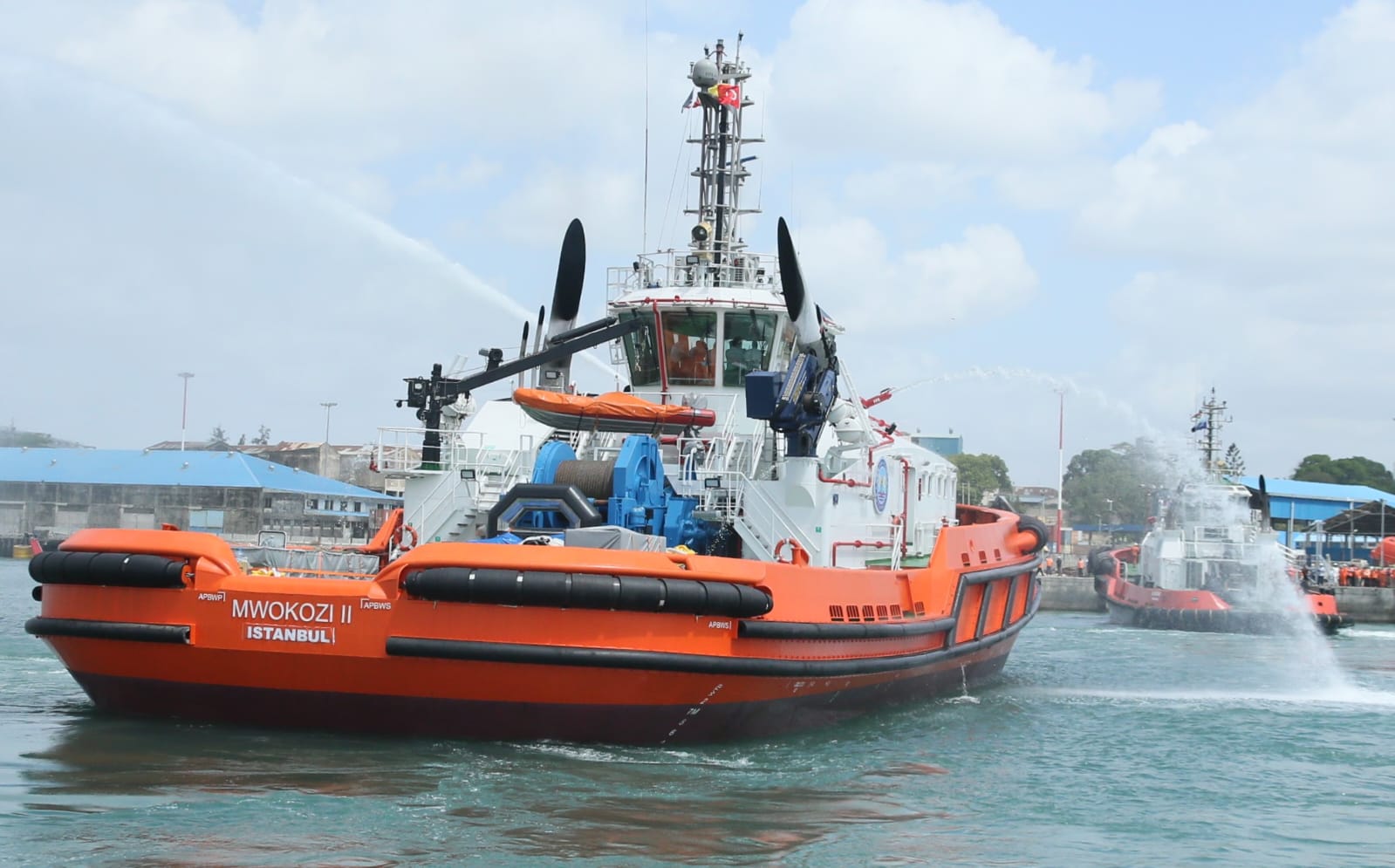
· Salvage tugs: Dominated by the standout Mwokozi II (RAstar 4200 class, delivered around 2022), a powerful 42-meter vessel with over 120–126 tonnes of bollard pull, Fi-Fi capabilities, and multi-role functionality for harbor assist and high-seas rescue. Supported by harbor tugs with secondary salvage roles, Kenya fields roughly 1–2 dedicated or primary salvage assets. This fleet has proven its worth, notably in refloating grounded vessels like the MSC Eagle and averting potential ecological disasters.
· Anchor Handling Tugs (AHT) and Offshore Supply Tug Boats: These fall largely to private operators, with firms like Alpha Logistics Services (EPZ) Ltd maintaining a small presence. Alpha’s fleet includes vessels such as Alpha 1200 (Kenyan-flagged AHT from 1989) and others, contributing an estimated 2–5 multi-purpose offshore support tugs overall, often overlapping in anchor handling, towing, and supply duties. Kenya’s offshore oil and gas sector is not yet at the scale of West African giants, limiting demand for a larger dedicated fleet.
These numbers reflect a pragmatic, functional maritime support system rather than a powerhouse. KPA’s investments—such as Turkish-built tugs and modernization efforts—demonstrate foresight, but they also highlight gaps when viewed against regional peers and Kenya’s stated ambitions under Vision 2030 and the Blue Economy Strategy.
Strengths Worth Celebrating
Kenya’s tug operations punch above their weight in quality. The arrival of Mwokozi II positioned it as one of the most capable salvage assets on East Africa’s Indian Ocean coast, enhancing search-and-rescue (SAR) reach and compliance with international standards like SOLAS. Harbor tugs ensure efficient port throughput, minimizing delays for international shipping lines that are vital to Kenya’s import-export economy. Private players like Alpha Logistics fill critical niches in offshore projects, supporting not just oil/gas but also potential wind, cabling, or construction activities.
This setup has delivered tangible successes: swift responses to incidents, safe port calls, and incremental revenue from salvage chartering. It underscores Kenya’s potential as a regional maritime hub.
The Critical Shortcomings: Hardware and Human Capital
However, modesty becomes a liability as traffic grows. Six harbor tugs for two major ports (with Lamu poised for significant expansion) risk strain during peak periods, weather events, or simultaneous incidents. The offshore segment’s small size reflects under-developed upstream energy activities—but this is a chicken-and-egg problem. Without robust AHTS and supply tug capacity, attracting large-scale offshore investments becomes harder. Aging vessels in parts of the private fleet (e.g., 1980s builds) raise long-term maintenance and reliability concerns, while environmental pressures demand greener, more efficient designs.
Yet the most acute shortage is not merely in vessels—it is in the highly specialized human capital required to operate them. Kenya faces a severe deficit of Chief Divers and Salvage Masters, the elite professionals who command complex underwater interventions and direct high-stakes wreck removal and refloating operations. The Mwokozi II may be a world-class asset, but without a commensurate corps of certified Salvage Masters and experienced saturation divers, her full potential remains untapped. Currently, Kenya relies heavily on expensive expatriate expertise for any major salvage response, draining foreign exchange and delaying critical decision-making during emergencies. This skills gap represents a systemic vulnerability: a state-of-the-art tug is only as effective as the master who directs her cables and the divers who inspect damaged hulls below the waterline. If Kenya is to position itself as the region’s go-to for maritime emergency response, investing in local training pipelines and international certification pathways for these roles is as urgent as procuring new vessels.
Broader challenges loom: climate change intensifies storm risks and sea-level impacts on ports; piracy threats, though subdued, require vigilant response capabilities; and competition from ports in Tanzania, Djibouti, or further afield demands superior infrastructure. A limited tug fleet, compounded by a shallow talent pool of senior salvage personnel, constrains not only safety but also economic multipliers—fewer jobs in shipbuilding/maintenance, reduced SAR coverage for fishing and coastal communities, and missed opportunities in tug chartering or regional emergency response leadership.
Opinion: Time for Strategic Boldness
Kenya must treat its tugboat fleet and its maritime workforce as strategic national infrastructure, not mere operational expenses. The blue economy—projected to contribute significantly to GDP through fisheries, tourism, shipping, and energy—cannot thrive on minimalism. Expanding the harbor tug fleet to 8–10 modern, high-bollard-pull units would provide redundancy and support Lamu’s growth. Investing in 3–5 additional dedicated salvage/multi-role tugs, potentially with hybrid or LNG propulsion, would bolster resilience and position Kenya as East Africa’s maritime safety leader.
For offshore supply and AHTs, public-private partnerships (PPPs) are essential. Incentives for local flagging, crew training through institutions like the Bandari Maritime Academy, and joint ventures could grow this segment to 8–10 vessels, aligning with any uptick in offshore exploration. Crucially, these partnerships must include funded fellowships for advanced salvage training and commercial diving certifications—turning the Bandari Maritime Academy into a regional center of excellence for these niche disciplines. KMA and KPA should prioritize a comprehensive national vessel register transparency and a long-term fleet renewal plan, incorporating technology like DP2 systems, advanced Fi-Fi, and eco-friendly features. Concurrently, a national “Salvage Master and Chief Diver Development Program” should be established, offering targeted mentorship and sea-time opportunities on KPA and private tugs to groom local talent for top-tier roles.
Funding need not strain the budget exclusively—development partners, blue bonds, or revenue from enhanced salvage/commercial towing services offer pathways. Training more Kenyan mariners for these specialized roles would create high-skilled employment and reduce reliance on foreign crews, keeping critical foreign currency within the local economy.
Critics may argue fiscal prudence in a resource-constrained environment. Yet, underinvestment in maritime support—both hardware and human skills—is a false economy: one major unhandled incident could cost far more in environmental damage, reputational harm, and lost trade than proactive fleet expansion and workforce development. Neighbors are modernizing; Kenya cannot afford to lag.
A Vision for Maritime Leadership
Imagine a Kenyan tug fleet that not only secures its own ports and waters but extends reliable salvage and support services across the Western Indian Ocean, commanded by locally-trained Salvage Masters and supported by Kenyan-certified divers. A fleet that underpins thriving offshore energy, sustainable fisheries, and vibrant coastal economies. This is achievable with deliberate policy, sustained investment, and collaboration between KPA, KMA, private operators, and international partners.
Kenya’s tugboats are already “saviors” in Swahili parlance—Mwokozi. It is time for policymakers to match that spirit with scale and ambition. The blue economy awaits; a stronger tug fleet, backed by world-class Kenyan expertise, will help steer the nation toward it safely and prosperously. The currents of opportunity are strong—Kenya must not drift but navigate with power, purpose, and a skilled crew ready for any challenge beneath the surface.