


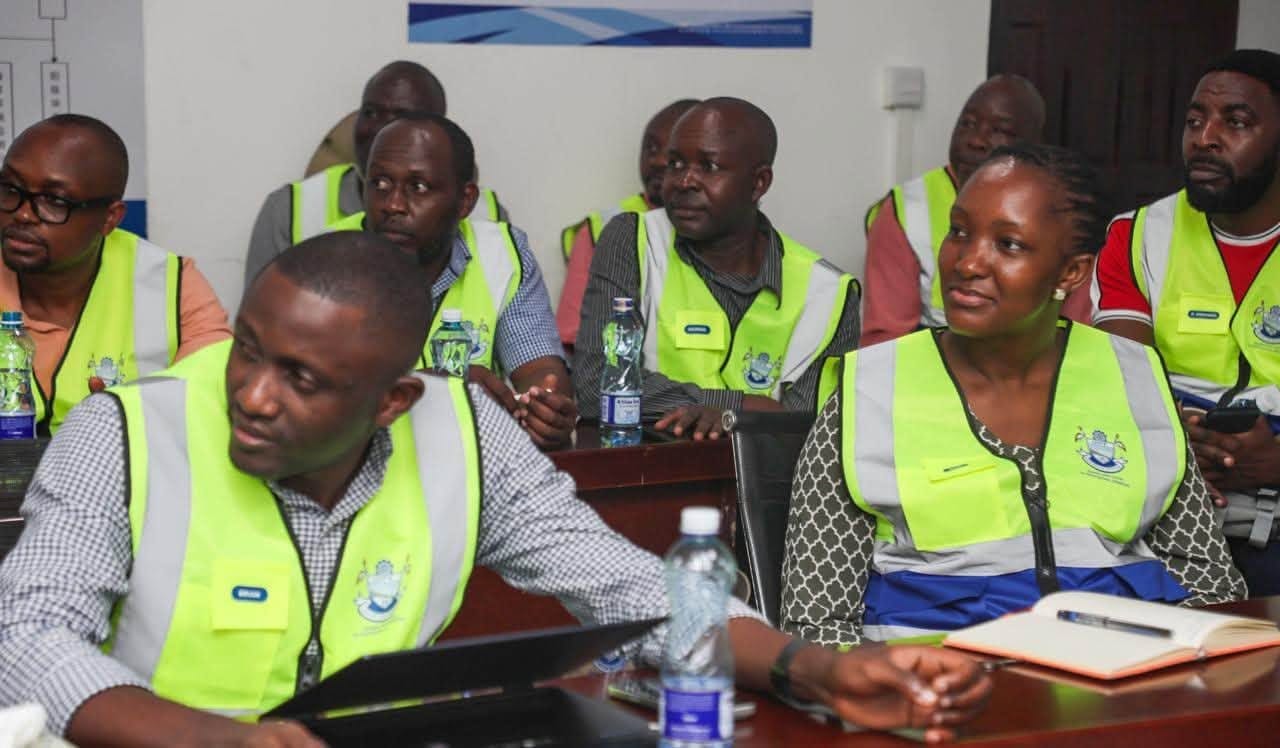
When a delegation of Ugandan engineers toured the Port of Mombasa this week, the headlines focused on concrete and capacity: Berth 19B, 240 metres of new quay length, a 15-metre draft, and 300,000 additional TEUs a year. But the significance of the visit lies less in the engineering statistics than in what it signals about the politics and economics of regional trade. Uganda’s willingness to send its top professional engineers to inspect Kenya’s flagship port expansion is an endorsement—cautious, technical, but unmistakable—of the Northern Corridor as the backbone of East African commerce. It is also a reminder that for a landlocked economy like Uganda, maritime infrastructure in Mombasa is not foreign policy. It is domestic economic policy by another name.
The Berth 19B Story
The delegation, led by Uganda Institution of Professional Engineers President Eng. Mwesiga Peterson, inspected Berth 19B, one of the Port of Mombasa’s flagship expansion projects. The berth is now more than 50 percent complete and will add 240 metres of quay length with a 15-metre draft, enabling it to accommodate container vessels of up to 45,000 deadweight tonnes. Once operational, it is projected to increase the port’s annual cargo-handling capacity by an additional 300,000 TEUs.
On paper, this is a capacity story. In practice, it is a competitiveness story. Mombasa has for years faced criticism over congestion, dwell times and berth productivity—criticisms that have given Dar es Salaam and other regional ports an opening to compete for Ugandan and Rwandan transit cargo. Berth 19B, combined with the broader Kipevu and Mombasa gateway upgrades, is Kenya’s answer: deeper draft, longer berths, and the ability to handle the larger vessels that global carriers are increasingly deploying. For Ugandan importers and exporters, that translates into fewer transshipment delays, better economies of scale and, if managed well, lower landed costs.
Uganda’s Stake Is Existential, Not Peripheral
It is easy to treat Uganda as a transit customer. It is more accurate to treat Uganda as a co-owner of Mombasa’s performance. Uganda remains one of the Port of Mombasa’s largest transit markets, with substantial volumes of imports and exports passing through the facility annually. Fuel, fertiliser, manufactured goods, machinery and containerised consumer cargo move through Mombasa and onward by road and rail to Kampala and beyond. Uganda’s exports—coffee, tea, minerals and agricultural products—depend on the same corridor in reverse.
For a landlocked country, this dependence is not a convenience; it is a vulnerability. Every day of delay at Mombasa is a cost absorbed by Ugandan businesses. Every additional shilling of port or freight cost erodes the competitiveness of Ugandan exports. Every capacity constraint at the quay becomes a queue at the Malaba and Busia borders. That is why the presence of Ugandan engineers at Berth 19B matters: it represents a shift from passive dependence to active professional engagement with the corridor’s infrastructure.
The Professional Dimension: Knowledge Sharing as Regional Integration
Eng. Peterson’s emphasis on knowledge sharing was not diplomatic filler. “This visit has provided an excellent opportunity to witness the significant investments being made to modernize the Port of Mombasa,” he said. “Such engagements are important in promoting professional collaboration, sharing best practices and strengthening the longstanding relationship between Kenya and Uganda.”
That framing deserves attention. Regional integration is usually discussed in the language of tariffs, customs unions and political summits. But integration is also built through professional communities—engineers, port operators, customs officials and logistics managers—who understand each other’s systems and can solve problems across borders. A Ugandan engineer who has walked Berth 19B understands the constraints under which Kenyan port planners operate. A Kenyan engineer who has visited Kampala’s logistics hubs understands the landside pressures that shape transit cargo. That shared understanding is the invisible infrastructure on which the visible infrastructure depends.
It also builds trust. Uganda has periodically flirted with alternative routes—Dar es Salaam, the Standard Gauge Railway to Naivasha and dry-port arrangements, even discussions of a route through South Sudan. Those alternatives are rational hedging, not betrayal. But the more Ugandan professionals see concrete progress at Mombasa, the stronger the case for the Northern Corridor becomes. Transparency and engagement are Kenya’s best defence against corridor competition.
The Bigger Picture: A Port Is Only as Good as Its Hinterland
Berth 19B is necessary but not sufficient. A port’s competitiveness is determined not only by quay length and draft but by what happens beyond the gate: road and rail connections, border crossing times, customs efficiency, and the reliability of the logistics chain to Kampala, Kigali, Juba and Goma. Kenya has made progress—the Standard Gauge Railway, the Naivasha Inland Container Depot and improved scanner capacity at the borders—but the Northern Corridor still suffers from bottlenecks that no berth can fix on its own.
This is where the Ugandan visit should prompt deeper reflection in Nairobi. If Kenya wants to remain the gateway of choice for East Africa, it must treat the corridor as a single integrated product. That means sustained investment in the SGR’s freight capacity, predictable transit times, harmonised customs procedures, and a genuine commitment to reducing non-tariff barriers. It also means involving transit countries earlier in the planning of port expansion—not as afterthoughts, but as partners whose cargo volumes justify the investment.
Risks and Realism
Optimism should be tempered. Berth 19B is 50 percent complete; the remaining works, equipment installation, operational testing and integration with existing terminal systems will determine whether the promised 300,000 TEUs materialise on schedule. Port projects in the region have a history of delays and cost overruns. The Kenya Ports Authority will need disciplined project management and transparent reporting to sustain the confidence that visits like this one generate.
There is also the question of utilisation. Additional capacity is only valuable if there is cargo to fill it—and if the port can move that cargo efficiently to the hinterland. Kenya’s own trade is growing, but the transit market is where the strategic upside lies. That requires competitive pricing, reliable service and sustained diplomatic engagement with Uganda, Rwanda, South Sudan and the Democratic Republic of Congo.
Finally, there is the human dimension. The engineers who toured Mombasa this week are part of a generation of East African professionals who will design, build and operate the region’s infrastructure for decades. Investing in their collaboration—through exchanges, joint training, shared standards and professional networks—may prove as valuable as any berth. The Uganda Institution of Professional Engineers and its Kenyan counterparts should formalise this engagement, not leave it to ad hoc visits.
A Gateway Worth Defending
The Port of Mombasa is not just a Kenyan asset. It is a regional commons, and Uganda is one of its most important stakeholders. The Ugandan engineers’ visit was a modest event in the grand scheme of infrastructure diplomacy, but it carried a larger message: the Northern Corridor works best when its users are also its co-authors. Berth 19B will add concrete and capacity. What it needs now is the policy coherence, operational discipline and regional trust to make that capacity count.
Kenya has an opportunity to convert a site visit into a strategic partnership. If it does, the quiet tour of a half-built berth may come to be seen as a small but meaningful step toward a more integrated, more competitive and more connected East Africa. The sea has always been there. The question is whether the corridor behind it can keep up.