


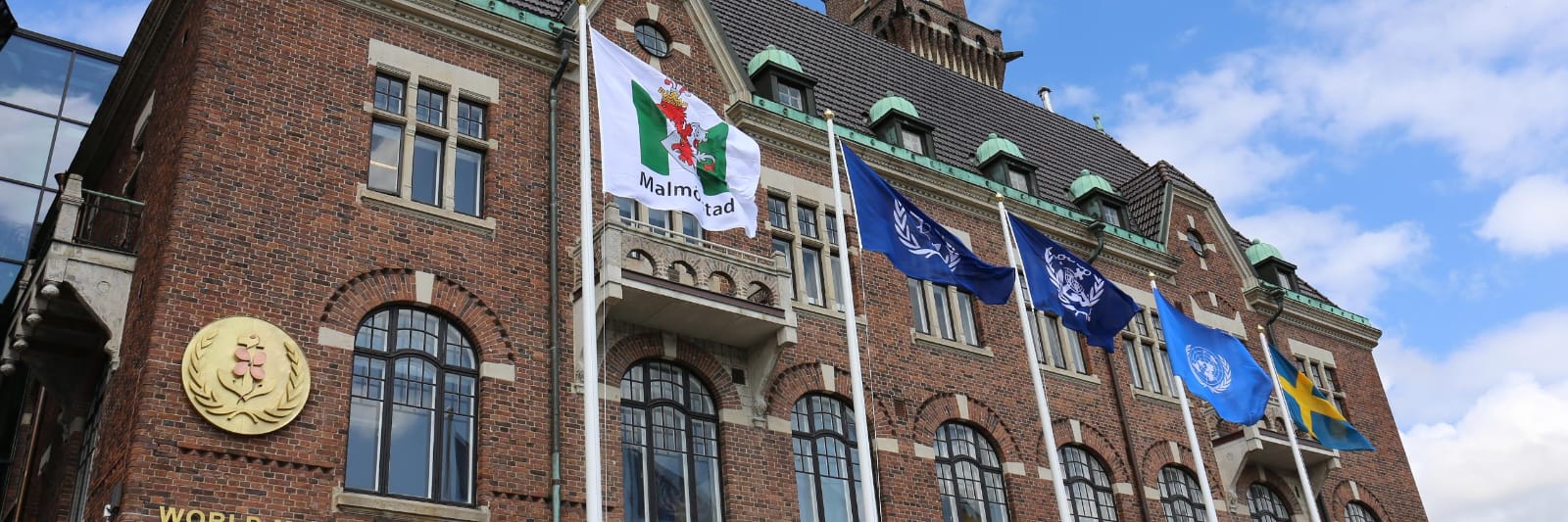
In late August 2026, the World Maritime University (WMU) Maritime Affairs Conference brought together the industry’s foremost minds in Malmö, Sweden, under a deceptively simple theme: Transforming Shipping in Practice. The choice of words was deliberate. After years of lofty declarations and aspirational roadmaps, the maritime sector is finally confronting the messy, complex reality of implementation. The question is no longer whether shipping will transform, but how—and whether the human and regulatory frameworks can keep pace with the technological revolution underway.
Held from 26–28 August, the three-day Conference convened experts from industry, academia, government, and international organizations to examine the practical interaction of technology, regulation, and policy across three interconnected pillars: decarbonization, digitalization, and Arctic navigation. The timing could not have been more critical.
The Decarbonization Imperative: Pragmatism Over Purity
International shipping accounts for nearly 3% of global greenhouse gas emissions—a figure that, left unchecked, could rise to 10% by 2050. The industry is under immense pressure to deliver on the IMO’s revised GHG strategy, which targets net-zero emissions by or around 2050. Yet as discussions at the Conference made clear, the pathway is fraught with technical, economic, and operational hurdles.
Sessions on decarbonization moved beyond the familiar rhetoric of alternative fuels to examine hard-headed realities: the viability of green shipping corridors, the scalability of onboard carbon capture, and the potential of physics-informed machine learning to optimize ship performance. Crucially, speakers emphasized the importance of policy pragmatism. The maritime sector cannot afford to wait for a single silver-bullet solution. A portfolio approach—embracing multiple fuels, efficiency measures, and operational improvements—is the only realistic path forward.
Yet pragmatism must not become an excuse for delay. The Conference underscored the need for safety assurance in what one speaker termed the industry’s “dual transformation.” As vessels transition to new fuels like ammonia and hydrogen, the risks of toxicity, flammability, and handling failures demand rigorous regulatory attention. The technology must be safe before it can be sustainable.
Digitalization: The Human Factor
The digitalization strand of the Conference offered a refreshing departure from the techno-optimism that often dominates such discussions. Rather than focusing solely on the promise of autonomy and AI, speakers confronted the human dimensions of digital transformation.
Maritime autonomy is advancing rapidly, but it will not eliminate the need for skilled seafarers—it will redefine their roles. The skills required for increasingly complex maritime systems are evolving, and maritime education and training must evolve with them. The Conference examined how digitalization can enhance training delivery, but also raised sobering questions about cyber risk governance and the legal implications of autonomous ships and electronic documentation.
Perhaps the most uncomfortable question posed was this: as vessels become smarter, are we investing enough in the people who will operate them? The answer, across much of the industry, is no. Digital transformation cannot succeed without parallel investment in human capital development.
The Arctic Frontier: Geopolitics and Environmental Stewardship
The Arctic navigation theme brought into sharp focus the tension between opportunity and responsibility. As sea ice retreats, new shipping routes are opening, promising shorter voyages and reduced emissions. Yet the region’s fragility demands an approach that prioritizes environmental protection and safety alongside commercial interest.
The Conference considered the co-evolution of Arctic shipping and geopolitics—a relationship that grows more volatile by the day. With Sweden set to assume the Chairmanship of the Arctic Council, its Arctic strategy, presented at the Conference, signals a commitment to multilateral cooperation. Yet the region is increasingly contested, and the absence of robust international frameworks for Arctic shipping governance is a concern that cannot be ignored.
Sessions on voyage planning and navigation tools that consider marine biodiversity protection, Arctic search and rescue, and future technology for polar waters all reinforced a single message: the Arctic is not a frontier to be conquered, but a commons to be stewarded. The shipping industry must operate there with the humility that the environment demands and the foresight that geopolitics requires.
The WMU Moment: A Platform for Practical Collaboration
This year’s Conference also marked the 25th anniversary of the WMU Journal of Maritime Affairs, a milestone that underscores the institution’s enduring contribution to maritime scholarship. Co-hosted by the Korea Research Institute of Ships & Ocean Engineering (KRISO) and the Korea Maritime Institute (KMI), with sponsorship from the Korean Register (KR), the event was the third annual WMU Maritime Affairs Conference—and by far the most consequential.
WMU President Professor Maximo Q. Mejia, Jr. opened the proceedings by emphasizing the importance of dialogue and collaboration. He was joined by IMO Secretary-General Arsenio Dominguez, whose keynote reinforced the urgency of the sector’s transformation; Alexandra Anstrell, Chair of the Arctic delegation in the Swedish Parliament and Chair of the Conference of Parliamentarians of the Arctic Region; Jongjin Jung, President of KRISO; and Sung-Soon Yoon, Vice-President of KMI. Their presence signalled the high-level commitment to translating conference discourse into tangible outcomes.
From Dialogue to Delivery
The Conference’s emphasis on the intersection of technology, regulation, and policy is precisely where the maritime sector’s attention must be focused. Too often, innovation outpaces governance, and regulation lags behind technological reality. The result is a patchwork of national approaches that creates uncertainty for investors and operators alike.
What is needed is not more conferences, but more action. The WMU Maritime Affairs Conference provided a vital platform for exchange, but its ultimate value will be measured by the practical outcomes it generates. Do the conversations in Malmö translate into better regulations in London? Do they inform investment decisions in Singapore? Do they shape training curricula in Manila?
These are the questions that will determine whether the Conference’s theme—Transforming Shipping in Practice—becomes a reality or remains an aspiration. The maritime sector has demonstrated its capacity for resilience and innovation. Now it must demonstrate its capacity for coordinated, purposeful transformation that leaves no one behind—least of all the seafarers who will navigate the ships of the future.