


The United States has pledged to help Kenya build factories and secondary industries around the rare earth element and niobium deposits at Mrima Hill on the southern coast. This is more than a bilateral mining deal. It is a test of whether Africa and its partners can finally move beyond the extractive model that has defined resource relationships for generations—and whether Kenya can convert one of East Africa’s most significant undeveloped critical-mineral endowments into lasting industrial capacity, skilled jobs, and strategic leverage.
On 9 September 2026, US Assistant Secretary of State for African Affairs Frank Garcia told a Nairobi business audience that Washington is ready to support Kenya’s development of a domestic critical-minerals processing industry. The focus is Mrima Hill in Kwale County: a coastal carbonatite complex estimated to hold tens of billions of dollars in rare earths and niobium. Kenya is evaluating bids, including from US consortia, under terms that explicitly prioritise local processing, technology transfer, worker training, and downstream industries rather than the export of unprocessed ore. President William Ruto has repeatedly insisted that strategic minerals must be refined in Kenya. The American position aligns with that demand.
The stakes are high. Rare earth elements power the permanent magnets essential to electric-vehicle motors, wind turbines, advanced electronics, and defence systems. China still dominates both mining and, more critically, the midstream separation and refining stages that turn ore into usable materials. Niobium strengthens high-performance steels used in pipelines, automotive components, aerospace alloys, and superconducting applications; global supply is heavily concentrated in Brazil. A credible Kenyan source of both, processed on Kenyan soil, would meaningfully diversify supply chains at a moment when geopolitical competition over critical minerals has become a central feature of great-power rivalry.
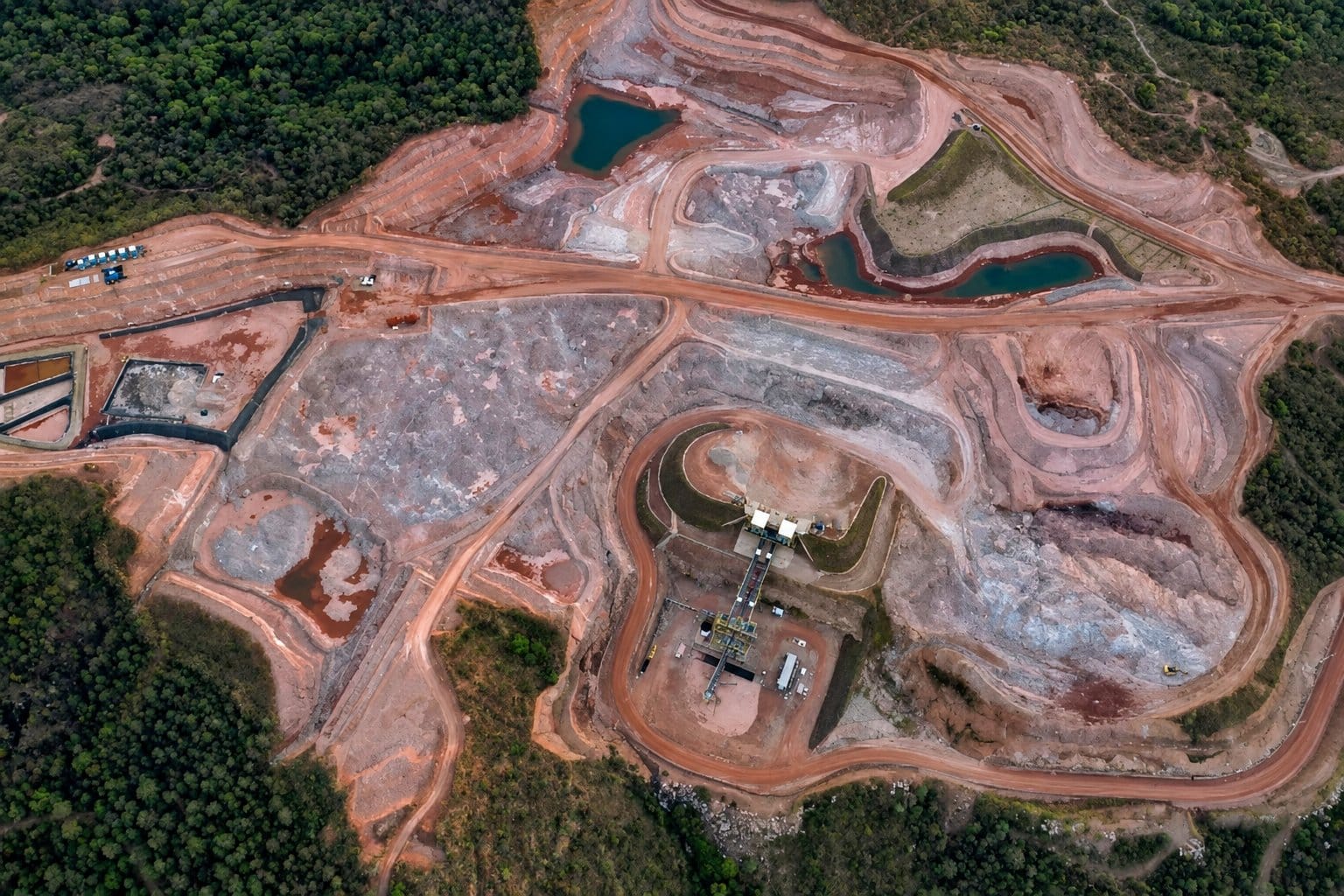
Mrima Hill itself is a Cretaceous carbonatite within the Jombo-Mrima-Kiruku alkaline complex, roughly 65 kilometres southwest of Mombasa. Weathering under tropical conditions has concentrated niobium (often as pyrochlore) and rare earths in residual and lateritic zones, making the deposit more accessible than many hard-rock alternatives. Indicated resources include approximately 48.7 million tonnes of rare-earth material grading about 4.4 percent total rare earth oxides and 5.8 million tonnes of niobium material, with substantial additional inferred tonnage. Earlier valuations placed the in-ground potential near $62 billion. Yet the true economic value will depend far less on the headline figure than on whether Kenya captures the midstream and downstream stages.
That is where the wider geological context becomes decisive. Mrima Hill does not sit in isolation. It lies within the broader structural architecture of the Neoproterozoic Mozambique Belt—the East African Orogen that formed between roughly 900 and 500 million years ago during the assembly of Gondwana. This high-grade metamorphic belt stretches from Mozambique through Tanzania and Kenya (east of the Rift System) into Ethiopia and beyond. In Kenya it comprises gneisses, schists, marbles, quartzites, amphibolites, and associated ultramafic bodies that experienced intense deformation and metamorphism. The same tectonic history that produced the coastal carbonatites also created the conditions for a diverse suite of mineralisations inland.
Nowhere is this clearer than in Taita Taveta County. Situated near the Tanzanian border and adjacent to the Tsavo national parks, Taita Taveta lies squarely within the Mozambique Belt and ranks among Kenya’s richest and longest-exploited mineral provinces. Its high-grade metamorphic rocks—banded biotite gneisses, graphite gneisses, marbles, kyanite-sillimanite-garnet gneisses, and ultramafic bodies—host world-class gemstone deposits. Tsavorite, the vanadium-bearing green grossular garnet first commercialised in the Tsavo area, remains one of the county’s signature products. Ruby, sapphire, rhodolite and other garnets, tourmaline, and a range of additional coloured stones are also present. Alongside the gems sit industrial and metallic minerals of growing strategic interest: iron ore (magnetite) at sites such as Kishushe, graphite prospects at Chawia and Mwatate, marble, limestone, magnesite, asbestos, kaolin, and manganese. Iron-ore mining and processing have already operated at commercial scale; graphite is attracting renewed attention because of its role in battery anodes.
Further north and inland, the belt continues to reveal potential. In Kitui County, areas such as Mwitika-Makongo and Mutomo-Ikutha host high-grade iron ore (in places exceeding 80–90 percent Fe₂O₃), magnesite, marble, graphite, and heavy mineral sands with titanium traces. Embu, Meru, Kajiado, and surrounding districts add further gemstone, industrial mineral, and base-metal occurrences. Recent nationwide airborne geophysical surveys have identified hundreds of anomalies across these terrains, confirming that the Mozambique Belt remains significantly underexplored relative to its prospectivity.
A partnership limited to Mrima Hill alone would miss the larger opportunity. A coastal processing hub that begins with rare earths and niobium could, over time, support value chains for iron, graphite, and industrial minerals sourced from Taita Taveta, Kitui, and other belt segments. Shared infrastructure—power, roads, rail links to Mombasa, skills training, and environmental standards—would amplify returns. Technology transfer and secondary industries promised in the US framework could help professionalise artisanal gemstone mining in Taita Taveta, where production has long generated local income but also environmental damage, safety risks, and limited formal value addition.
The risks are equally clear. Mrima Hill is a sacred Kaya forest for the Digo and Mijikenda communities and holds National Monument status. Earlier licence controversies and ongoing court challenges over transparency underscore the need for rigorous public consultation, parliamentary oversight where required, and equitable benefit-sharing. Radioactive elements such as thorium associated with the deposit demand careful management. Processing rare earths and niobium is capital-intensive, technically demanding, and environmentally sensitive. In Taita Taveta and Kitui, the lessons of decades of artisanal activity—unreclaimed pits, uneven community benefits, and weak formalisation—must inform any scaling of industrial operations. National parks and cultural heritage sites cannot be treated as afterthoughts.
For the United States, the pledge reflects a broader effort to reduce reliance on concentrated Chinese midstream capacity through partnerships that emphasise investment, local industrialisation, and responsible development rather than pure extraction. For Kenya, it is a chance to demonstrate that resource nationalism can translate into durable industrial capacity rather than short-term rents. Success will require transparent tender processes, bankable feasibility studies, strong environmental and social safeguards, genuine skills transfer, and deliberate linkages between the coastal project and the wider Mozambique Belt mineral system.
The geology is already in place. The strategic rationale is compelling. The political and commercial will appears to be emerging. Whether Kenya and its partners convert this moment into a genuine regional processing hub—or allow it to become another chapter in the long history of African resources leaving the continent as raw materials—will be decided by the quality of contracts, the strength of institutions, and the seriousness with which community rights and environmental limits are treated. The factories promised on the coast will matter. The ability to integrate Taita Taveta, Kitui, and the rest of the Mozambique Belt into a coherent industrial strategy will matter more.
Andrew Mwangura is a maritime and resource governance analyst based in Mombasa.