


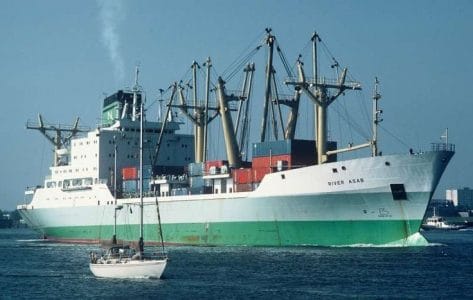
In 1993, Nigeria established the Ship Acquisition and Ship Building Fund (SASBF) under the then National Maritime Authority. The ambition was bold: channel roughly $65 million into helping Nigerians acquire and build vessels, grow indigenous tonnage, create maritime jobs, and retain a larger share of the country’s maritime trade value at home. The objectives were straightforward—build Nigerian-owned fleets, strengthen local shipping capacity, and reduce reliance on foreign operators.
Yet the programme became a case study in the high cost of weak financial governance. Historical accounts show that many beneficiaries failed to repay loans, while some financing was diverted from its intended maritime purposes. Monitoring and recovery mechanisms proved inadequate, and the fund was suspended in the late 1990s. As the Marine and Energy Professionals Association, Akwa Ibom State (MEPAAKS), rightly notes in a recent reflection, the $65 million should not be casually described as simply “stolen.” The documented problems were mismanagement, diversion of funds, and repayment failures. The distinction matters: it points to systemic failures rather than a single narrative of theft.
That painful experience later shaped the design of the Cabotage Vessel Financing Fund (CVFF), created under the Coastal and Inland Shipping (Cabotage) Act of 2003. The CVFF was meant to learn from SASBF’s shortcomings by introducing stronger loan-recovery tools, clearer eligibility rules, and more targeted support for indigenous operators. Funded primarily by a 2% levy on cabotage-protected trade, it has accumulated for more than two decades—recently estimated in the region of $700 million—while Nigerian shipowners waited.
The Stakes Remain High
Nigeria’s maritime reality has not fundamentally changed. The country moves more than 180 million tonnes of seaborne cargo annually and generates billions of dollars in freight revenue, the overwhelming majority of which still flows to foreign-flagged vessels and operators. Indigenous capacity remains thin. Access to affordable, long-tenor capital for vessel acquisition has been chronically limited. Commercial banks have historically been reluctant to provide the scale and terms required for shipping assets. The result is continued dependence on foreign tonnage, leakage of value, and missed opportunities for jobs in shipyards, marine engineering, logistics, and seafaring.
The recent push to operationalise the CVFF—launch of an application portal in early 2026, expansion of Primary Lending Institutions from five to twelve, and high-level directives to accelerate processing—is therefore significant. Eligible Nigerian-owned operators can seek up to $25 million per application under a blended structure that typically requires borrower equity (around 15%), bank participation, and a substantial contribution from the Fund itself, with projected single-digit interest rates and an eight-year tenor. Applications have poured in. Yet progress has been slow: of dozens of applications, only a limited number have advanced meaningfully through the banks, and actual disbursements have lagged behind earlier timelines.
Lessons That Must Shape Implementation
The SASBF episode offers three enduring lessons that the CVFF cannot afford to ignore.
First, due diligence and governance cannot be afterthoughts. Soft loans without rigorous credit assessment, collateral enforcement, and ongoing monitoring invite the same patterns of non-repayment and diversion that hollowed out the earlier fund. The CVFF’s reliance on commercial banks as Primary Lending Institutions is a structural improvement—but only if those institutions apply genuine banking standards rather than political or relational criteria. Transparency in the selection, scoring, and approval of applications is essential.
Second, funding alone does not create capacity. Maritime development requires vessels that are actually acquired, registered, manned, and put to work under Nigerian ownership and control. It also requires complementary investments in shipyards, training, insurance frameworks, and reliable cargo access. Enforcement of cabotage rules—limiting waivers for foreign vessels—must move in parallel with financing. Without credible demand for indigenous tonnage, even well-structured loans risk becoming stranded assets or white elephants.
Third, recovery and revolving design are non-negotiable. The CVFF is intended to be a revolving fund. Timely repayment is what keeps it available for successive generations of operators. Weak recovery mechanisms turned SASBF into a one-time transfer that evaporated. Strong legal and operational tools for monitoring utilisation, enforcing security, and recovering defaults are therefore not bureaucratic obstacles; they are the conditions for sustainability.
A Narrow Window of Opportunity
Nigeria now has a rare combination of accumulated capital, renewed political attention under the Ministry of Marine and Blue Economy, and clear industry demand. The risk is that bureaucratic delays, overly complex processes, or insufficient political will allow the window to close again—repeating the two-decade pattern of accumulation without impact. Equally dangerous would be a rushed disbursement that prioritises speed over quality and recreates the governance failures of the 1990s.
The MEPAAKS reflection is timely: maritime history should guide better decisions, not merely be remembered. The SASBF demonstrated that money without discipline produces neither fleets nor lasting capacity. The CVFF has the chance to demonstrate the opposite—that transparent processes, rigorous due diligence, effective monitoring, and enforceable recovery can convert public resources into productive Nigerian-owned vessels, skilled employment, and retained economic value.
If that happens, the $65 million lesson will have been learned. If not, Nigeria will once again have funded ambition without securing results. The choice is still open, but the margin for error is narrow.