


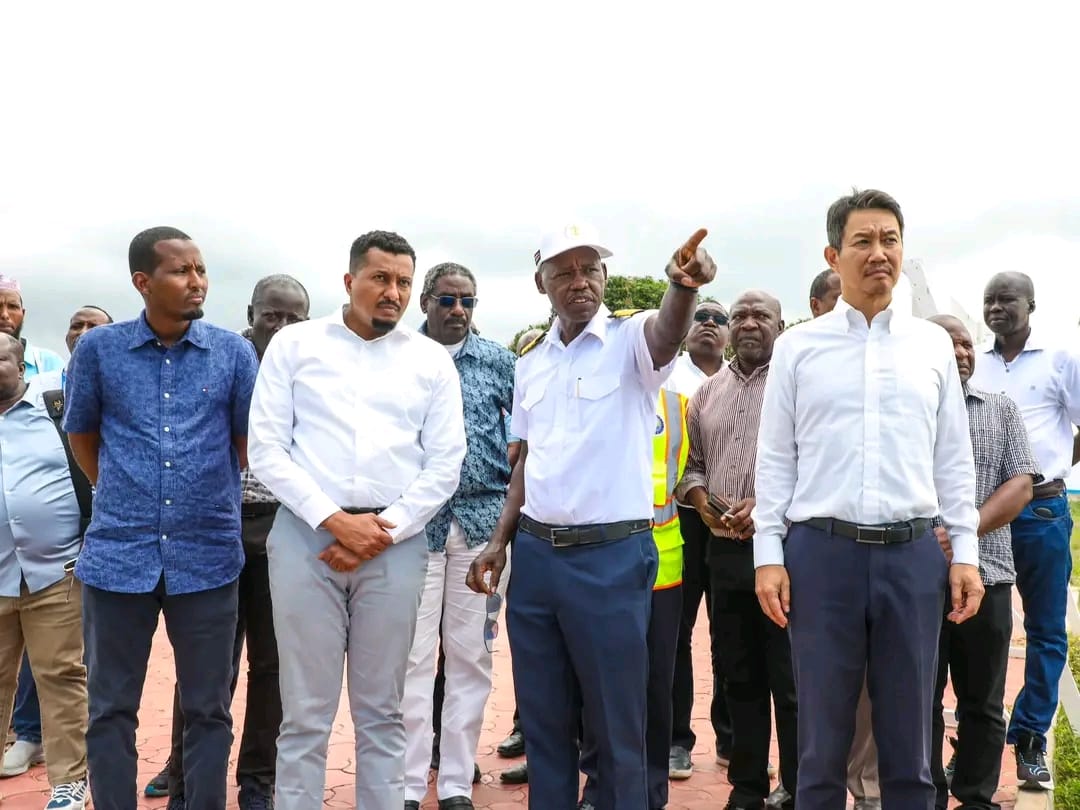
On 10–11 September 2026, Transport Principal Secretary Mohamed Daghar led officials from 14 government agencies on an inspection of the Dongo Kundu Special Economic Zone and its first berth. The message was unambiguous: KSh74.1 billion has been allocated to accelerate enabling infrastructure so the 3,000-acre public SEZ in Likoni Sub-County can transition from plans into operations, with a target of substantial readiness before September 2028.
This is the government’s flagship coastal industrial play—far larger than the concurrent private-sector SEZ in Jomvu involving GulfCap and DP World (KSh12 billion, 535 acres). Dongo Kundu sits adjacent to Mombasa Port, close to the Southern Bypass, the SGR corridor and Moi International Airport. The vision encompasses a free port, industrial parks, free trade zones, logistics and warehousing, energy facilities, and tourism and MICE infrastructure.
Kenya Ports Authority is central to delivery: its KSh41.1 billion port component covers seven berths and associated yards across roughly 1,300 acres. Berth One—a 300-metre multipurpose berth with a planned 15-metre draft—began construction in October 2025 and stood at 16 per cent complete in mid-September 2026, with completion scheduled for December 2028. Dredging is underway; once finished, the berth will rank second in depth only to Lamu’s 17.5-metre facilities. It will link to a 4.6-kilometre road and 2.8-kilometre ramp. Designs already incorporate a dedicated SGR spur with sidings into individual factories, connecting into the main Mombasa–Nairobi–Naivasha–
Power is another critical enabler. KSh6.5 billion has been set aside for a 50-kilometre, 220 kV double-circuit transmission line from Mariakani, backed by two 75 MVA transformers and a dedicated SEZ substation. Roads, water and sewerage complete the “horizontal infrastructure” that officials say must be in place before private capital scales up.
Investor interest is tangible. Officials report 94 expressions of interest, with four projects already underway. The most advanced is Taifa Gas’s KSh16 billion LPG terminal, owned by Tanzanian businessman Rostam Aziz. Construction has reached roughly 80–85 per cent, with commissioning targeted for October 2026 or shortly thereafter. The facility will add major regional LPG storage capacity—initially around 30,000 metric tonnes, expandable—and will connect by pipeline to the new berths. Other early movers include Milly Glass (pharmaceutical glass) and Afreximbank-linked developments. Land has been zoned: approximately 1,300 acres for the core SEZ, 700 for industrial and logistics uses, and 1,000 for residential, social amenities and roads.
The economic logic is strong. Mombasa remains East Africa’s principal maritime gateway. Integrating production, logistics and export under one roof with preferential SEZ rules should lower costs, shorten supply chains and support value addition in sectors such as energy, pharmaceuticals, glass, agro-processing, textiles and light manufacturing. Preferential power tariffs—reported in the range of KSh7.5–10 per kWh in related SEZ policy—and customs facilitation are designed to improve competitiveness. Broader projections have sometimes cited tens of thousands of jobs, with figures of 40,000 circulating in connection with larger financing packages involving Afreximbank. The more recent official estimate for the core SEZ portion is approximately 5,600 direct jobs once fully operational, with substantial indirect employment in construction, transport, services and the surrounding economy. Either way, the Coast needs the employment and skills transfer.
Yet history counsels caution. Dongo Kundu has been discussed for two decades. Land compensation for Project Affected Persons faced repeated delays, audits and controversies before significant progress in 2025–2026. Infrastructure rollout has lagged investor readiness; manufacturers have repeatedly cited missing internal roads, reliable power, water and housing as reasons for hesitation. A recent transfer of land administration responsibilities from the Special Economic Zones Authority to KPA reportedly introduced further bureaucratic friction. Global and regional experience shows that SEZs succeed only when the “soft” infrastructure—one-stop approvals, predictable regulation, skills pipelines and genuine local content—matches the hard assets. Kenya’s other SEZ experiments, including Naivasha and Tatu City, illustrate both the potential and the gap between licensed interest and fully operational factories.
The private Jomvu SEZ offers a useful parallel and competitive spur. Its smaller scale and private-sector speed may deliver quicker wins in pharmaceuticals, engineering and agro-processing, while Dongo Kundu’s scale and direct port-rail integration position it for heavier industry and bulk logistics. Complementarity is possible; duplication of effort or investor confusion is a risk if coordination is weak.
What must happen next. Weekly and monthly progress tracking, as promised by PS Daghar, is necessary but not sufficient. Land allocation to ready investors must be accelerated without new red tape. Power and water commissioning need to stay ahead of factory construction. Skills programmes—linking local TVETs to the emerging plants—should begin now so Coast youth are not left as spectators. Transparent local-content rules and community benefit-sharing will determine whether the project builds political and social licence or generates fresh grievances. Finally, the December 2028 berth deadline and the broader 2028 operational target must be treated as hard commitments rather than aspirational dates.
Dongo Kundu is no longer a distant concept. The money is allocated, the first berth is rising, the first major private terminal is nearly ready, and investor interest has crystallised. If the government converts this momentum into reliable utilities, predictable administration and measurable jobs and exports, the project can help shift Kenya’s economy from consumption and transit towards production and value addition. If the familiar pattern of delays, coordination failures and under-delivery reasserts itself, the 3,000 acres will remain a reminder of opportunity deferred. The next 24 months will tell which path Kenya chooses.
Andrew Mwangura is a maritime and logistics analyst based in Mombasa.