


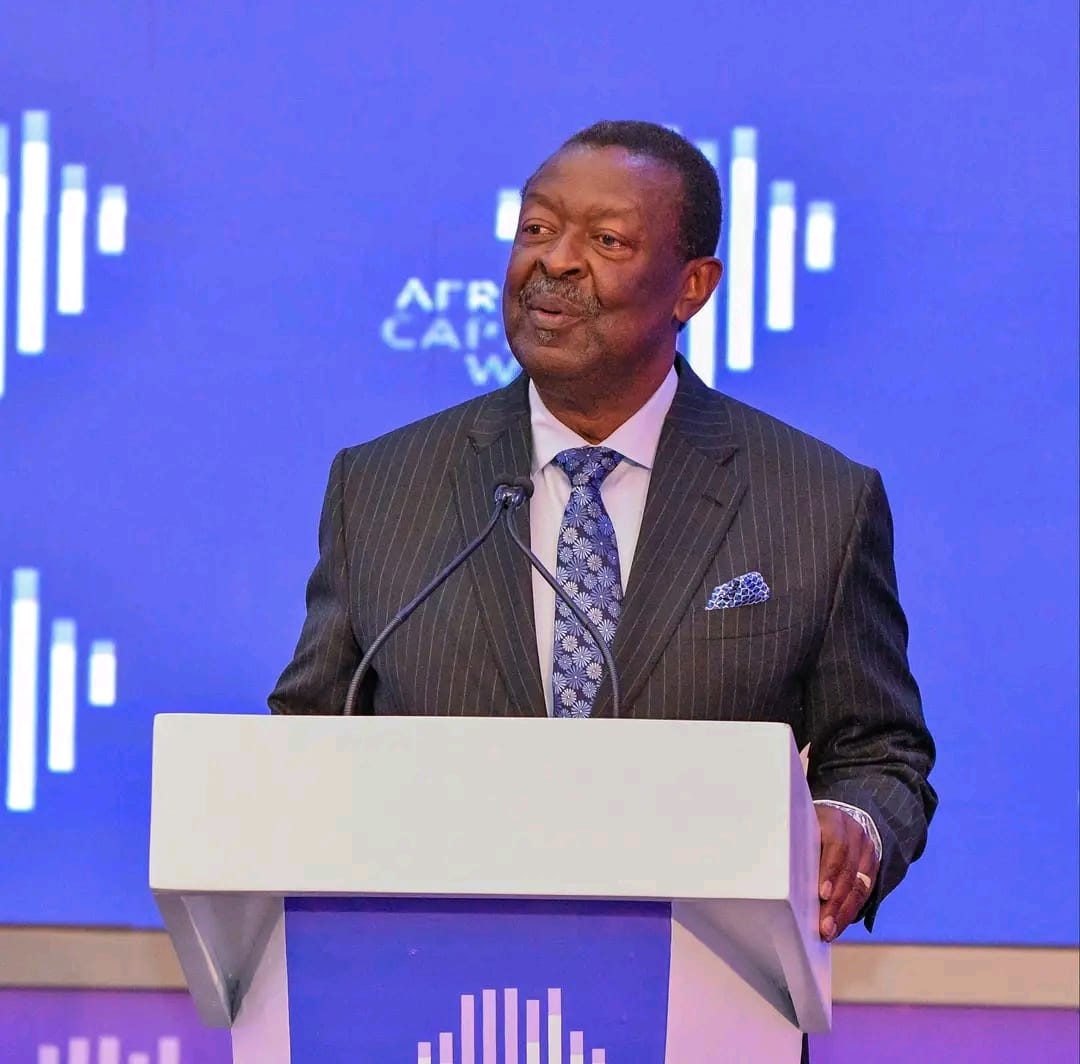
The convening of the inaugural Africa Capital Week 2026 in Nairobi under the theme, “Deepening Capital Markets to Advance Africa’s Economic Sovereignty,” could not be more opportune. As policymakers, regulators, investors, and development partners gather this week, the agenda transcends the usual discourse on financing gaps. It confronts a structural imperative: Africa cannot achieve durable transformation while tethered to the volatility and conditionalities of external capital. The forum’s laser focus on mobilizing domestic resources for economic restructuring and critical infrastructure is not merely timely—it is existential.
Prime Cabinet Secretary Musalia Mudavadi struck a decisive chord in his opening address, urging African nations to intensify efforts in harnessing local capital for regional trade and major infrastructure projects. “It is time for Africa to invest more in its own capacity and build resilient financial systems that support sustainable development and economic competitiveness,” he asserted. This is not rhetorical flourish; it is a pragmatic reckoning. While external financing offers short-term relief, it frequently imposes currency risks, stringent policy conditionalities, and debt-service burdens that erode fiscal sovereignty.
Africa’s infrastructure and development financing deficits are vast, and public balance sheets alone are insufficient to bridge them. The antidote lies in deep, liquid domestic capital markets capable of channeling pension funds, insurance assets, sovereign savings, and private investment into long-term, productive ventures. When capital is raised and deployed continent-wide, it mitigates exposure to external shocks, ensures returns circulate within the local economy, and aligns investment with regional priorities under frameworks such as the African Continental Free Trade Area (AfCFTA).
The Kenya Ports Authority (KPA) exemplifies how this vision transitions from principle to practice. As a pivotal trade facilitator and engine of regional economic growth, KPA leveraged the summit’s exhibition and panels to showcase its expansive modernization program. The Authority is strategically scaling capacity to handle rising cargo volumes, enhance efficiency, and bolster Kenya’s competitive edge in global maritime logistics. These initiatives position the Port of Mombasa and its auxiliary facilities as critical nodes in Africa’s economic architecture.
Central to this drive is the Dongo Kundu Special Economic Zone (SEZ). Designed to catalyze manufacturing, spur value addition, and generate extensive employment, the SEZ directly integrates port capacity with industrial activity. It represents a deliberate shift from raw commodity exports toward higher-value production—a structural transformation ideally suited for long-term domestic capital investment.
Complementary megaprojects reinforce this trajectory. The construction of Berth 19B is underway, with preparations advancing for Berths 23 and 24. These expansions are essential to alleviating capacity constraints that could otherwise stifle trade growth and regional connectivity. Given the capital-intensive nature of this infrastructure, KPA is actively pursuing private-sector partnerships under the Public-Private Partnership (PPP) framework. This pragmatic model mobilizes private capital and expertise while allowing the public sector to retain strategic oversight, ensuring that projects remain anchored to national development goals.
The broader implications of these developments extend well beyond Kenya. Efficient maritime gateways lower logistics costs for landlocked neighbours, facilitate intra-African commerce, and attract manufacturing investments that spur job creation and skills development. When such projects are financed through deeper local markets or well-structured PPPs—rather than exclusively through external loans—the resulting economic, fiscal, and political dividends remain firmly under African stewardship.
Nevertheless, significant hurdles persist. Capital markets across much of the continent remain shallow and fragmented, with limited liquidity and nascent institutional investor bases. Regulatory and governance frameworks must be further fortified to instil the confidence necessary for large-scale, long-term commitments. Investor appetite is palpable, but it demands credible pipelines of bankable projects, transparent procurement, reliable data, and predictable policy environments. Forums like Africa Capital Week play a vital role in bridging this gap, connecting project sponsors with capital providers while spotlighting successful models.
Achieving success will require deliberate policy choices: regulatory reforms enabling pension and insurance funds to allocate greater capital to infrastructure and productive sectors; the development of regional platforms to pool risk and achieve scale; and a sustained emphasis on digital transformation and operational efficiency within institutions like KPA. The alternative—perpetual reliance on external financing—risks perpetuating vulnerability and curtailing the policy autonomy essential for independent decision-making.
Africa Capital Week 2026 is thus far more than a networking event; it is a declaration of intent. By placing the deepening of capital markets at the heart of the sovereignty agenda, participants have correctly diagnosed the financial architecture required for sustained transformation. Institutions such as the Kenya Ports Authority demonstrate that concrete, high-impact projects are already advancing. The true test now lies in translating Nairobi’s dialogues into expanded domestic capital mobilization, more robust partnerships, and measurable progress on the ground.
Economic sovereignty is not achieved by declaration alone. It is forged through the patient, disciplined work of strengthening institutions, mobilizing local savings, and directing capital toward productive capacity. This week’s forum has underscored both the urgency and the opportunity. Africa possesses the resources, the projects, and increasingly the institutional frameworks. The remaining task is to align them at scale—and the journey begins here, in Nairobi.