


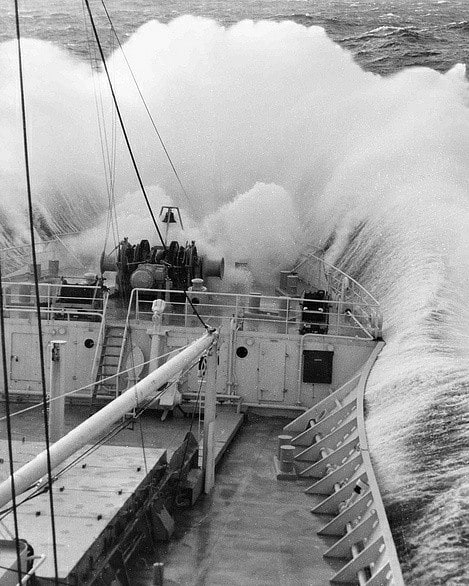
On 21 September 2026, the Kenya Maritime Authority (KMA) issued a public notice that, on its face, belongs to the routine choreography of maritime administration: adverse weather and sea conditions are expected along the Kenyan coast from September to December 2026. Strong winds, rough seas, high waves, heavy rainfall and reduced visibility are forecast. Fisherfolk are urged to postpone non-essential activities. Boat owners are told to secure their vessels. Passengers and crew must wear life jackets. The public is directed to monitor updates from the Kenya Meteorological Department and to report emergencies to the Regional Maritime Rescue Coordination Centre on two listed hotlines. It is signed by Director General CPA Omae Nyarandi.
Read alone, the notice is a seasonal advisory. Read alongside Kenya’s recent trajectory in spill preparedness, it is something far more consequential: an unplanned stress test of the very system the country has spent years assembling—and a preview of where that system may yet fracture.
The Warning Is Not the Story. The Response Architecture Is.
In July 2025, Kenya hosted MASEPOLREX25, a multi-agency Tier III spill simulation under the Indian Ocean Commission framework, involving thousands of tonnes of intermediate fuel oil drifting near the Kenya–Tanzania maritime border. That exercise fed directly into the launch of Kenya’s updated National Marine Spills Response Contingency Plan, which designates KMA as the competent oil-spill authority and clarifies roles across government, county, private-sector and security actors. Roughly a thousand responders have been trained through KMA and its partners, including the Oil Spill Mutual Aid Group, Kenya Ports Authority and Kenya Pipeline Company.
That architecture was built for the worst case. The September–December weather window delivers something different but equally instructive: a sustained, months-long period of elevated risk in which the probability of a maritime incident—a grounding, a collision, a disabled vessel, a breached hull—climbs steadily. The advisory is, in effect, a live-fire exercise in prevention. And prevention is where spill response either succeeds cheaply or fails expensively.
The logic is straightforward. A tanker that loses power or drags anchor in high seas is a spill waiting to happen. A fishing vessel that ignores the advisory and capsizes becomes a search-and-rescue operation that diverts resources from contamination monitoring. A port with reduced visibility and rough berthing conditions faces higher collision risk in precisely the corridors—Mombasa, the growing terminals at Lamu and Kisumu—where traffic and consequence are both rising. Every one of these scenarios sits upstream of the spill. How Kenya manages them over the next three months will determine how much of its response capacity is consumed by emergencies that good seamanship and timely advisories might have prevented.
The Real Test Is Coordination Under Sustained Load
The KMA notice is careful to distribute responsibility. Fisherfolk and coastal communities are told to remain alert and follow instructions from relevant authorities. Vessels at sea are told to monitor weather updates and proceed to safe shelter where necessary. The public is pointed toward KMD and KMA for information and toward the RMRCC for emergencies.
This is the correct posture—but it is also the point of maximum friction. A single advisory is easy to coordinate. A four-month season of recurring advisories, each requiring timely dissemination to artisanal fishers with limited connectivity, to beach operators, to ferry services, to cargo terminals and to the informal coastal economy, is a different order of difficulty. The MASEPOLREX25 calm that Nuru Mohammed rightly praised—responders moving with the confidence of repeated practice—was demonstrated in a compressed, scripted window. The weather season offers no script and no end date.
There are three specific pressure points to watch.
First, last-mile dissemination. The notice is a public document, but its effectiveness depends on reaching the fishing canoe at Kilifi, the dhow at Malindi, the tour boat at Diani and the boda-boda operator who ferries crew to the jetty. KMA and KMD have improved outreach, but the gap between a posted notice and a warned community is where lives are lost. If the next three months produce incidents involving fishers who never received the advisory, that is not a weather failure. It is a communications failure—and it is correctable.
Second, the RMRCC’s absorption capacity. The notice lists two hotlines. In a bad weather season, call volume rises, false alarms multiply, and genuine distress competes for attention. The RMRCC’s ability to triage, task and track multiple simultaneous incidents is the operational heart of this period. It is also the least visible part of the system and the easiest to under-resource. If Kenya wants its spill preparedness to be credible, the rescue coordination centre that feeds it must be funded and staffed to handle surge, not just steady state.
Third, the handoff from rescue to environmental response. A vessel secured or a crew rescued does not end the incident. Fuel, lubricants, cargo and debris remain. The contingency plan’s technical manuals on shoreline clean-up and waste management assume a response triggered by a spill report. The weather season may generate many small pollution events—sunken craft, ruptured tanks, washed-up containers—that individually fall below the Tier III threshold but collectively test the same institutions. Kenya’s system has been drilled for the dramatic event. It has not been stress-tested for the cumulative, low-grade, months-long event.
The HNS Gap Does Not Take a Season Off
There is a deeper vulnerability that the weather advisory implicitly exposes. Kenya’s contingency planning, like much of Africa’s, remains optimised for oil. But the cargoes moving through Western Indian Ocean corridors increasingly include hazardous and noxious substances—chemicals whose behaviour, toxicity and response requirements differ sharply from crude or fuel oil. Gases, evaporators, sinkers, dissolvers and floaters each demand distinct detection, personal protective equipment, containment and recovery approaches. Independent assessments have flagged incomplete legal frameworks, limited specialised HNS training and research, and the fact that Kenya has not fully operationalised the OPRC-HNS Protocol with the same rigour it has applied to oil.
Rough weather raises the probability of exactly the kind of incident—a container overboard, a drum washed ashore, a breached chemical tank—that would test this gap. A coastal community that finds an unmarked drum on the beach after a storm has no way of knowing whether it is inert or acutely toxic. A responder trained only in oil spill containment may not recognise the signs of a chemical release. The advisory tells coastal communities to remain alert. It does not tell them what to be alert for. That is a gap in the public communication architecture, and it is one that the HNS dimension of Kenya’s mandate should close.
What Kenya Should Do Before December
The weather notice is not a crisis. It is an opportunity—arguably the most useful one Kenya will get this year—to validate its preparedness system under real, sustained, unscripted conditions. Four actions would convert the season from a risk into a rehearsal.
Pre-position and publicise. KMA should confirm that equipment stockpiles—booms, skimmers, dispersant, PPE, chemical detection kits—are audited, accessible and located where the weather is most likely to generate incidents. The joint audits that are part of the contingency plan should be conducted now, not after the first report.
Push advisories through every channel, not just the official one. Radio, SMS, community leaders, religious networks, fisher cooperatives, ferry operators and port authorities should all be enlisted. The measure of success is not whether the notice was issued. It is whether the fisherman in the canoe heard it.
Rehearse the surge. The RMRCC should run a tabletop or live exercise simulating multiple simultaneous incidents during adverse weather—a grounding, a capsized fishing vessel, a suspected pollution report—to test triage, tasking and inter-agency communication under load.
Close the HNS communication gap. Even before full OPRC-HNS operationalisation, KMA can issue simple public guidance on identifying and reporting suspected chemical hazards on beaches and in waterways. The public is already being asked to report maritime incidences. It should be told what an HNS incident might look like.
The Hours After the First Report
The KMA notice ends with a directive that is easy to skim past: report maritime incidences and emergencies to the RMRCC using the listed numbers. That sentence is the connective tissue between the weather warning and the spill preparedness system. It is the moment when a storm becomes a response, when a plan on a shelf becomes a system that works—or does not.
Kenya has earned the right to be held up as a regional reference point. It has trained its people, mapped its equipment, written its manuals, exercised its command structures. But the credibility of a preparedness system is not established in the exercise. It is established in the unscripted season—the four months of wind and wave in which the system is asked to prevent, to warn, to rescue and, if necessary, to respond.
The 2019 Wakashio disaster off Mauritius remains the region’s cautionary tale of what happens when preparedness lags traffic volumes. Kenya’s September–December weather window is the opposite kind of test: not whether the system exists, but whether it holds under sustained pressure. If it does, the Kenyan blueprint becomes more than a model to admire. It becomes a standard to adopt. If it does not, the gaps will be visible in the hours after the first report of a slick—or a toxic plume.
Those hours are no longer hypothetical. They begin now.
Andrew Mwangura is a maritime safety and security analyst.