


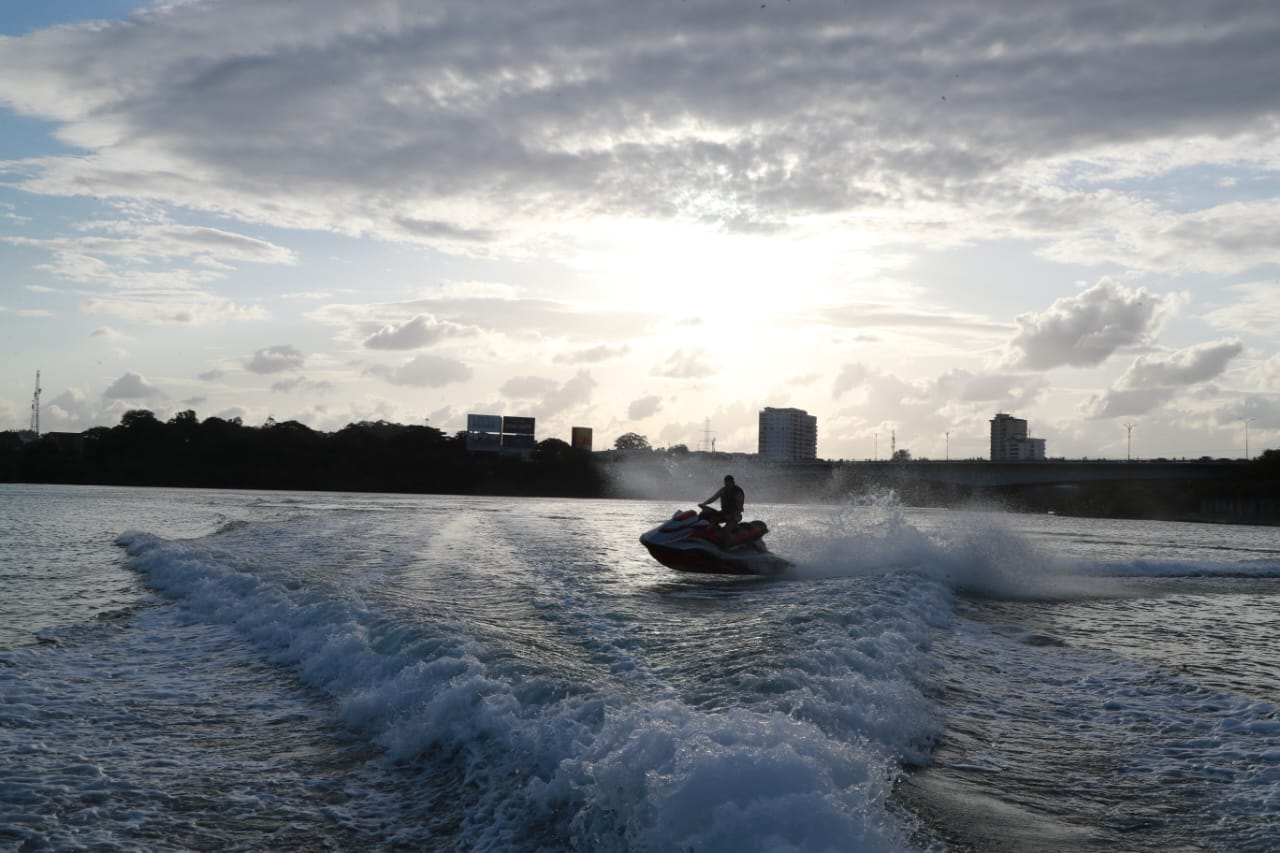
The iconic image of Kenya’s coast—pristine white sands and the azure Indian Ocean—has long been a magnet for global tourists. In recent years, however, the tranquillity of Mombasa’s beaches has been increasingly disrupted by the roar of jet skis. What was once a niche recreational activity has grown into a booming, largely informal industry, bringing with it a complex web of safety hazards, environmental degradation, and noise pollution.
Against this backdrop, the decision by Kenya Maritime Authority (KMA) Director General, CPA Omae Nyarandi, to convene a multi-agency consultative meeting marks a significant, and arguably overdue, attempt to impose order on the chaos. The gathering, which brought together the County Government of Mombasa, Kenya Coast Guard Service (KCGS), Tourist Police Unit (TPU), Kenya Wildlife Service (KWS), NEMA, and—crucially—jet ski owners and operators, signals a shift from reactive crisis management to proactive regulation.
The key resolutions—designating operating zones, regulating hours, enhancing operator sensitization, strengthening enforcement, and maintaining stakeholder engagement—are technically sound. But their success will depend on navigating a treacherous course between the Scylla of regulatory overreach and the Charybdis of weak enforcement, all while balancing the economic livelihoods of operators against the safety and serenity of residents and visitors.
A Governance Gap Years in the Making
The current regulatory vacuum is not new. For nearly two decades, the dangers of unregulated jet ski operations have been tragically evident. The 2006 death of British policewoman Sally Roberts, who was killed in a jet ski accident off Mombasa’s coast after falling from a rented craft, highlighted the catastrophic consequences of inadequate oversight. An inquest later ruled it a tragic accident, but questions about operator competence and safety protocols lingered.
The legal framework governing small vessels, including jet skis, exists in the Merchant Shipping (Small Vessel Safety) Regulations, 2012, which KMA administers. These regulations cover everything from built-in buoyancy and guard rails to the requirement for kill switches and adequate crew competence. Yet, as academic research on marine protected areas in Mombasa has noted, specific regulations for jet-skiing within sensitive zones like the Mombasa Marine National Park and Reserve are not clearly found in the legal acts, making prosecution for environmental violations difficult and often avoided.
This gap has allowed a situation where, as one study found, KWS officers face difficulties in court because legal provisions are “too vague and do not define what is prohibited and not”. The result is a system where enforcement has relied on a patchwork of warnings, suspensions, and informal norms negotiated with boat operators’ associations, rather than clear, enforceable law.
The Multi-Agency Approach: A Necessary but Complex Dance
The strength of the KMA-convened meeting lies in its recognition that jet ski regulation is not a single-agency task. It requires a coordinated approach:
· KMA provides the regulatory authority under maritime safety law.
· KCGS brings enforcement capability on the water, with a mandate covering maritime security and safety.
· KWS manages the marine protected areas—the Mombasa Marine National Park and Reserve are gazetted conservation areas where extractive activities are prohibited, and noise disturbs wildlife.
· NEMA is the environmental regulator, with the legal power to control noise and vibration pollution under the Environmental Management and Coordination Act. Its presence signals that noise nuisance is being taken seriously.
· The County Government of Mombasa has a role in local licensing and beach management, as demonstrated by Governor Abdullswamad Sherrif Nassir’s decisive suspension of all beach and marine activities during adverse weather alerts in 2025.
· The Tourist Police Unit is essential for protecting both tourists and the industry’s reputation, a function it has been scaling up in recent years.
This multi-agency framework is a positive development. However, coordination costs can be high. As the 2025 Cyclone Hidaya response demonstrated, KMA can coordinate multiple agencies during emergencies. The challenge is to institutionalise that level of coordination for routine, day-to-day regulation.
The Resolutions: A Balanced but Fragile Compromise
The agreed measures represent a sensible middle path:
1. Designated Operating Zones: This addresses the most immediate safety and environmental concerns. By confining jet skis to specific areas, the authorities can protect swimming zones, sensitive coral reefs, and areas of high wildlife density. KWS guidelines for the Mombasa Marine Park already emphasise that noise distracts wildlife and that visitors should “move slowly and quietly”. Zoning operationalises this principle.
2. Regulated Operating Hours and Night-Time Activities: Restricting night-time operations is a critical safety measure. The KMA’s own safety tips stress the importance of required lighting and never operating a vessel under the influence of alcohol or drugs. Night-time jet skiing, with poor visibility and impaired judgment, is a disaster waiting to happen. It also directly addresses the noise nuisance that has degraded the quality of life for coastal residents.
3. Operator Sensitization: Education is the foundation of compliance. KMA’s existing safety brochures and water safety tips provide a template. The involvement of KWS in sensitization is also crucial, as the authority has a track record of using education and warnings, rather than immediate sanctions, to achieve compliance in marine parks.
4. Strengthened Enforcement: Without enforcement, regulations are mere paper. The KCGS, with its operational presence in Mombasa, Lamu, Kwale, Kilifi, and Tana River counties, is the primary enforcement arm on the water. However, its effectiveness is hampered by “inadequate human resource” and a lack of “requisite human resource policy instruments”. Strengthening enforcement must therefore include resourcing the KCGS and TPU adequately.
5. Continuous Stakeholder Engagement: This is perhaps the most important resolution. The history of marine regulation in Mombasa shows that excluding stakeholders leads to resistance and litigation. A 2024 High Court judgment on KWS conservation fees highlighted that public participation must be genuine and that concerns raised must be addressed. The inclusion of jet ski owners and operators in the consultative meeting is a positive step. It must be sustained through regular forums, not just crisis meetings.
The Road Ahead: From Resolutions to Reality
The real test will be implementation. Several challenges loom:
· Enforcement Capacity: The KCGS’s own documentation acknowledges staffing and policy gaps. The TPU, while active, is primarily focused on tourist safety and crime, not maritime regulation.
· Legal Clarity: The ambiguity in current laws regarding jet ski operations in marine protected areas needs to be resolved. KMA and KWS should work together to develop specific, enforceable regulations for recreational vessels in marine parks, as recommended by researchers.
· Livelihoods: Jet ski operators depend on the income from this trade. Regulations that are too restrictive without providing alternative economic opportunities could push operators into non-compliance or drive the industry underground. The stakeholder engagement process must address the economic dimension.
· Weather and Safety: The coast is vulnerable to sudden weather changes, as seen with Cyclone Hidaya and the 2025 wind alerts that forced beach closures. Any regulatory framework must include clear protocols for suspending operations during adverse conditions.
Conclusion
The KMA’s multi-agency initiative is a necessary and welcome step towards restoring order to Mombasa’s beaches. It acknowledges that the current free-for-all is unsustainable—dangerous for tourists, damaging to the marine environment, and a nuisance to residents.
Yet, resolutions made in a conference room are only the first step. The true measure of success will be whether the designated zones are respected, whether enforcement is visible and consistent, and whether the stakeholder engagement is genuine and ongoing. Kenya’s blue economy ambitions depend on a coast that is safe, sustainable, and attractive. Taming the jet ski industry is a small but telling test of whether the country can govern its maritime resources effectively. The waves will keep coming; it is time to learn how to ride them responsibly.