


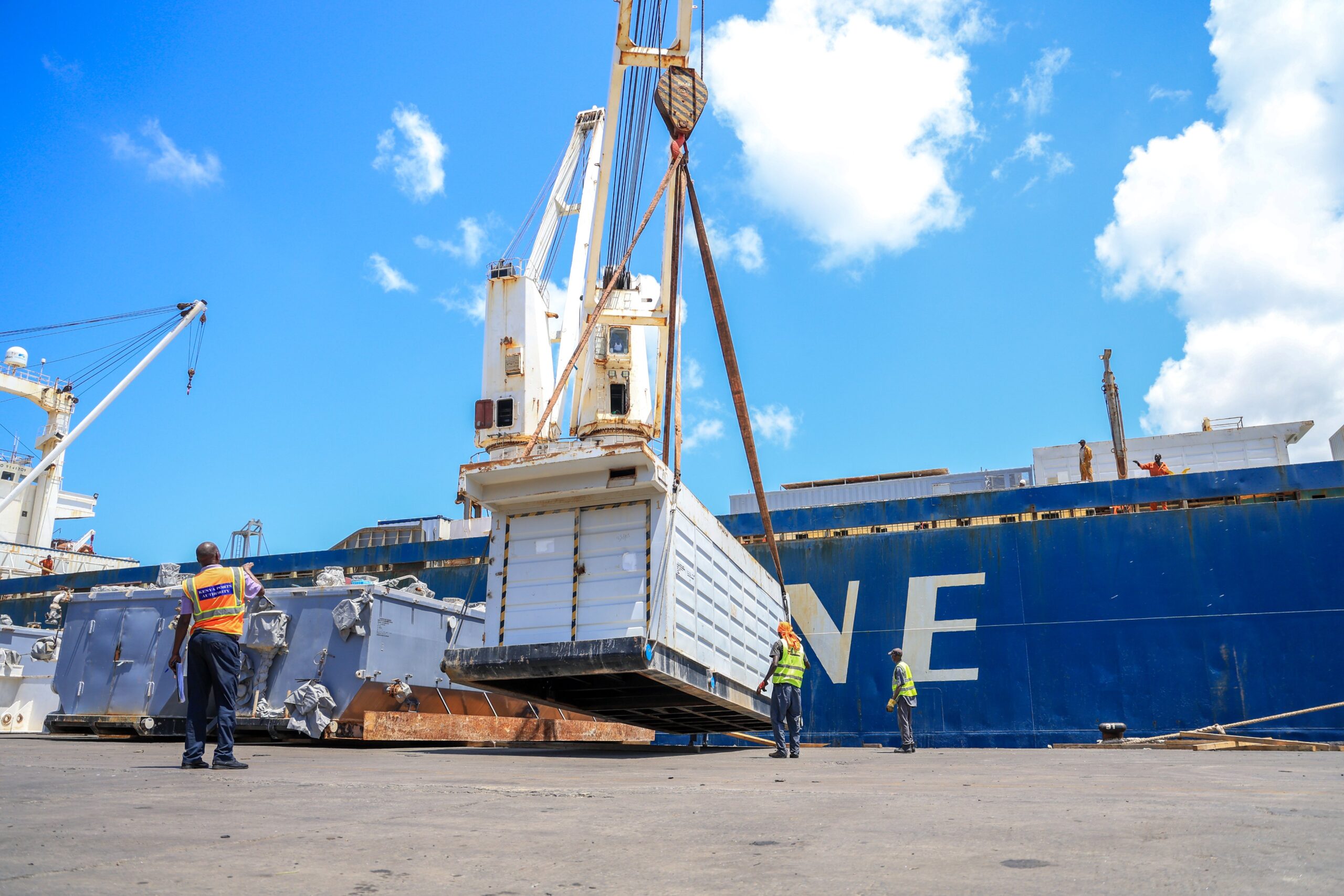
The arrival of the GW70 onshore drilling rig at Mombasa’s Kilindini Port on 25 September 2026 is more than a logistical milestone. It is the most concrete signal yet that Kenya may finally produce commercial crude oil before the year ends — nearly 15 years after the Ngamia-1 discovery first ignited national excitement in Turkana’s South Lokichar Basin.
Gulf Energy E&P BV SEZ, the Kenyan firm that took over the project from Tullow Oil in 2025, has set a spud date of 1 November and targets first oil in December 2026. The 1,500-horsepower rig, leased long-term from Great Wall Drilling Company after service for ADNOC in the UAE and valued at more than US$20 million, will travel by road to Turkana. Phase 1 aims for 20,000 barrels per day, scaling later to 50,000 bpd within a broader US$6 billion development. Baker Hughes will handle integrated well services, and SLB the early production facilities. Government projections put lifetime fiscal earnings above US$2.9 billion (KES 371 billion), depending on prices and volumes.
This is no ordinary press-release triumph. It is the product of painful adaptation.
From Ambition to Pragmatism
South Lokichar’s recoverable resources are estimated at roughly 326 million barrels (best estimate) against a much larger stock-tank oil initially in place. Early plans envisioned a high-plateau development — potentially 60,000–120,000 bpd — supported by a multi-billion-dollar pipeline to Lamu. That vision collapsed under the weight of capital intensity, partner exits (TotalEnergies and Africa Oil), financing difficulties, and a rejected field development plan. Tullow, left holding the assets, eventually sold to a Gulf Energy affiliate for about US$120 million.
Gulf Energy’s revised plan is deliberately modest and modular: early production facilities at Ngamia and Amosing, trucking of stabilised crude to Mombasa for export via the Kipevu Oil Terminal, and later reliance on rail once infrastructure is ready. Existing wells will be reinstated and new ones drilled. The approach prioritises speed to cash flow over maximising peak rate. In an era of capital discipline and energy-transition pressure, that pragmatism is both necessary and shrewd.
The handover to a domestic operator also carries symbolic weight. For the first time, Kenya’s flagship upstream project is led by a Kenyan-owned company emphasising local content, skills transfer, and community benefits. Tax and fiscal adjustments — higher cost-oil recovery ceilings, exemptions, and revised profit-oil splits — have improved project economics. A long-term storage and handling deal with Kenya Pipeline Company’s KPRL subsidiary further embeds the midstream piece.
The Economic Stakes Are Real — But So Are the Risks
At 20,000 bpd, Phase 1 will not transform Kenya’s fiscal position overnight. Yet even modest, reliable production generates foreign exchange, supports the balance of payments, creates skilled and semi-skilled jobs in Turkana and along the logistics corridor, and builds institutional experience in regulating and taxing petroleum. Scaling to 50,000 bpd and extending the plateau through additional drilling would amplify those gains. Regional positioning matters too: East Africa has watched Uganda’s longer pipeline story and Tanzania’s gas developments; Kenya finally entering the producer club would alter the narrative.
Risks remain substantial. The timeline is tight. Moving a heavy rig overland to Turkana, completing commissioning, drilling and completing wells, installing and commissioning EPFs, and establishing a reliable trucking operation by December leaves little margin for weather, road conditions, community issues, or technical surprises. Waxy crude requires heated transport and careful handling. Environmental and social safeguards in a sensitive arid region with pastoralist communities must be rigorously enforced; past pilot schemes and exploration activity left legacies of expectation and grievance that a commercial phase cannot ignore.
Financing the full US$6 billion lifecycle still requires disciplined capital and ongoing confidence from lenders and contractors. Global oil prices will determine the ultimate government take. And the broader energy transition — while not yet rendering new African oil projects obsolete — means the window for maximising value is finite. Over-reliance on trucking for an extended period also raises cost, safety, and emissions questions that rail and, eventually, more permanent infrastructure must address.
What Success Requires
Success will not be measured solely by the first barrel loaded in Mombasa. It will be measured by whether production is sustained, local content targets are met in practice rather than on paper, environmental performance is transparent and accountable, and revenues are managed transparently for national and county benefit. Turkana’s communities must see tangible improvements in livelihoods, not merely the passage of trucks and the presence of security. National institutions — EPRA, the Ministry, Parliament, and revenue authorities — must demonstrate they can regulate a producing asset effectively.
Kenya has already shown it can adapt. The shift from an over-ambitious pipeline-centric plan to a phased, truck-and-rail model, the transfer to a local operator with skin in the game, and the steady progress on permitting and contracting are evidence of learning. The GW70’s arrival converts that learning into hardware.
The next three months will test whether the project management schedule CEO Paul Limoh describes as “tight” can hold. If it does, Kenya will join the ranks of African oil producers on its own terms — smaller scale, more pragmatic, and under domestic leadership. That outcome would be worth celebrating. It would also demand continued realism: first oil is a beginning, not a finish line. The harder work of turning a discovery into durable national value is only now beginning in earnest.