


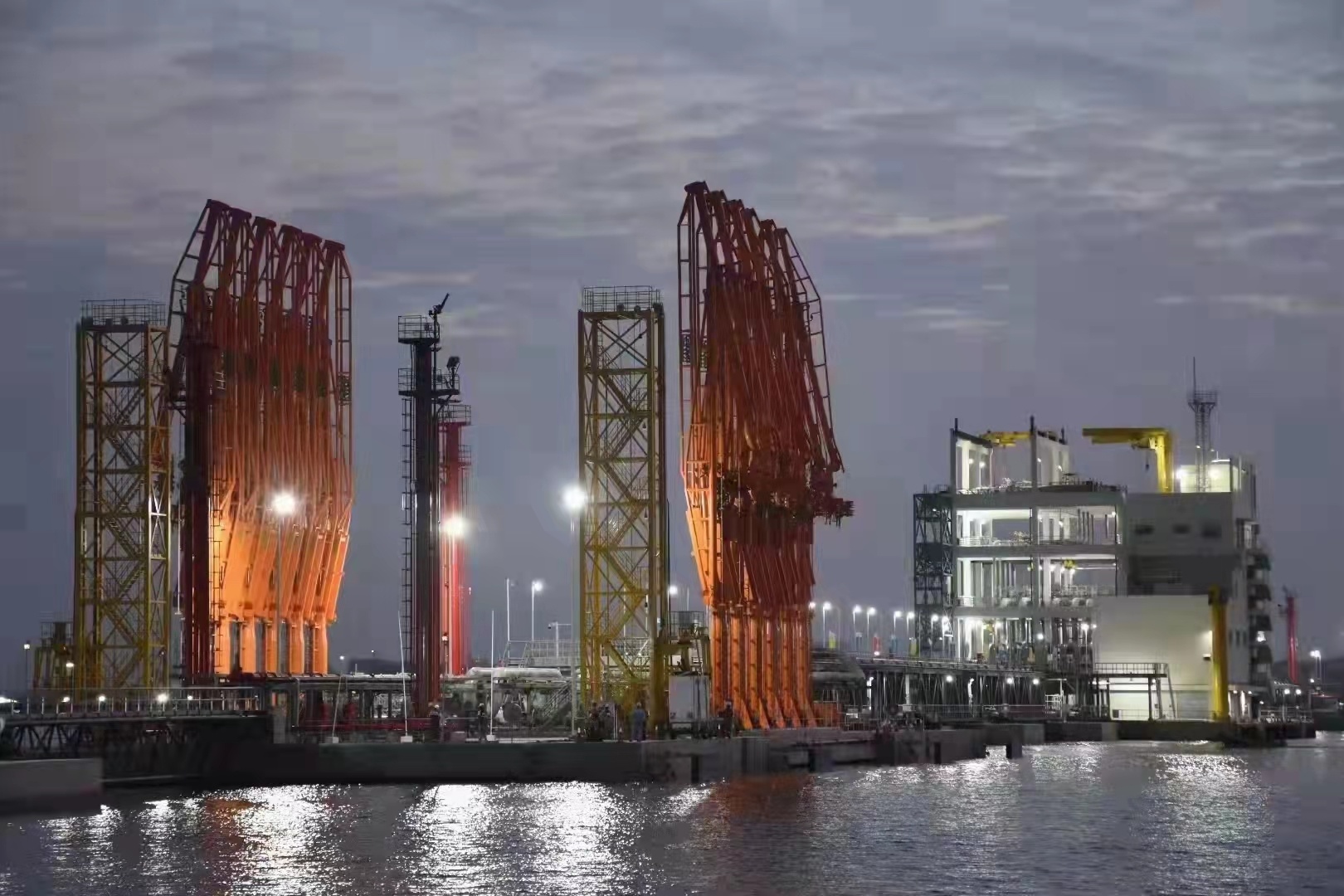
Kenya stands on the cusp of becoming an oil producer. After more than a decade of false starts, appraisal wells, and abandoned pipeline dreams, the South Lokichar Basin in Turkana is finally edging toward first oil, targeted for December 2026. At the heart of the export logistics sits a newly signed 25-year Crude Oil Storage and Handling Contract between Kenya Petroleum Refineries Limited (KPRL), a wholly owned subsidiary of Kenya Pipeline Company (KPC), and Gulf Energy E&P B.V. The deal positions Mombasa—and specifically Kipevu Oil Terminal II (KOT II)—as the country’s primary crude export gateway. It is both a pragmatic use of idle infrastructure and a high-stakes bet whose governance questions already threaten to undermine its promise.
Under the agreement, signed around 26 August 2026, KPRL will receive, store, handle, and deliver crude produced by Gulf Energy from the South Lokichar fields for loading onto tankers at KOT II. The oil will move from Turkana by road—or potentially rail—rather than the long-mooted dedicated pipeline to Lamu. KPC’s internal projection puts gross revenue at approximately KSh 93.68 billion (about $725 million) over 25 years—roughly KSh 3.75 billion annually—drawn from fixed service fees and recovery of qualifying variable costs. Crucially, the company has repeatedly stressed that this is an estimate based on anticipated throughput and tariffs, not a guaranteed take-or-pay commitment.
The arrangement gives commercial purpose to KPRL’s Mombasa complex, idle as a refinery since 2013. The site offers substantial tankage—around 484 million litres under KPC ownership—and sits adjacent to the port, making it a natural consolidation and export hub. For Gulf Energy, which acquired Tullow Oil’s entire Kenyan interests (blocks 10BA, 10BB and 13T, holding roughly 463 million barrels of contingent resources) for a minimum $120 million in 2025, the deal secures a reliable coastal outlet as it races toward initial production of about 20,000 barrels per day, with later phases aiming for 50,000 bpd in a multi-billion-dollar development. A drilling rig has already arrived in Mombasa for transport to Turkana, underscoring the accelerated timeline.
On paper, the strategic logic is sound. Mombasa already anchors Kenya’s refined-product logistics through KPC’s pipeline network and KOT II. Adding crude export capability deepens the port’s role as a regional petroleum logistics centre at a time when East African energy trade is evolving. It monetises underused public infrastructure, generates long-term revenue for KPC/KPRL, and supports Kenya’s broader ambition to capture value from its own resources rather than remaining a pure importer. Government projections have previously cited potential state revenues from South Lokichar in the range of $1–3 billion over the project life, depending on oil prices. For Turkana and the national economy, commercial production could mean jobs, local content, and fiscal inflows—if managed well.
Yet the deal arrives shadowed by legitimate governance concerns. The Consumers Federation of Kenya (COFEK) has petitioned the High Court to suspend implementation, arguing that the selection process and material terms were not publicly disclosed, raising questions under Article 227 of the Constitution—which requires public procurement to be transparent, competitive and cost-effective—as well as the Public Procurement and Asset Disposal Act, the Petroleum Act and access-to-information laws. COFEK contends that locking strategic petroleum infrastructure into a 25-year private arrangement without a clear competitive process or beneficial-ownership transparency risks creating irreversible obligations. Gulf Energy’s rapid expansion—from downstream trading and participation in the government-to-government fuel import scheme into upstream ownership and now exclusive long-term coastal storage rights—has fuelled perceptions of concentration and preferential access.
These are not trivial objections. Kenya’s petroleum sector has a history of opaque contracting, delayed projects and public distrust. A quarter-century commitment involving critical national infrastructure demands higher standards of disclosure than a routine commercial notice to shareholders. Even if the contract is commercially defensible and volume risk sits largely with the producer, the absence of a visible competitive process or detailed public terms erodes confidence at precisely the moment the country needs broad buy-in for its first oil project.
Operational and structural risks compound the governance ones. Road-hauling crude across hundreds of kilometres from Turkana is logistically intensive, environmentally sensitive and vulnerable to weather, security and infrastructure constraints—precisely the challenges that once justified a pipeline. Volume uncertainty remains: the revenue projection assumes sustained throughput that has yet to be proven at scale. Legal challenges could delay implementation or force renegotiation. Environmental and community impacts in Turkana, longstanding sources of friction, will require careful management if production ramps up. And Kenya’s energy transition ambitions sit uneasily alongside a major new fossil-fuel export play, however modest the initial volumes.
The smarter path forward is not to abandon the opportunity but to strengthen its foundations. Full disclosure of the contract’s key commercial terms, the basis for selecting Gulf Energy, and beneficial ownership structures would address the core of COFEK’s petition and restore public trust. Independent oversight of tariffs, performance and local-content delivery should be hard-wired into the arrangement. Parallel investment in safer, lower-impact logistics—including eventual rail or pipeline options—and rigorous environmental and social safeguards are non-negotiable. KPC and KPRL should treat the projected revenue as contingent and plan conservatively.
Mombasa’s emergence as Kenya’s crude export hub is a logical evolution of existing assets and a necessary enabler of South Lokichar’s commercialisation. Done transparently and competently, it can generate durable value for the state, the port city and the producing region. Done behind closed doors, it risks becoming another cautionary tale of concentrated privilege and eroded institutions. Kenya has waited long enough for first oil. It should not now sacrifice legitimacy for speed.