


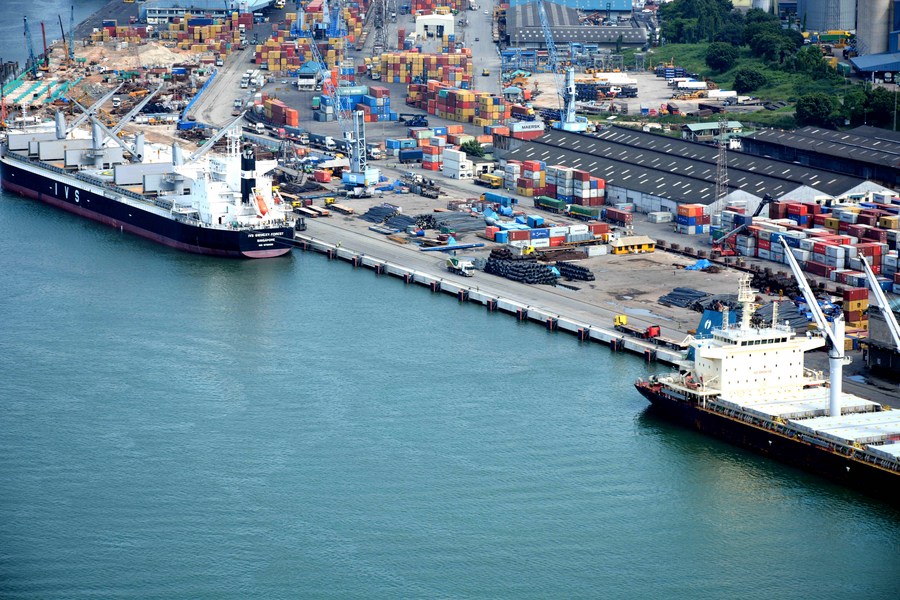
When a major global carrier announces it expects to move more than one million TEU across Africa in a single year, and pairs that ambition with a deeper terminal partnership spanning five ports in four regions, the story transcends a simple commercial deal. It is a signal about where African maritime trade is heading—and where the bottlenecks still bite.
Hapag-Lloyd and DP World have expanded their long-standing cooperation. The German line is securing long-term terminal capacity at Dakar (Senegal), Luanda (Angola), and Dar es Salaam (Tanzania), while supporting infrastructure development at Banana (Democratic Republic of Congo) and Maputo (Mozambique). The rationale is straightforward: volumes are rising, Africa is a priority growth market, and reliable terminal capacity is the foundation for network expansion and service quality.
This is not merely incremental. It reflects a broader structural shift. Maritime transport already moves the vast majority of Africa’s international trade by volume. As container traffic climbs, carriers are responding by locking in access rather than relying on spot berth availability. For Hapag-Lloyd, the deal strengthens its African service network as it targets the one-million-TEU milestone in 2026. For DP World, it deepens integration with a major liner and reinforces the role of its African terminals and development projects in supporting trade flows.
Why These Five Ports Matter
The geography is deliberate. Dakar has become a significant West African gateway; DP World recently marked the handling of its ten-millionth container there. Luanda provides access to Angola’s economy and energy-related flows. Dar es Salaam serves Tanzania and a vast hinterland of landlocked countries in East and Central Africa, with DP World holding a long-term concession to modernise operations. Banana is a strategic deep-water development on the DRC’s short Atlantic coastline, intended to ease pressure on existing facilities and open new export routes for minerals and other commodities. Maputo is expanding container capacity to better serve southern Africa and Mozambique’s own trade. Together, they form a rough arc from the western seaboard through the Congo Basin to the Indian Ocean coast.
This dual strategy—securing capacity at established terminals while supporting new or expanding ones—protects near-term reliability and shapes longer-term infrastructure. Without sufficient berth, yard, and landside capacity, rising volumes translate into congestion, longer waiting times, schedule disruption, and higher costs that ripple through supply chains. African shippers and importers already face freight rates and logistics costs that are often higher than the global average. Capacity shortfalls only amplify that disadvantage.
The Larger Context: Growth Meets Gridlock
Africa’s ports and logistics systems have improved in places, yet many still lag in efficiency, digitalisation, and hinterland connectivity. Landlocked countries remain particularly exposed to the performance of coastal gateways. Regional trade under the African Continental Free Trade Area (AfCFTA) will increase demand for reliable coastal and corridor services, not just deep-sea links to Europe, Asia, and the Americas. Simultaneously, the sector faces climate and regulatory pressures—decarbonisation requirements, rising extreme weather risks, and the need for more resilient infrastructure.
Carrier-terminal partnerships of this kind are one response. Shipping lines want predictability for their networks; terminal operators want committed cargo to justify investment. The model is not unique to Africa, but the stakes are higher here because baseline capacity is tighter and the growth trajectory is steeper in relative terms. Hapag-Lloyd’s broader terminal strategy—maintaining a diversified portfolio of operators while also developing its own assets through Hanseatic Global Terminals—suggests it is not putting all its eggs in one basket. That diversification is a sensible hedge against the risk of over-reliance on any single operator or port.
Opportunities and Caveats
The upside is clear. Better terminal access and new infrastructure can reduce congestion, improve schedule reliability, and support higher volumes of both imports and exports. Improved reliability benefits manufacturers, agricultural exporters, and consumers. For host countries, successful projects can generate employment, skills transfer, and ancillary logistics activity. Well-functioning corridors can help landlocked economies reach markets more competitively.
Yet several caveats remain. First, terminal capacity is necessary but not sufficient. Hinterland transport—roads, rail, inland container depots, and border processes—often determines the real door-to-door performance. A well-run coastal terminal that feeds into congested or poorly maintained roads and railways will still frustrate shippers. Second, the benefits of concentrated carrier-terminal alliances can be uneven. Smaller carriers and local operators may face higher barriers if the best berths and slots are pre-committed. Competitive access and transparent pricing are essential for a healthy market. Third, governance and execution risk are real. Large port projects in Africa have sometimes been delayed by financing, political, or contractual issues. Sustained delivery at Banana and Maputo will be watched closely.
There is also the question of inclusivity. Global carriers and international terminal operators bring capital, technology, and networks. African governments, port authorities, and local private sector actors must ensure that the terms of concessions and partnerships deliver lasting local value—skills, supplier development, and alignment with national and regional trade strategies—rather than simply extracting throughput fees.
A Pragmatic Step, Not a Panacea
The Hapag-Lloyd–DP World expansion is a pragmatic commercial response to rising African volumes and the infrastructure required to handle them. It correctly identifies that shipping services and terminal capacity must move in tandem. One million TEU is a meaningful milestone for the carrier; the five-location footprint is a meaningful commitment to the continent’s maritime geography.
Whether it translates into broader, more competitive, and more resilient African trade will depend on what happens beyond the quayside: hinterland investment, regional corridor coordination, digital and operational efficiency gains, and policy frameworks that keep ports open and competitive. Capacity without connectivity is only half the solution. Partnerships of this type can help close that gap—if they are matched by equally serious efforts on land and in governance.
Africa’s maritime future will be shaped less by isolated announcements and more by the cumulative effect of such deals, the quality of their execution, and the degree to which they serve the continent’s own trade ambitions rather than merely accommodating external demand. This partnership is a notable piece of that larger puzzle. The real measure of success will be visible not in press releases, but in shorter dwell times, more reliable schedules, lower logistics costs, and growing volumes of African goods moving efficiently to regional and global markets.