


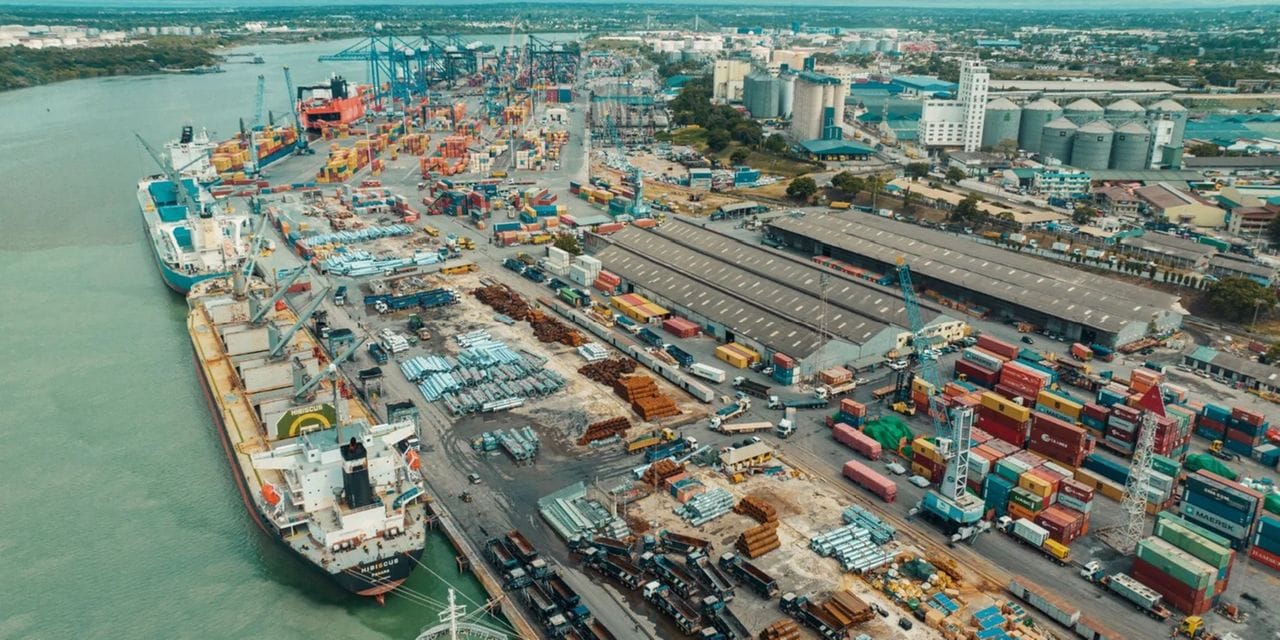
The African Maritime Council’s recent snapshot is useful — and incomplete. Mombasa handled 45.45 million tonnes in 2025. Dar es Salaam moved 27.7 million tonnes in FY2024/25. Lamu processed about 799,000 tonnes after a near-tenfold jump from the year before. Those numbers describe volume. They do not describe power.
The real contest is over corridors: who can move cargo cheapest, fastest, and most predictably from the Indian Ocean to Uganda, Rwanda, Burundi, eastern DRC, South Sudan, Zambia, and Malawi. Ports are only the first mile. Rail, road, dry ports, storage rules, security levies, and political trust decide the rest.
Efficiency Has Quietly Flipped the Script
The World Bank and S&P Global Container Port Performance Index (CPPI) for 2025 is the most awkward data point for Kenya. Dar es Salaam climbed from 360th to 255th. Lamu entered the ranking at 345th. Mombasa slipped from 375th to 396th. In the East and Horn of Africa grouping, Djibouti and Mogadishu sit far ahead; Dar is third regionally; Lamu outranks Mombasa.
CPPI measures time ships spend in port. It is not a verdict on total throughput. Mombasa remains the region’s workhorse. It is a verdict on reliability. When ships wait at anchorage, inventory costs rise, liners skip calls, and landlocked shippers start shopping for another gateway. That is already happening.
Tanzania has used concessions, extra free storage for transit cargo, and a more aggressive Central Corridor pitch to convert frustration at Mombasa into market share. South Sudan’s formal shift toward Dar and Tanga is the clearest political signal. Uganda has kept both options open while deepening SGR links toward Tanzania. Rwanda and DRC cargo is more mobile than Nairobi sometimes admits.
Three Ports, Three Theories of the Future
Mombasa is still the incumbent. Depth of about 15 metres, dense urban constraints, and a channel that is hard to expand put a ceiling on how large it can get. CMA CGM’s reported investment interest and talk of leasing berths are attempts to buy time and productivity. Congestion since mid-2025 — vessels idling, long berth delays, extra security charges on some Juba cargo — has been the incumbent’s tax. Kenya’s answer is a dual-port story: keep Mombasa as the high-volume Northern Corridor machine and let Lamu take the mega-ships.
Dar es Salaam is the efficiency play. DP World and Adani concessions, new berths, and corridor diplomacy have produced a ranking leap that matters to liners even if absolute tonnes still lag Mombasa. The bet is operational elasticity: shorter waits, cheaper storage, and a Central Corridor that looks less like a bottleneck than Kenya’s Northern Corridor did in 2025–26.
Lamu is the optionality play. Natural depth of 17.5–18 metres let it berth Hapag-Lloyd’s 369-metre Baltimore Express — the largest boxship yet to call in East and Central Africa. Cargo is still a rounding error next to Mombasa, but the growth rate and the LAPSSET story (Ethiopia, South Sudan, and a possible Dangote-scale refinery) are why investors keep looking north of Mombasa. The constraints are not the water. They are the road and rail behind the water, security costs in a restive neighbourhood, and the long lag between a deep berth and a filled corridor.
Hinterland, Not Harbour, Will Decide
East Africa’s landlocked economies treat ports as bargaining chips. That is rational. A $5,000 security levy, a 14-day wait, or a missing empty-container agreement is enough to reroute a contract. Tanzania’s 30-day free storage for some transit cargo is not charity; it is pricing strategy. Kenya’s Naivasha ICD and SGR are the correct structural reply, but only if the last-mile cost to Kampala and Kigali falls with them.
Geopolitics is now baked into the schedule. Red Sea and Gulf disruptions have dumped extra calls on East African quays. That is a windfall only if yards, scanners, and trucks can absorb it. Import-heavy African ports already score worse on CPPI because yard chaos is harder to sequence than export stacks. Extra diverted ships make that worse unless terminals and hinterland operators move as one system.
There is also a quiet industrial layer. A Lamu refinery, Tanga blending and storage tied to EACOP, and competing rail gauges are not maritime footnotes. They are attempts to lock energy and bulk flows to a particular coastline. Once a pipeline or a refinery is sunk, cargo follows the pipe more stubbornly than it follows a brochure.
What “Winning” Should Mean
A healthy region does not need one victor. It needs contestable corridors. Monopoly ports get lazy; rival ports get better. The risk is the opposite of cooperation: fragmented standards, duplicate dry ports, and security politics that tax trade instead of protecting it.
Policymakers should stop treating ranking tables as national scoreboards and start treating dwell time, truck turnaround, and corridor cost per tonne-kilometre as the only metrics that landlocked treasuries care about. Concessioning can work — Dar’s recent climb is evidence — if the state remains a demanding landlord rather than a captured one. Lamu only becomes a hub if LAPSSET is finished as logistics, not as a ribbon-cutting itinerary.
Mombasa will remain large. Dar will remain faster on current evidence. Lamu will remain the deep-water wildcard. The cargo will go to whoever makes the hinterland boring: predictable prices, short waits, and rails that actually run. That is a less romantic story than a 369-metre ship on a Kenyan quay. It is the only story that will still matter in 2030.