


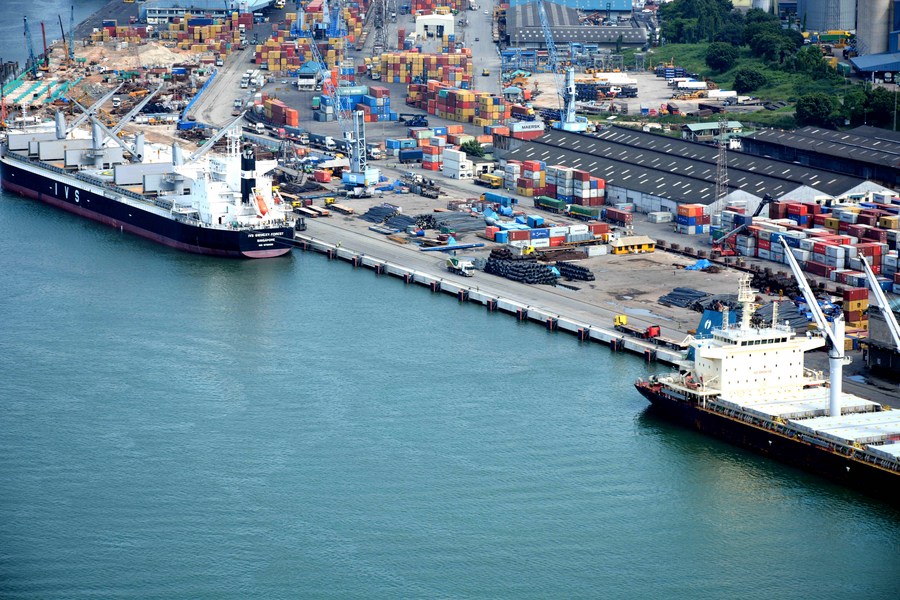
In the high-stakes competition for East Africa’s maritime trade, rankings rarely shift this dramatically without consequence. The World Bank and S&P Global Market Intelligence’s Container Port Performance Index (CPPI) 2025 has delivered precisely such a tremor. Dar es Salaam Port has surged 105 places to rank 255th globally, up from 360th. Its longtime rival, Mombasa, has slipped to 396th from 375th. Kenya’s Lamu Port, entering the index for the first time at 345th, now sits ahead of Mombasa. Within the East and Horn of Africa, Dar es Salaam trails only Djibouti (53rd) and Mogadishu (127th).
These are not abstract figures. The CPPI measures the total time container vessels spend in port—waiting at anchorage, berthing, and handling cargo—normalized for vessel size and workload. Dar es Salaam’s standardized score improved from –176 in 2021 to –7.75 in 2025. This trajectory signals a fundamental shift in how cargo moves through the Central Corridor.
Investment, Not Accident
This improvement is the product of deliberate policy and strategic capital. The Dar es Salaam Maritime Gateway Project reconstructed and deepened berths, widened the entrance channel, and expanded the turning basin, granting access to larger vessels. Private operators, notably DP World—which began terminal operations in April 2024—and Tanzania East Africa Gateway Terminal Limited, have injected capital into equipment, yard systems, and digital tools. The results are tangible: DP World reported discharge times for comparable cargo falling by over 90 percent, from more than 300 hours to under 28. Average container vessel handling time has dropped to roughly three days. For many vessels, ship waiting times have collapsed from over 10 days to berthing on arrival.
Volumes have risen in parallel. The Tanzania Ports Authority recorded a record 33.7 million tonnes in the 2025/26 financial year, up from 27.7 million the previous year and 23.7 million in 2023/24. Transit cargo is increasingly regional: the Democratic Republic of Congo alone accounted for nearly 6 million tonnes—47 percent of transit traffic—followed by Zambia, Rwanda, Malawi, and Burundi. Copper, cobalt, agricultural commodities, fuel, and machinery now flow more reliably from the Indian Ocean toward the Great Lakes and the Copperbelt.
A Regional Realignment
For decades, Mombasa dominated East African transit volumes. Congestion, longer vessel times, and infrastructure bottlenecks have eroded that edge. Shipping disruptions—from Red Sea rerouting to global capacity constraints—have amplified the advantage of ports that can turn vessels quickly. Dar es Salaam’s gains are making it the preferred gateway for shippers who prioritize reliability over legacy preference. Lamu’s entry into the rankings hints at Kenya’s attempt to diversify, yet the data still place it behind Dar on pure efficiency.
The implications extend beyond Tanzania. Landlocked economies measure corridors by door-to-door time and cost. Faster port turnaround expands effective capacity and improves schedule integrity for liners, which in turn supports higher trade velocity along the Central Corridor. Logistics providers and supply-chain managers are already seeing the shift: fewer demurrage claims, more predictable inventory planning, and growing confidence in routing cargo via Dar es Salaam rather than the Northern Corridor.
The Limits of the Metric—and the Next Test
The CPPI is deliberately narrow. It does not capture customs clearance times, road or rail congestion, border delays, or total logistics cost. A ship can leave the berth in record time only for its containers to sit for days at an inland dry port or border post. Tanzania’s Standard Gauge Railway expansion and dry-port investments are therefore critical. Without seamless hinterland connectivity, the port’s efficiency gains risk being partially offset inland.
Global context also matters. Overall CPPI scores showed slight deterioration in 2025 amid lingering disruptions. Sub-Saharan African ports generally lag higher-income peers due to capacity constraints and import-heavy trade structures. Dar es Salaam’s progress is notable precisely because it runs against that regional grain. Sustaining it while volumes keep rising will require continuous investment in equipment, digital coordination among stakeholders, and workforce skills.
The Strategic Stakes
East Africa’s trade architecture is not fixed. Ports that convert infrastructure spending into measurable operational performance capture not only cargo but also the associated economic activity—warehousing, trucking, value-added services, and employment. Tanzania’s bet on modernization, public-private partnership, and corridor integration is producing early returns. Whether those returns compound depends on maintaining the discipline that produced the 105-place jump.
For policymakers across the region, the lesson is straightforward: rankings follow results. Vessel time in port is a leading indicator of competitiveness. Dar es Salaam has demonstrated that targeted investment and operational reform can move the needle. The question now is whether the rest of the logistics chain—rail, roads, borders, and digital systems—can keep pace. If it can, the Central Corridor will not merely compete; it will set the pace for East African trade for years to come.