


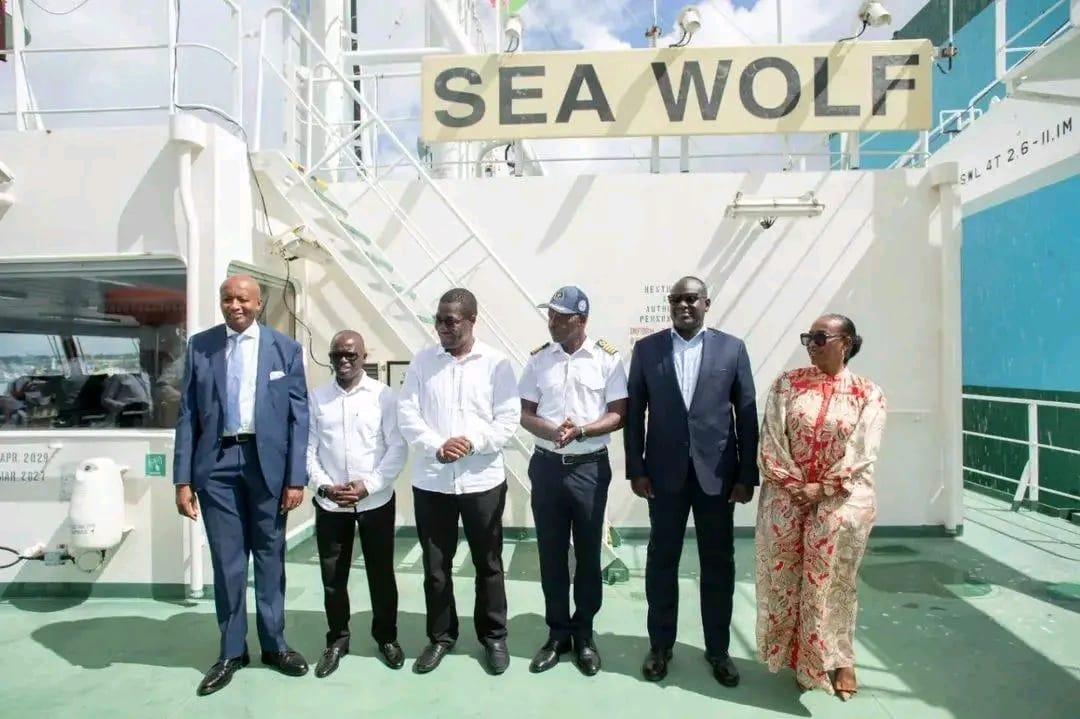
On Tuesday, 29 September 2026, the MT Sea Wolf berthed at Kipevu Oil Terminal II in Mombasa, carrying 40,000 metric tonnes of refined petroleum for the Rwanda National Energy Company. Designated RNEC 001/2026, this was no ordinary shipment. It was the first cargo under the Kenya–Rwanda government-to-government petroleum framework signed in Nairobi just three months earlier, marking the moment a carefully negotiated set of agreements moved from paper into operational reality.
H.E. Amb. Janet Mwawasi Oben was present, alongside Kenya’s Cabinet Secretary for Energy and Petroleum, Hon. James Opiyo Wandayi, and Rwanda’s Minister of State in the Ministry of Infrastructure, Hon. Armand Zingiro. They were joined by RNEC Director Chris Twagirimana, Kenya Pipeline Company Acting Managing Director Pius Mwendwa, Kenya Ports Authority Managing Director Captain William Ruto, and their teams. The symbolism was deliberate: two sovereign states, their technical agencies, and the commercial operators who will make the corridor work stood together as Rwanda began using Kenya’s port, pipeline, and storage infrastructure at scale for its bulk refined petroleum needs.
This is more than a ceremonial berthing. It is the practical activation of a strategic realignment in East Africa’s energy logistics.
The Agreements and Their Ambition
On 29 June 2026, Kenya and Rwanda signed three instruments: a Memorandum of Understanding, a Tripartite Agreement involving the two governments and RNEC, and a Transport and Storage Agreement between RNEC and the Kenya Pipeline Company. Together, they established a clear G2G framework under which Rwanda sources its own refined products and uses Kenya’s Northern Corridor infrastructure for import, storage, scheduling, and inland transport.
The volume ambitions are striking. Rwanda’s petroleum throughput through the Northern Corridor stood at roughly 42,000–50,000 cubic metres in 2025. Under the new arrangement, that figure is projected to rise more than tenfold to over 500,000 cubic metres annually. The 40,000-tonne maiden cargo alone represents close to a month’s consumption for Rwanda. The Kenya Pipeline Company has prepared the ground: extended storage windows for RNEC cargoes from the standard 35 days to 90 days for an initial two-year period, a 1,342-kilometre pipeline network, over 1.13 billion litres of storage capacity, and the Kisumu Oil Jetty on Lake Victoria. RNEC itself has been registered and licensed in Kenya to import, export, and wholesale petroleum products.
This is not charity; it is mutual interest. For landlocked Rwanda, diversifying import routes strengthens energy security and reduces exposure to disruptions on any single corridor. For Kenya, it reclaims a larger share of regional transit business that had shifted heavily toward Tanzania’s ports over the past decade, while positioning Mombasa and the Northern Corridor as the preferred gateway for Great Lakes energy markets.
Regional Integration Beyond Rhetoric
East African Community and African Continental Free Trade Area documents are full of language about deeper integration. This deal tests whether that language can be translated into functioning infrastructure, predictable commercial terms, and reliable throughput. Rwanda’s simultaneous development of a complementary route through Tanzania’s Port of Tanga shows that Kigali is pursuing deliberate multi-corridor resilience rather than exclusive dependence on any one neighbour. That pragmatism is healthy. Competition between corridors, properly managed, drives efficiency; monopolies do not.
The Kenya–Rwanda partnership also carries broader implications. Successful execution will demonstrate that G2G frameworks can deliver security of supply without crowding out private traders. It will test the capacity of Kenya’s institutions—KPC, the Kenya Ports Authority, and the Energy and Petroleum Regulatory Authority—to handle significantly higher transit volumes without compromising domestic supply. And it will offer a template for other landlocked states seeking reliable access to global energy markets through coastal partners.
There are, of course, risks. Execution must match ambition. Pipeline scheduling, storage allocation, quality control, and last-mile logistics through Uganda and into Rwanda must perform consistently. Any prolonged disruption or cost overrun will erode confidence quickly. Political relations between Nairobi and Kigali have improved markedly, yet energy security is sensitive enough that technical reliability must remain the dominant metric. Regional infrastructure projects also require sustained investment; the eventual possibility of extending pipeline services further toward Kigali will depend on commercial viability and coordinated planning among the countries involved.
Shared Prosperity, Realistically Measured
The language of “shared prosperity” is easy to invoke and harder to deliver. Higher throughput through Mombasa generates revenue for Kenyan agencies and supports jobs in port and pipeline operations. For Rwanda, more predictable and potentially more competitive logistics costs support industrial growth, transport, and household energy needs. If RNEC expands distribution into neighbouring markets, the corridor’s benefits could radiate further. None of this is automatic. It depends on transparent pricing, efficient turnaround times, and continued political commitment on both sides.
Ambassador Oben’s presence at the ceremony was fitting. Diplomacy does not end with the signing of agreements; it continues through the practical work of implementation, relationship management, and problem-solving when systems are stressed. The officials and technical teams who have turned the June framework into a living supply chain deserve recognition. Their collaboration is what converts political intent into physical cargo moving inland.
The arrival of RNEC 001/2026 is therefore both a milestone and a beginning. It confirms that Kenya and Rwanda can move from negotiation to delivery. Whether the tenfold volume growth materialises, and whether the corridor becomes a durable pillar of regional energy security, will be determined by the quieter, harder work that follows: consistent operations, fair commercial terms, and the willingness of both governments to treat the partnership as a long-term strategic asset rather than a short-term political win.
In an era of global supply-chain volatility and rising demand for reliable energy in East Africa, that quieter work matters more than any single berthing ceremony. The vessel has arrived. The real test of East African integration is now underway.