


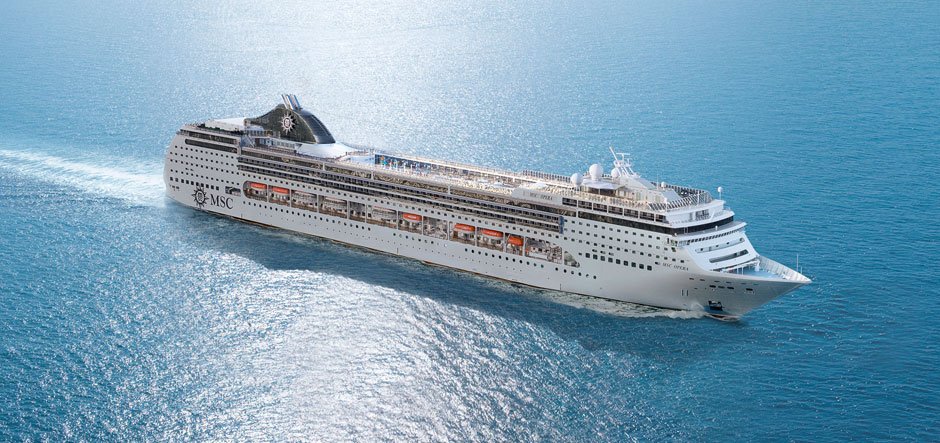
In a stark notice issued in mid-October 2026, MSC Cruises moved to temporarily suspend the embarkation of its Kenyan crew members. Citing “recent public health developments in Kenya,” the company halted deployments until 31 October, promising rescheduling from 1 November with priority for those whose travel was disrupted. The tone was carefully calibrated: an apology for the short notice, firm reassurance that employment status and future opportunities remained intact, and a reaffirmation that MSC “highly values Kenyan seafarers.”
The context is both clear and urgent. On 6 October 2026, Kenya confirmed its first imported case of the Ebola Bundibugyo strain. A Kenyan national who had lived in the Democratic Republic of Congo for years arrived via Uganda, was hospitalised in Nairobi, and tragically died. Contact tracing followed swiftly, with dozens of family members, healthcare workers, and flight contacts placed under monitoring or quarantine. Authorities insist this is an imported incident, not a domestic outbreak: hundreds of thousands of travellers screened, thousands of health workers trained, and no secondary cases reported so far. President William Ruto ordered enhanced measures, and the Ministry of Health activated protocols refined since the DRC outbreak began earlier in the year.
Against this backdrop, MSC’s decision is neither surprising nor unprecedented. Cruise operators function under extreme health scrutiny. Ships are closed environments where an outbreak can cascade rapidly, threatening passengers, crew, itineraries, and brand reputation. Post-COVID protocols remain institutionalised. When a source country records even a single high-consequence pathogen case, temporary restrictions on crew movement from that nationality become a standard risk-management tool. The company’s language—precautionary, time-bound, and employment-protecting—mirrors the careful framing used by airlines and other travel operators during health alerts.
Yet the measure exposes deeper structural tensions in the global maritime labour market and Kenya’s place within it.
Kenyan seafarers have become a significant and growing cohort for MSC. The company has recruited thousands of Kenyans since establishing a local crewing presence, with several thousand currently under contract and cumulative contracts exceeding 7,000. Many work in hotel and hospitality roles, others in deck and engine departments. For young Kenyans, cruise employment offers competitive foreign-currency earnings, skills transfer, and pathways into the broader maritime economy. Parliamentary committees have actively engaged MSC to expand these opportunities, viewing them as part of Kenya’s blue-economy and youth-employment strategies. Delays in Seafarer Identity Documents, visa processing, and medical clearances have long been friction points; a sudden embarkation freeze adds another layer of uncertainty precisely when many had already made travel arrangements.
The short notice is particularly painful. Crew members often rearrange their lives, family responsibilities, and finances around fixed embarkation dates. A suspension until the end of the month, even with priority rescheduling, creates immediate cash-flow stress and psychological strain. MSC’s apology acknowledges this, but apologies do not pay rent or school fees. The company’s insistence that the measure does not affect employment status is legally and rhetorically important, yet the lived experience of delayed income and disrupted planning remains very real.
There is also a question of proportionality and consistency. Kenya’s public-health response has been transparent and relatively swift: isolation of the index case, contact tracing, laboratory confirmation, and public messaging that distinguishes an imported case from community transmission. No evidence has emerged of widespread local spread. Other industries with international labour mobility—aviation, logistics, construction—have not announced equivalent nationality-based freezes. Cruise lines face unique closed-environment risks, but the selective targeting of one nationality raises equity concerns, especially given Kenya’s demonstrated screening capacity at airports and borders.
At the same time, critics of MSC’s caution must confront the alternative. Had the company continued embarkations without pause and a case later been linked to a Kenyan crew member, the reputational and operational damage would have been severe. Passengers, other crew nationalities, port authorities, and insurers all demand demonstrable risk mitigation. In an industry still haunted by the early COVID ship outbreaks, over-caution is often preferred to under-reaction.
The episode also highlights the asymmetric power relationship between global shipping giants and labour-supply countries. MSC’s letter is corporate, unilateral, and final in the short term. Kenyan authorities and seafarer associations can engage, protest, or seek diplomatic clarification, but they cannot compel the company to reverse a health-risk decision. This dynamic is familiar across the maritime sector, where flag states, port states, and operating companies hold the practical levers while labour-sending nations negotiate from a position of relative dependence.
Looking forward, several constructive paths exist. First, MSC and Kenyan maritime authorities should establish clearer, pre-agreed protocols for temporary health-related embarkation restrictions—transparent triggers, maximum durations, and support measures for affected crew, including stipends, clear communication channels, and expedited medical clearance pathways. Second, Kenya’s public-health apparatus can use moments like this to demonstrate capacity: rapid negative testing of prospective crew, digital health certificates, or dedicated screening for seafarers could accelerate the lifting of such freezes. Third, the broader industry should examine whether nationality-based pauses remain the most precise tool, or whether individual risk assessment—based on recent travel history, symptoms, and testing—can replace blanket measures once initial uncertainty subsides.
MSC’s letter ends on a note of mutual commitment: the company values Kenyan seafarers and remains “fully committed” to their planned assignments. That commitment will be measured not by the elegance of the apology, but by the speed and fairness of rescheduling, the support offered during the pause, and the willingness to treat this as a temporary health measure rather than a precedent for broader restrictions.
Public-health threats do not respect borders or corporate schedules. Neither should the response ignore the human and economic realities of the people who keep ships running. Kenya’s first recorded Ebola case is a serious public-health event that demands vigilance. MSC’s precautionary suspension is understandable. The test for both the company and the Kenyan maritime ecosystem is whether they can navigate the next three weeks with transparency, proportionality, and genuine regard for the seafarers whose livelihoods hang in the balance.