


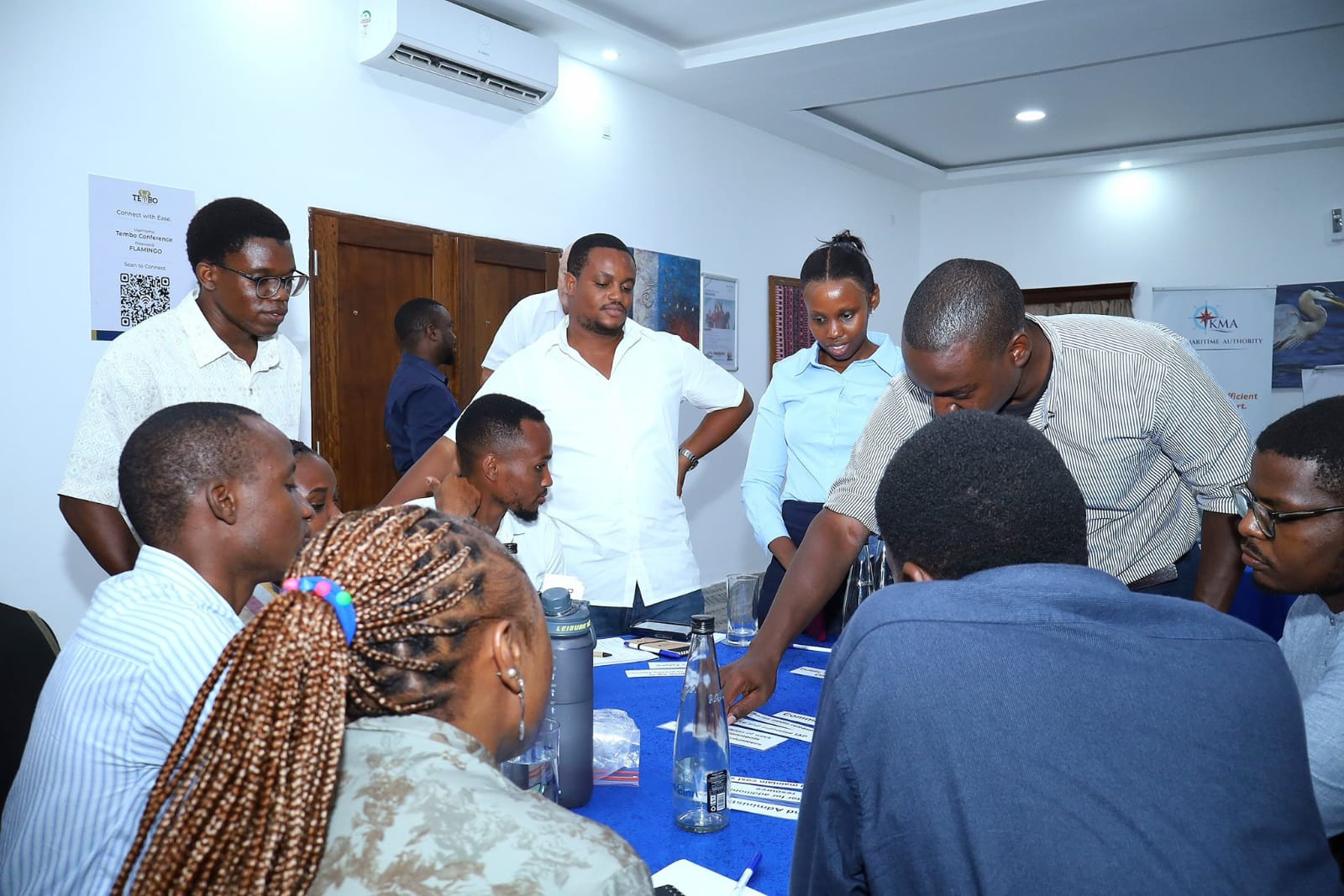
Kenya’s maritime sector is expanding rapidly. The Port of Mombasa continues to grow as East Africa’s primary gateway; Lamu Port is taking shape; shipping traffic is rising; and the recent groundbreaking of the Dangote East Africa Refinery project in Lamu signals a major increase in oil handling and related industrial activity along the coast. Against this backdrop, the Kenya Maritime Authority (KMA), working with the Norwegian Coastal Administration (NCA) under the Kenya–Norway Ocean for Development Programme, is conducting Incident Command System (ICS) training in Mombasa. The programme brings together national government agencies, county governments, and private-sector actors to build practical capacity for oil pollution preparedness and response.
This is no routine workshop. It is a necessary investment in institutional readiness at a moment when the consequences of inadequate preparation would be severe.
The Growing Risk Landscape
Kenya’s coastline and exclusive economic zone support critical economic activity, marine ecosystems, fisheries, tourism, and coastal livelihoods. An oil spill—whether from a tanker incident, terminal operations, or associated infrastructure—can devastate mangroves, coral reefs, fishing grounds, and beaches for years. The environmental, social, and economic costs would be high and long-lasting.
The Dangote East Africa Refinery project, alongside expanding port infrastructure and higher vessel traffic, will increase the volume of petroleum products moving through Kenyan waters and facilities. Higher activity does not automatically mean higher risk, provided systems, people, and coordination mechanisms keep pace. Preparedness is the variable Kenya can control.
The Incident Command System provides a standardised, scalable structure for managing complex emergencies. It clarifies roles—Incident Commander, Operations, Planning, Logistics, Finance/Administration, and Command Staff functions such as Safety, Liaison, and Public Information—establishes clear lines of authority, supports unified command when multiple agencies are involved, and enables the development of Incident Action Plans. In oil spill response, ICS helps move responders from the chaotic initial phase to coordinated, objectives-driven action that prioritises safety, containment, environmental protection, and recovery.
Kenya already has a National Oil Spill Contingency Plan framework and has conducted related exercises and training, including earlier oil-spill capacity-building supported by Norwegian partners. ICS training deepens the operational layer: turning policy into practised, multi-agency competence.
A Multi-Stakeholder Approach Is Essential
The training’s inclusion of national agencies, county governments, and private-sector participants is one of its strongest features. Oil pollution does not respect institutional boundaries. Effective response requires seamless coordination among KMA, the Kenya Ports Authority, the Kenya Coast Guard Service, environmental regulators, county disaster and environment teams, oil-handling facilities, mutual-aid groups, and other operators.
Counties along the coast will often be first on scene or heavily involved in shoreline response, community liaison, and local resource mobilisation. Private operators control critical equipment, personnel, and facilities. Training them together under a common ICS language reduces friction during real incidents and builds the relationships and shared understanding that no plan on paper can fully replace.
Mr. Michael Mbaru, Assistant Director in the Marine Environment Department, opened the training on behalf of KMA Director General CPA Omae Nyarandi. His emphasis on the need for enhanced preparedness in light of port expansion, increased shipping, and the Dangote project correctly frames the stakes. Preparedness is not optional when the scale of activity is rising; it is a core responsibility of a maritime authority charged with protecting the marine environment while enabling economic growth.
The Value of the Norway Partnership
Norway’s experience in integrated ocean management, coastal administration, and pollution preparedness is well established. The NCA’s involvement through the Ocean for Development Programme continues a pattern of practical cooperation that has already supported oil-spill contingency planning, response training, and related capacity work in Kenya. Institutional partnerships of this kind transfer not only technical knowledge but also operational culture—discipline around planning cycles, information management, resource tracking, and after-action learning.
Such cooperation aligns with Kenya’s broader blue-economy ambitions and international obligations under the International Convention on Oil Pollution Preparedness, Response and Co-operation (OPRC). It also strengthens regional leadership. The Western Indian Ocean is a shared space; stronger national systems in Kenya contribute to better collective readiness.
Beyond the Classroom
Training is necessary but not sufficient. Sustained impact will require:
· Regular drills and exercises that test ICS structures under realistic scenarios, including multi-agency and Tier 2/3 events.
· Integration of ICS principles into agency standard operating procedures, equipment inventories, and mutual-aid arrangements.
· Clear designation of trained personnel who can fill ICS roles at short notice.
· Continued investment in equipment, surveillance, and rapid-response assets.
· Transparent after-action reviews that feed improvements into the National Contingency Plan and local plans.
· Attention to the human and community dimensions—protecting responders, engaging coastal communities, and managing public information effectively during incidents.
The Dangote project and port growth also create opportunities. Industrial operators have strong incentives to maintain high standards of prevention and response readiness. Aligning private-sector capabilities with the national ICS framework multiplies national capacity rather than creating parallel systems.
A Strategic Imperative
Kenya is positioning itself as a maritime and logistics hub while seeking to grow a sustainable blue economy. These goals are compatible only if environmental risks are managed with the same seriousness as commercial ones. Oil pollution preparedness is not a constraint on development; it is an enabler of durable development. A major spill would undermine investor confidence, damage reputations, impose heavy cleanup and compensation costs, and harm the very marine resources the blue economy depends on.
The current ICS training in Mombasa is a concrete step in the right direction. It demonstrates that KMA, supported by Norwegian partners and engaging a broad set of stakeholders, recognises the elevated stakes. The test will be consistency: embedding ICS competence, exercising it regularly, and ensuring that when the next incident occurs—whether small or large—the response is swift, coordinated, and effective.
Preparedness is measured not by the existence of plans or the holding of courses, but by the ability of people and institutions to perform under pressure. This training invests in that ability. Kenya’s coast, its economy, and its people deserve nothing less.