


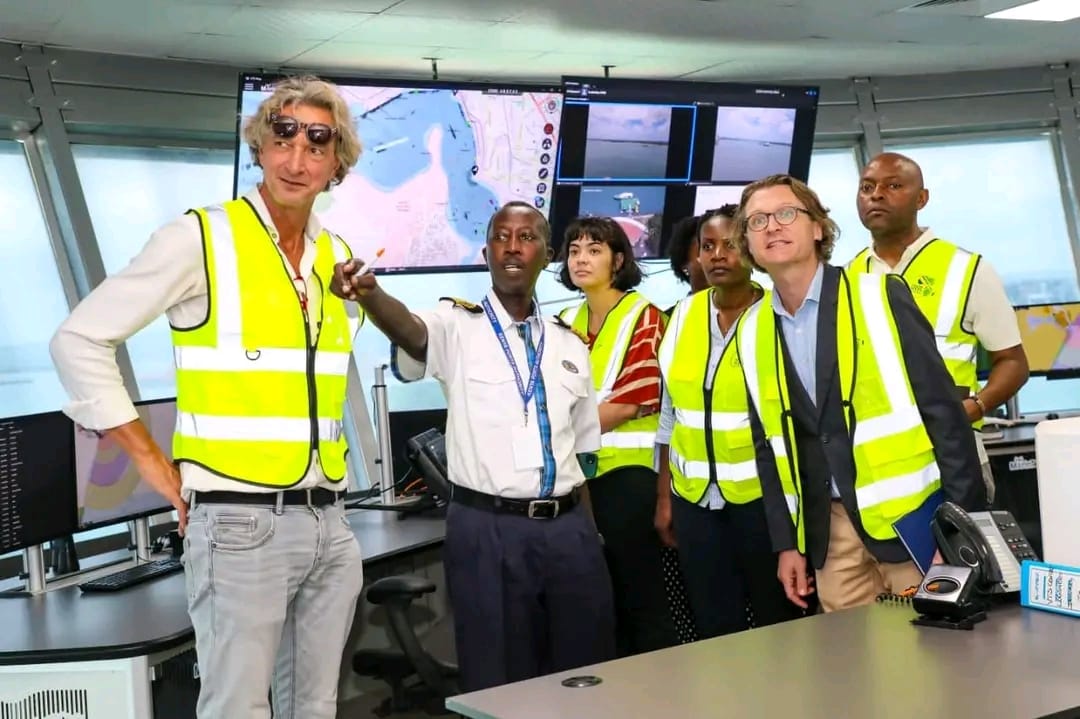
TradeMark Africa’s recent pledge to deepen its partnership with the Kenya Ports Authority (KPA) is far more than a routine diplomatic gesture. When a Dutch-led TMA delegation toured the Port of Mombasa, assessed projects funded by the Netherlands, and heard KPA Managing Director Capt. William Ruto invite investment in the Port of Lamu, it signalled the continuation of one of the region’s most consequential trade-facilitation relationships. It also acknowledged a new reality: modernising Mombasa alone is no longer sufficient for East Africa’s ambitions.
The visit underscored three interlocking priorities: operational efficiency, infrastructure upgrades, and regional trade facilitation. Capt. Ruto highlighted the new Terminal Operating System and Smart Gates as digital tools to accelerate cargo processing and improve visibility for customers as far as Rwanda and Uganda. He pointed to cargo-scanning improvements and a green channel for fresh produce designed to cut delays for time-sensitive agricultural exports. The Green Port Policy was explicitly mentioned as part of a push for sustainable operations. These are not abstract aspirations; they build on more than a decade of measurable results.
A Partnership with a Track Record
Since around 2010, TradeMark Africa (formerly TradeMark East Africa) has channelled substantial resources—tens of millions of dollars, with UK FCDO support often prominent—into Mombasa and the Northern Corridor. Interventions have included road expansions (Port Reitz, Kipevu, Magongo and others), gate and traffic management works, container yard capacity expansion, solar energy installations, and asbestos removal for worker safety. Independent assessments and corridor reports have documented concrete gains: cargo dwell times falling from over 11 days in 2010 to around 3.5 days in recent years; significant reductions in truck turnaround and road travel times in the Mombasa area; and steady growth in throughput. TMA has also supported broader digital trade systems, one-stop border posts, and single-window platforms that reduce paperwork and clearance times across the region.
These investments have not merely greased the wheels of existing trade. They have lowered costs, improved reliability, and helped the Port of Mombasa remain the primary maritime gateway for more than 200 million people across Uganda, Rwanda, Burundi, South Sudan, eastern DRC and beyond. Capt. Ruto’s attribution of part of recent container growth to such partnerships is consistent with the data. For a cargo owner in Kampala or Kigali, visibility is not a luxury; it is a competitive requirement in modern supply chains.
Digital Transformation and the Green Imperative
The emphasis on the Terminal Operating System, Smart Gates, and real-time visibility reflects a necessary shift from physical capacity alone to data-driven operations. Ports that cannot provide transparent, predictable information lose customers to competitors or alternative routes. The green channel for fresh produce and scanning upgrades address a practical pain point for Kenya’s horticultural and agricultural exporters, where delays destroy value. Pairing these with the Green Port Policy—developed with TMA support and focused on emissions, waste, energy efficiency and climate resilience—positions Mombasa to meet growing demands from global shipping lines and buyers who increasingly price in sustainability.
This dual focus on digital efficiency and environmental performance is strategically sound. African ports that lag on either front risk becoming costlier, less reliable, or less attractive in a world of carbon border measures and tighter supply-chain scrutiny. TMA’s role in bridging technical assistance, donor funding and operational implementation has been catalytic precisely because it sits at the intersection of government, development partners and private operators.
Lamu: From Underutilised Asset to Strategic Option
Capt. Ruto’s invitation to explore opportunities at Lamu is the most forward-looking element of the discussion. The deep-water port, with natural depths that can accommodate larger vessels than Mombasa’s constrained channels, was long criticised as a white elephant under the LAPSSET corridor vision. Recent years have begun to change that narrative. Vessel calls and cargo volumes have risen, helped in part by global shipping disruptions that forced rerouting away from high-risk zones. The port has demonstrated a capacity for large discharges and is attracting interest as a potential transshipment and industrial hub.
Major proposed investments—most prominently a large-scale oil refinery project associated with Aliko Dangote—could provide the industrial anchor Lamu has lacked. If realised, such projects would generate sustained traffic in crude imports and refined product exports while creating jobs and deepening the corridor’s economic rationale. Lamu will not displace Mombasa overnight, nor should it try. A diversified port system that offers complementary capabilities—Mombasa for established Northern Corridor flows, Lamu for deeper-draft vessels, northern Kenya, Ethiopia, South Sudan and energy-related trade—strengthens Kenya’s overall position and reduces single-point vulnerability.
Challenges That Cannot Be Wished Away
Sustained progress, however, requires more than renewed commitments. Implementation capacity, coordination among agencies, consistent policy, and private-sector confidence remain critical. Congestion, long-stay cargo, cold-chain reliability and last-mile connectivity continue to surface in logistics performance discussions. Digital systems only deliver if they interoperate across customs, port, transport and regulatory platforms—and if users adopt them. Green policies succeed when they move from documents to capital expenditure on equipment, fuels and infrastructure. Lamu’s long-term viability depends on hinterland connectivity, reliable inland transport, security, and the actual realisation of large industrial projects rather than announcements alone.
Geopolitics and competition also matter. Red Sea and Middle East disruptions have temporarily favoured alternative Indian Ocean gateways, but those conditions can change. Djibouti, Tanzanian ports and emerging facilities elsewhere will continue to compete. Donor funding, while valuable, is not infinite; commercial models, public-private partnerships and catalytic finance will need to play larger roles.
The Larger Stakes
TradeMark Africa’s recommitment arrives at a moment when East Africa is simultaneously pursuing deeper regional integration under the African Continental Free Trade Area, seeking to shift more high-value exports from air to sea for cost and emissions reasons, and contending with climate and geopolitical shocks. Efficient, reliable, greener ports are not peripheral infrastructure; they are foundational to whether the region can convert geography into sustained prosperity.
The partnership model on display—long-term, results-oriented collaboration between a specialised trade organisation, a national port authority, and supportive governments—has already delivered measurable reductions in time and cost. Extending that model with sharper digital tools, genuine green investment, and strategic development of Lamu offers a practical path to greater resilience and competitiveness. The test now is whether renewed political and financial commitment translates into faster cargo movement, lower costs for traders, and tangible opportunities for the economies that depend on these gateways. East Africa’s trade future will be shaped less by isolated announcements than by the disciplined execution of exactly this kind of partnership.