


A recent statement circulating in political circles claims that strategic investments built by the Kenya Ports Authority (KPA) with nearly KSh 150 billion of public money over 15 years have been reduced to a valuation of just KSh 10 billion. It frames this as a “dangerous betrayal of public wealth,” warns investors of future legal challenges under a putative “Ukombozi Government,” and declares that “Kenya is not for sale.” The rhetoric is powerful. The underlying claim is not.
The KSh 10 billion figure does not represent the value of Kenya’s ports, terminals, inland depots, or logistics infrastructure. It originates from a circulating document purporting to show KPA registered as a public limited company with a nominal share capital of KSh 10 billion—10 million ordinary shares at KSh 1,000 each. The National Treasury has publicly labelled that document fake. It was not issued by the ministry, does not record any listing on the Nairobi Securities Exchange, and does not constitute an official valuation of assets. Nominal share capital is a legal and accounting construct used when reconstituting a state corporation under company law. It is not the market value, book value, or enterprise value of the underlying physical assets.
Official financial data tell a different story. For the year ended 30 June 2024, KPA reported total assets of approximately KSh 350–351 billion. That figure appears in both the Authority’s own financial statements and the National Treasury’s consolidated report on state corporations. It places KPA among the wealthier public entities in Kenya. A claimed “valuation” of KSh 10 billion is therefore not merely low; it is disconnected from the audited books by more than an order of magnitude.
Significant public investment has indeed been made. The Second Container Terminal at Kilindini (Terminal 2), expansions at the Inland Container Depot in Embakasi, development of Lamu Port under the LAPSSET corridor, upgrades at Kisumu Port, acquisition of modern ship-to-shore cranes and handling equipment, and supporting road and logistics infrastructure represent multi-decade capital programmes measured in tens of billions of shillings. Aggregating every related outlay over 15 years can produce a figure in the region of KSh 150 billion, depending on what is included. Those investments exist. They are reflected in the asset base. They have not been written down to KSh 10 billion on any official ledger.
What is underway is a legal and commercial reorganisation, not a fire sale. Under the Government-Owned Enterprises Act of 2025, commercial state corporations are being reconstituted as public limited companies owned by the National Government through the National Treasury. The stated purpose is clearer commercial accountability, performance discipline, and the ability to attract private capital for expansion without permanently expanding the fiscal burden on the Exchequer. In parallel, the government has advanced public-private partnership and concession models for specific berths and terminals—most notably parts of Mombasa and Lamu—under a landlord-port framework. In this model, the state retains ownership of the land and core infrastructure while private operators assume operational and investment risk for defined periods in exchange for fees. Earlier proposals for broader privatisation were scaled back. No credible evidence has been produced of a completed transaction that transfers ownership of strategic assets at a fraction of their value.
Political opposition has every right to demand transparency, competitive processes, parliamentary oversight, and independent valuation of any concession or partnership involving critical national infrastructure. Questions about cost overruns on individual projects, utilisation rates at Lamu Port, or the precise terms of future concessions are legitimate and should be answered with data rather than slogans. What is not legitimate is the conversion of a fake registration document’s nominal capital figure into an official “valuation,” or the assertion that strategic assets have already been reduced to a political bounty.
Investors and financial institutions should, of course, conduct rigorous due diligence. Any transaction found to be fraudulent, unlawful, or structured to undermine the public interest can and should be challenged under Kenyan law. That principle is not new, nor is it the exclusive property of any future government. It is already the law. Treating every commercial partnership as presumptively corrupt, however, risks deterring the very capital required to expand capacity, modernise equipment, and keep Mombasa and Lamu competitive as regional gateways.
Kenya’s ports remain publicly owned assets of substantial scale. Their book value is measured in hundreds of billions of shillings, not ten. The claim that they have been reduced to a token valuation rests on a mischaracterised document that the Treasury itself rejected. Rhetoric about betrayal and restitution may mobilise political support; it does not alter the audited numbers. Citizens deserve both accountability for public investment and clarity about what is actually happening. Demanding accountability is not the same as accepting a false premise dressed up as outrage.
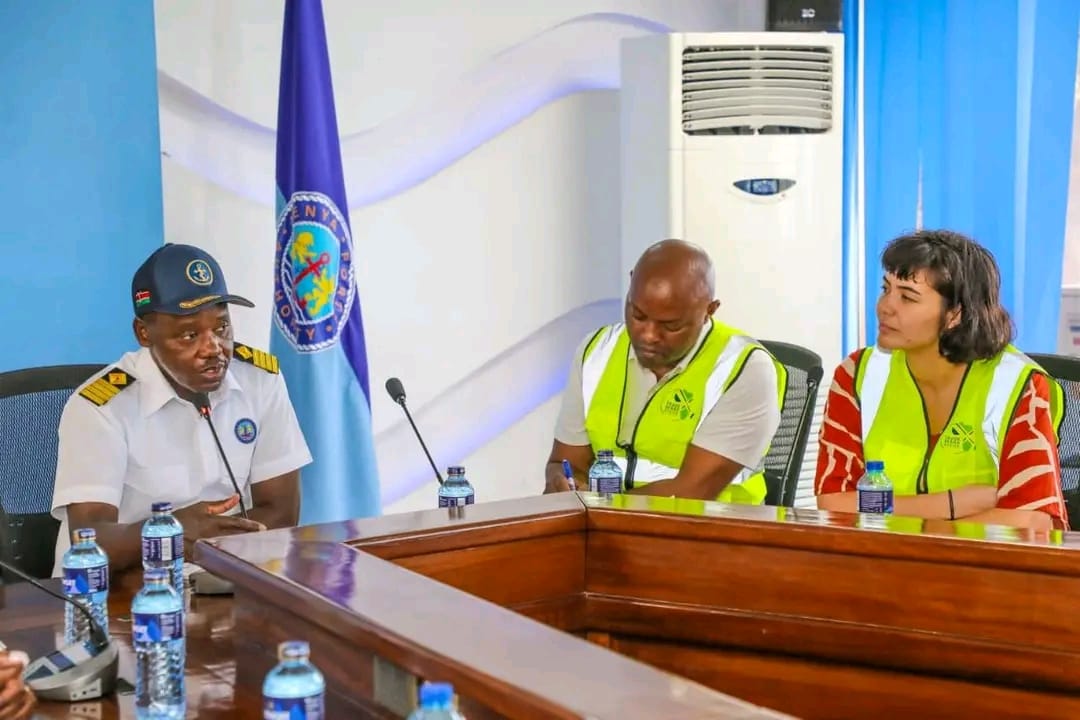
While political rhetoric continues to swirl, the day-to-day work of running and modernising Kenya’s ports goes on. Just yesterday, KPA Managing Director Capt. William Ruto met with delegates from TradeMark Africa at KPA headquarters, who paid him a courtesy visit. Such engagements—focused on trade facilitation, operational efficiency, and strategic partnerships—underscore the reality that KPA remains an active, functioning institution. It is not a distressed asset being quietly auctioned off. The real threat to Kenya’s ports is not a fictional fire sale, but the possibility that sensationalism and misinformation will scare off the very partners needed to keep Mombasa and Lamu competitive.