


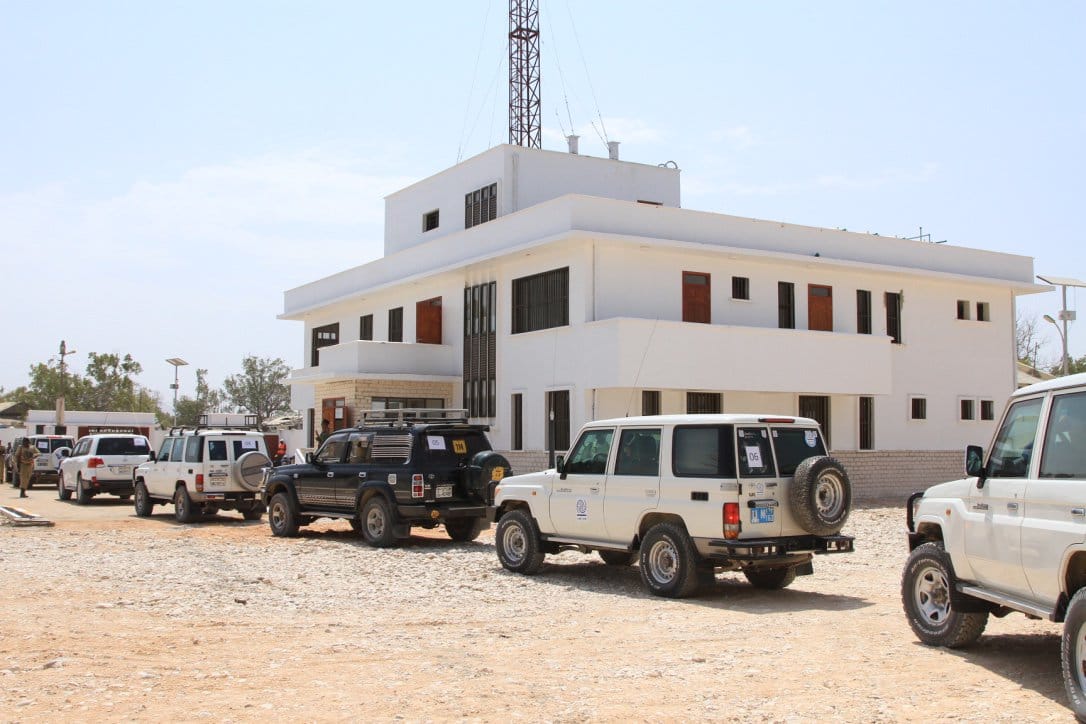
In mid-September 2026, the International Maritime Organization (IMO) convened a four-day Port Security and Inter-Agency Coordination Workshop in Bosaso, the commercial heart of Somalia’s Puntland State. Participants from port authorities, security agencies, and government offices focused on the practical application of the International Ship and Port Facility Security (ISPS) Code and related SOLAS requirements. The tangible outcome was a draft Terms of Reference and a roadmap for a multi-agency Port Security Advisory Committee—an institutional mechanism designed to improve information sharing, clarify roles, and strengthen joint incident response.
On the surface, the workshop—funded by the European Union’s Regional Programme for Maritime Security in the Red Sea Area and opened by Puntland’s Minister of Sea Transport, Ports and Marine Crime Intervention, Shakir Mohamed Guled—looks like routine capacity-building. It is not. In the current regional environment, it represents a modest but strategically significant step toward hardening one of the Horn of Africa’s most important secondary ports at a moment when maritime order in the Red Sea and Gulf of Aden is under severe strain.
Bosaso’s Strategic Weight
Bosaso is Puntland’s economic lifeline. The port handles the bulk of the region’s imports of food, fuel, and consumer goods, and exports of livestock and other commodities across the Gulf of Aden. Customs and related revenues form a substantial share of Puntland’s domestic budget, funding basic governance and security forces. When the port temporarily closed in mid-2026 amid a dispute over fees charged by the concession operator, the effects rippled quickly through local markets and state finances. Any sustained disruption or security failure at Bosaso therefore carries immediate fiscal and humanitarian consequences.
Geographically, the port sits on the southern shore of the Gulf of Aden, close to the critical shipping lanes that feed into the Bab el-Mandeb Strait and the Red Sea. These waters have become one of the most contested maritime spaces on the planet. Houthi attacks on commercial shipping, the diversion of naval assets to the Red Sea and the Strait of Hormuz, and the consequent reduction in deterrence off the Somali coast have coincided with a sharp resurgence in Somali piracy—reaching levels not seen in a decade. At the same time, links between Houthi networks and al-Shabaab have raised the prospect of more sophisticated maritime threats, including arms and technology transfers that could further destabilize the Horn.
In this environment, a functional multi-agency Port Security Advisory Committee is not a bureaucratic nicety. It is an attempt to create a standing mechanism that can share threat intelligence, coordinate responses among port operators, police, coast guard, customs, and immigration, and begin to institutionalize the whole-of-government approach that the ISPS Code presupposes. Previous IMO workshops in Bosaso and Berbera had already laid groundwork on port facility security assessments and national-level committees. The September 2026 event advanced that process by focusing on inter-agency coordination and producing concrete draft instruments.
The Broader Context: Fragmentation and External Interests
Puntland’s relative stability compared with south-central Somalia has made Bosaso attractive to external partners. The United Arab Emirates has long been involved through the port concession, operated by DP World. More recently, the United States has expanded its military footprint in Bosaso, signing agreements with Puntland authorities focused on counter-terrorism and maritime security—moves that have sometimes bypassed or strained relations with the federal government in Mogadishu. These external engagements reflect the port’s dual commercial and strategic value, but they also highlight the political sensitivities of federal-member-state relations inside Somalia.
Security coordination at the port therefore cannot be divorced from the wider political contest between Mogadishu and the federal member states, nor from the competition among external powers for influence along the Red Sea littoral. A purely technical workshop cannot resolve those tensions. What it can do is create practical habits of cooperation among the agencies that actually control access to the port and respond to incidents on a day-to-day basis. If those habits take root, they may provide a modest buffer against both local political shocks and regional maritime insecurity.
Limits and Realism
The roadmap and draft Terms of Reference are only the beginning. Turning them into an operational committee with clear authority, regular meetings, shared databases, and the political backing to act requires sustained follow-through by Puntland authorities and continued external technical support. Institutional capacity in Somalia remains uneven. Corruption, clan dynamics, and resource constraints can erode even well-designed coordination mechanisms. The resurgence of piracy and the presence of al-Shabaab and Islamic State elements in the surrounding mountains further illustrate that port security is only one layer of a deeper set of land-based and maritime challenges.
Moreover, the EU-funded Red Sea programme and IMO’s technical assistance operate in a crowded field of bilateral security relationships. Success will depend in part on whether local ownership is genuine and whether the committee can function without becoming another arena for federal–regional contestation.
Why It Still Matters
Despite these caveats, the Bosaso workshop is worth serious attention. In an era when great-power competition, proxy conflicts, and non-state threats are converging on the Red Sea–Gulf of Aden corridor, incremental improvements in port governance and inter-agency coordination are among the few tools that can still be built from the ground up. Securing Bosaso will not solve the Houthi problem, eliminate piracy, or reconcile Mogadishu and Garowe. It does, however, strengthen one of the few relatively functional commercial nodes on Somalia’s long coastline and creates a small institutional platform that can absorb and share information more effectively when the next incident occurs.
For the African Maritime Council and other regional voices that have highlighted this development, the lesson is clear: maritime security in the Horn is not only about naval patrols or high-profile counter-terrorism deals. It is also about the quiet, unglamorous work of getting port managers, police, customs officers, and local officials into the same room, agreeing on procedures, and building the muscle memory of joint response. That work is now underway in Bosaso. Whether it endures will depend on political will in Puntland and the consistency of international partners. In the current maritime environment, even modest progress is better than another vacuum.