


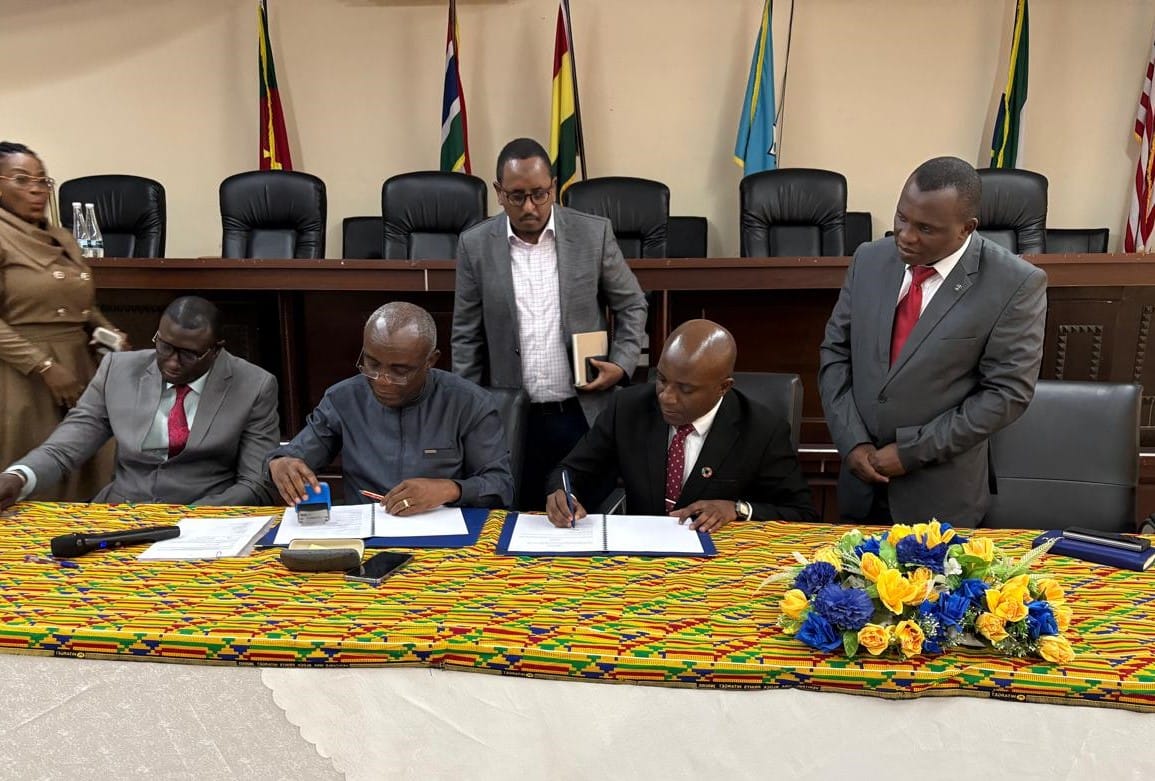
In late 2025, dozens of maritime professionals from West and Central Africa—including Ghana—gathered in Jakarta for intensive courses that rarely make front-page news. Funded by Indonesia at roughly US$1.1–1.3 million, the programmes focused on Training of Trainers (IMO Model Course 6.09) and Assessment, Examination and Certification of Seafarers (IMO Model Course 3.12). These are not routine capacity-building exercises. They represent a calculated South-South partnership that places Ghana’s Maritime Education and Training (MET) instructors at the centre of a broader contest for influence, standards, and labour-market advantage in global shipping.
The Deal in Context
The arrangement sits under the Maritime Organisation of West and Central Africa (MOWCA) and is framed as triangular cooperation endorsed in International Maritime Organization (IMO) forums. Indonesia’s Transportation Human Resources Development Agency (BPSDMP), backed by the Ministry of Finance’s International Development Cooperation Fund, hosted participants from 13 MOWCA states. Ghana featured among them, with clear institutional beneficiaries including the Regional Maritime University (RMU) in Accra—one of the region’s flagship MET institutions—alongside counterparts in Nigeria and Côte d’Ivoire.
The numbers are modest but strategic: approximately 84–96 trainees across batches, all costs covered (flights, accommodation, tuition, per diems). The explicit goal is to produce instructors and examiners whose certificates of competence fully meet the Standards of Training, Certification and Watchkeeping (STCW) Convention. In practical terms, this means Ghanaian trainers return home better equipped to produce seafarers whose credentials are accepted worldwide without the credibility doubts that still dog parts of African certification systems.
This is not Ghana’s first engagement with Indonesia on maritime matters. A Ghana Maritime Authority (GMA) delegation visited Jakarta in July 2024 to discuss port digitalisation, cabotage, and broader cooperation. The 2025 instructor-training programme is a logical next step: moving from dialogue to human-capital transfer.
Why It Matters for Ghana
Ghana has ambitious plans to position itself as a supplier of quality seafarers into a market facing a projected global shortfall that some estimates put near 90,000 by the late 2020s. Africa currently supplies only 4–5% of the world’s roughly 1.9 million seafarers despite its youthful demographics. The GMA has secured European Maritime Safety Agency (EMSA) recognition of Ghanaian certificates, memoranda with major open registries (Panama, Liberia, Bahamas, Singapore, Cyprus), and placement pipelines with operators such as Hafnia and others. Cadets from RMU and even the newer KNUST Marine Engineering programme are beginning to secure sea-time on international vessels.
Yet structural bottlenecks remain. Training a single cadet at RMU costs US$37,000–40,000—an eye-watering figure that limits scale. Instructor quality and examination integrity are decisive. Weak MET capacity produces graduates whose certificates face scrutiny or delays, eroding employer confidence. Indonesia’s ToT and ToE courses directly attack that weak link. Graduates of these programmes can cascade knowledge within RMU and other Ghanaian institutions, raising the baseline for every subsequent cohort of deck officers, engineers, and ratings.
The multiplier effect is real. One well-trained instructor can influence hundreds of cadets over a career. Strengthening examiners improves the credibility of Ghana’s entire certification chain—critical ahead of the IMO Member State Audit Scheme and for sustained EMSA confidence.
Indonesia’s Strategic Calculus
Indonesia is not acting out of pure altruism. As a Category C member of the IMO Council, it is actively cultivating political capital among African states that collectively form a substantial voting bloc. Officials have been frank: the training builds “political engagement” and potential support for Indonesia’s positions within the organisation. It also showcases Indonesian maritime education institutions (STIP Jakarta, BP3IP) as centres of excellence and opens commercial pathways for Indonesian shipping technology, simulators, and services into African markets.
This is classic soft-power maritime diplomacy. China, European nations, and others have long used training and scholarships to build influence in Africa’s blue economy. Indonesia’s entry is notable because it is a developing-country peer offering practical, STCW-aligned expertise rather than purely extractive partnerships. For Ghana, the value proposition is attractive: high-quality, fully funded training without the political baggage sometimes attached to great-power offers.
Risks and Limitations
Several caveats deserve attention. First, scale remains limited. A few dozen instructors trained in 2025 will not transform Ghana’s entire MET ecosystem overnight. Sustained follow-up—curriculum localisation, continuous professional development, and domestic investment—is essential. Second, brain drain is a perpetual risk: well-trained instructors and examiners may be poached by higher-paying international institutions or shipping companies. Third, dependency on external sponsors for critical capacity building can become a structural weakness if Ghana does not progressively internalise the capability.
There is also the broader African context. MOWCA’s collective approach is sensible for regional coherence, yet national priorities differ. Ghana’s relatively stronger institutions (RMU, GMA) may absorb the benefits faster than smaller members, potentially widening intra-regional gaps unless deliberate knowledge-sharing mechanisms are built.
The Way Forward
Ghana should treat this partnership as a catalytic investment rather than a one-off windfall. Practical steps include rapid integration of returned trainers into RMU and other MET centres, with measurable performance indicators on graduate quality and examination consistency; domestic co-financing for expanded instructor pipelines so that Indonesian (and other) scholarships become supplements rather than the main source; leveraging the relationship for deeper bilateral gains—joint simulator development, sea-time placements on Indonesian or Indonesian-managed vessels, and technology transfer in green shipping and digital navigation; and positioning Ghana as a regional hub that re-exports improved MET practices to other MOWCA states, amplifying both developmental impact and diplomatic returns.
Globally, the seafarer shortage is structural, driven by demographics in traditional supply countries, the energy transition, and rising regulatory complexity. Nations that can produce reliable, STCW-compliant officers and ratings at competitive cost will capture disproportionate economic value—remittances, skills transfer, and influence over labour standards. Ghana has the geographic position, institutional foundations, and policy intent. Indonesia’s training offer supplies a missing piece: instructor and examiner excellence.
The real test is whether Accra converts this external boost into endogenous capacity. If it does, the Jakarta classrooms of 2025 will be remembered not merely as a successful South-South project, but as a quiet turning point in Ghana’s long march toward becoming a serious player in the global maritime workforce.