


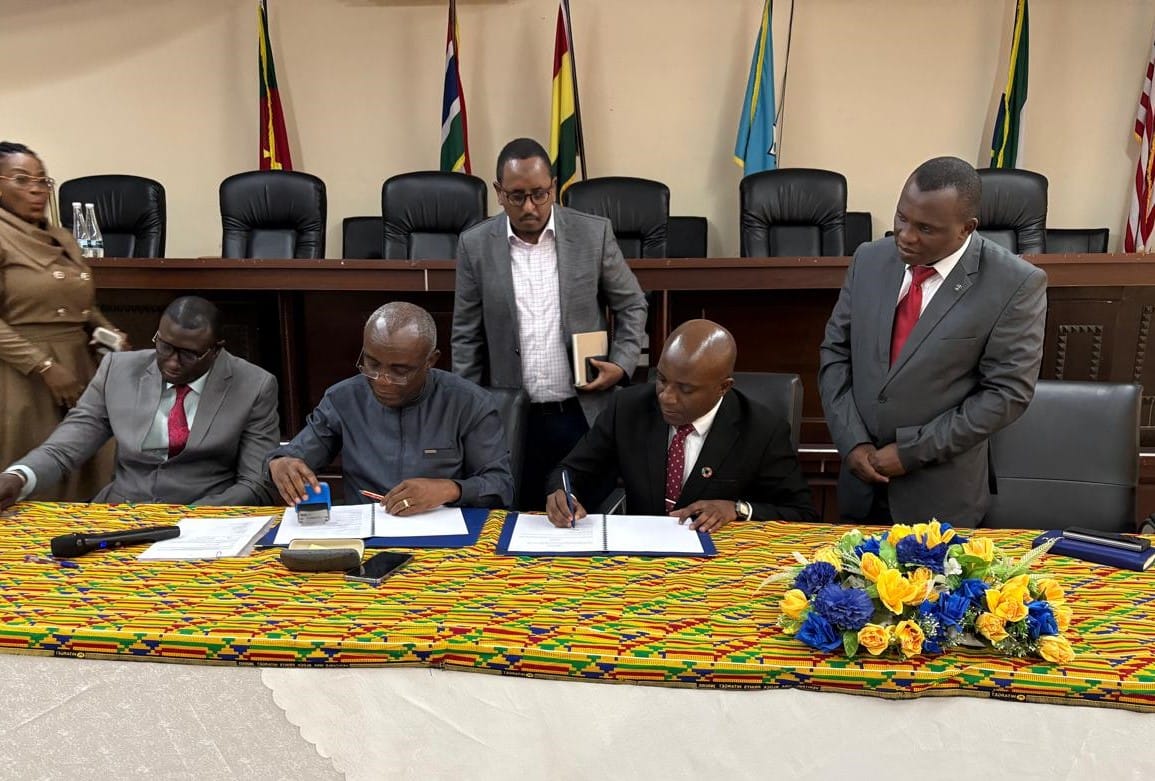
On Monday, October 19, 2026, Eastaway Ship Management—the ship-owning and management arm of the X-Press Feeders Group, the world’s largest independent container feeder carrier—visited the Regional Maritime University (RMU) in Accra. Led by Managing Director Rajneesh Rana and Global Head of Crew Manning Celia Kang Shiwei, and joined by Ghanaian agents from City Manning, the delegation came to explore recruiting qualified cadets and forging stronger industry-academia ties.
This was more than a courtesy call. It was a timely signal of confidence in African maritime training at a moment when the global shipping industry faces a deepening shortage of officers.
The Broader Context: A Global Officer Shortage Meets Rising African Capacity
According to the BIMCO/ICS Seafarer Workforce Report 2026, the industry currently faces an estimated shortfall of about 39,100 STCW-certified officers, with demand projected to require an additional 113,735 officers by 2030. Fleet growth, post-pandemic recovery, stricter regulations, and the energy transition have outpaced training pipelines. Ratings show a surplus, but officers—especially in technical and senior ranks—remain scarce.
In this environment, ship managers are expanding their recruitment geographies beyond traditional sources such as the Philippines, India, China, and Eastern Europe. West Africa, and Ghana in particular through RMU, has become an increasingly attractive option.
RMU has spent years building a credible track record. Partnerships with Hafnia (focused on female cadets and diversity), Danaos Shipping (dozens of recent placements), Bernhard Schulte Shipmanagement (hundreds of cadets over more than a decade, plus a training centre on campus), DNV, and others have delivered measurable sea-time opportunities and employment. These relationships have helped RMU graduates gain international acceptance of their Certificates of Competency and practical exposure that pure classroom training cannot provide.
Eastaway’s interest fits this pattern. As part of X-Press Feeders—which operates more than 100 vessels across Asia, the Middle East, Africa, the Mediterranean, Europe, and the Americas—the company needs reliable, well-trained junior officers and cadets. Its recent moves into dual-fuel methanol vessels and even Suezmax tankers underscore the need for crews ready for both conventional and next-generation operations.
Why This Partnership Matters for Ghana and the Region
For RMU and its students, the potential benefits are clear and immediate. Cadet berths and graduate employment opportunities address one of the biggest bottlenecks in maritime education: the gap between graduation and first sea-time. Dr Gabriel Akakpo, Dean of the School of Graduate Studies, correctly noted that such collaboration would significantly improve job prospects. In a country where youth unemployment remains a structural challenge, high-quality seagoing careers offer competitive pay, international mobility, and transferable skills.
More broadly, successful placements strengthen RMU’s regional role. The university already serves students from Ghana, Cameroon, The Gambia, Guinea-Bissau, Liberia, and Sierra Leone. Demonstrable employment outcomes attract more applicants, encourage governments and private partners to invest in infrastructure—hostels, simulators, laboratories—and reinforce Ghana’s position as a maritime training hub in West Africa.
There is also a soft-power and economic dimension. Ghanaian and West African seafarers who rise through international fleets bring home remittances, professional networks, and technical expertise. Over time, this builds local capacity in ship management, logistics, and the emerging blue economy.
Opportunities and Risks of Industry-Academia Partnerships
These relationships work best when they are substantive rather than symbolic. The strongest existing models include guaranteed or preferred cadet slots, curriculum input and guest lectures from industry practitioners, investment in simulators and training facilities, and clear pathways from cadet to junior officer. Eastaway’s focus on recruitment and building stronger ties is a solid starting point; the real test will be converting discussions into structured Memoranda of Understanding with measurable targets for berths, training support, and retention.
Risks exist. Over-reliance on a few employers can create vulnerability if market conditions change. Quality control must remain rigorous—international ship managers will not compromise on competence and safety standards. There is also the perennial challenge of ensuring that female cadets and graduates from smaller member states receive equitable opportunities, an area where partnerships such as Hafnia’s have already shown leadership.
For Eastaway and X-Press Feeders, sourcing from RMU diversifies their talent pipeline, potentially improves retention through regional cultural affinity on certain trade lanes, and aligns with broader industry efforts to professionalise and expand the seafarer workforce for the energy transition.
Looking Ahead: From Visit to Sustainable Pipeline
The October 19 visit should be viewed as the opening of a conversation, not its conclusion. If both sides move quickly to formalise cooperation—with clear commitments on numbers of cadets, training support, and feedback loops into RMU’s programmes—this partnership can join the growing list of industry relationships that have elevated the university’s standing.
In a world short of officers and long on shipping demand, institutions that consistently produce disciplined, STCW-compliant, and adaptable graduates will become strategic assets. RMU is positioning itself as one of those institutions. Eastaway’s interest is validation of that trajectory.
Ghana and West Africa have the young people. RMU is refining the training. Global operators are now showing up with employment opportunities. Closing the loop between classroom, cadet berth, and career is no longer just a national development goal—it is becoming a practical contribution to keeping global trade moving. The next step is turning this latest expression of interest into durable, high-quality placements that benefit students, the university, the company, and the industry as a whole.