


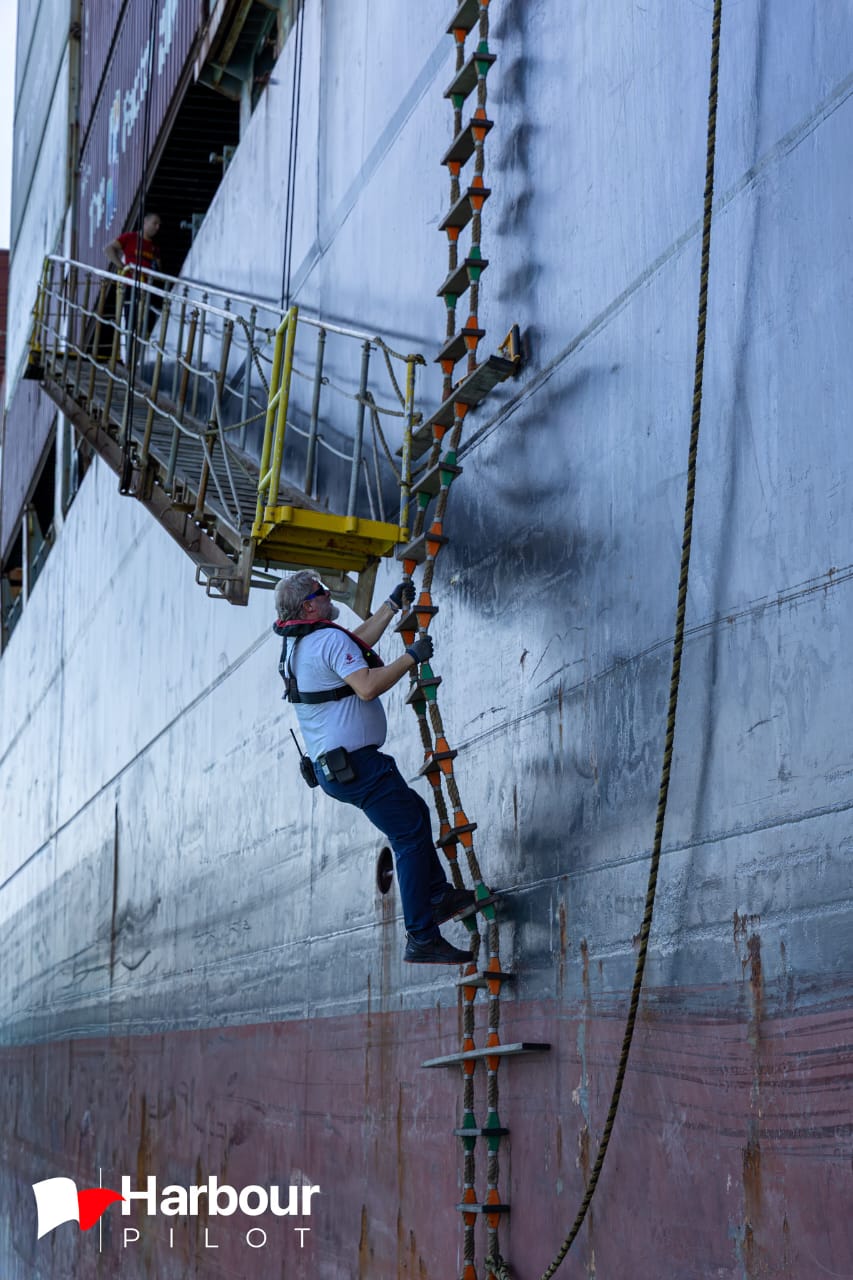
For decades, the pilot ladder occupied a strange place in maritime safety culture. It was the fragile, rope-and-wood bridge between a pilot boat pitching in a swell and a steel hull towering above the water. It was essential, ubiquitous—and, tragically, often treated as an afterthought. A ladder was a ladder. If it looked intact, it was good enough.
That era ends on 1 January 2028. The International Maritime Organization’s amendments to SOLAS Regulation V/23, accompanied by the mandatory Performance Standards in Resolution MSC.576(110), do not merely tweak inspection intervals. They fundamentally reclassify the pilot ladder and its associated manropes from “equipment” to “consumable safety-critical wear items,” impose hard expiration dates, and—most significantly—arm the pilot with the explicit right to refuse a non-compliant arrangement.
The headline numbers are well known: 36 months from manufacture, 30 months from service, and stricter inspections. But to view this as a mere administrative update to a maintenance log is to miss the point entirely. The 2028 amendments represent a cultural stress test for ship management. They ask a blunt question: Will owners and masters invest in safety proactively, or will they wait for a surveyor or a pilot to force their hand?
The Death of the “Patch and Pray” Mentality
Perhaps the most operationally disruptive change is the absolute prohibition on repairing individual steps or spreaders onboard. For generations, a ship’s crew might have replaced a cracked step or tightened a spreader with available materials. Under the new regime, this is forbidden. A damaged ladder is a dead ladder.
This rule is not bureaucratic sadism. It is a recognition that a pilot ladder is a life-support system. A crew-repaired step may hold a 90-kilogram pilot in calm seas, but the physics of a transfer in a two-meter swell involve dynamic loads, twisting, and sudden impacts against the hull. The margin for error is zero. The new regulation forces a binary choice: the ladder is either compliant and certified, or it is removed from service. There is no middle ground.
The Spare Ladder Paradox
The requirement to carry at least one spare compliant pilot ladder and a spare set of manropes—even on ships with arrangements on both sides—is another provision that looks simple on paper but is complex in practice. A spare ladder is not a small item. It requires stowage space, protection from the elements, and, crucially, a crew that knows how to rig it quickly.
Herein lies a hidden operational risk. If a primary ladder fails inspection in a remote port, the spare becomes the primary. But what happens if the spare is deployed and it fails or is damaged during use? The vessel is effectively grounded until a new certified ladder can be delivered. Ship managers must now factor “pilot ladder logistics” into their voyage planning in a way they never have before. A single delayed shipment of a replacement ladder can translate into a missed port call, a delayed cargo operation, and a very unhappy charterer.
The Pilot’s Veto: A New Balance of Power
The amended regulation explicitly states that where a pilot suspects non-compliance, they “should inform the master and refuse to use the arrangement until it is made compliant.” This codifies what was often a matter of informal negotiation into a hard legal right.
Pilots are now incentivized to be strict. As the Cayman Islands Shipping Registry guidance notes, a pilot who uses a non-compliant ladder risks their personal accident insurance being declared void in the event of a claim. No pilot wants to be the test case that validates an insurer’s loophole. The era of the pilot shrugging and climbing anyway—“she’ll be right”—is over. If the ladder is suspect, the ship does not enter port. The commercial pressure this creates will be immense, and it will flow directly downhill from the master to the superintendent to the owner.
The Compliance Calendar Is Not a Suggestion
The timeline is staggered, but it is relentless.
From 1 January 2028: All ships, regardless of when the ladder was installed, must comply with the new inspection, maintenance, and replacement rules. If your ladder was manufactured in 2024, it is already on the clock.
By the first survey on or after 1 January 2029: Existing SOLAS Chapter I vessels (cargo ships over 500 GT and all passenger ships on international voyages) must meet the new technical design and securing standards. This is not just about the ladder itself; it is about the strong points, the securing arrangements, and the approval of the system. For many older vessels, this will require shipyard work—hot work, structural reinforcement, or at the very least, a documented load test of existing strong points to 48 kN.
By 1 January 2030: The same technical compliance applies to non-SOLAS vessels, including many commercial yachts and smaller craft.
A ladder’s failure can have “serious consequences.” That is an understatement. A fall from a pilot ladder is not a workplace injury; it is a fatality. The pilot is often the only person on board who did not choose that specific ship, that specific day, or that specific ladder. They rely entirely on the vessel’s compliance.
What Operators Must Do Now (Not in 2027)
The industry has a two-year runway, but smart operators are already moving. The first step is a brutal audit of every ladder in inventory. Check the manufacture date stamped on the spreaders or the certificate. If it is past 30 months of service, it is already non-compliant for 2028 planning purposes.
Second, assess the securing arrangements. The new standards demand type-approved means of securing ladders at intermediate lengths, and strong points with documented 48 kN breaking strength. If your vessel has no documentation for its pilot ladder strong points, assume they will need to be tested or reinforced.
Third, and most importantly, change the conversation onboard. The new requirements for crew familiarization are not just about ticking a box for a Port State Control officer. They are about ensuring that the able seaman rigging the ladder understands that the pilot’s life depends on the correctness of every shackle, every knot, and every securing point. The 2028 SOLAS amendments cannot legislate vigilance, but they can, and will, penalize its absence.
The pilot ladder has always been simple equipment. But simplicity is not the same as insignificance. The 2028 amendments are the IMO’s belated acknowledgment that the maritime industry has too often treated the pilot’s embarkation as a minor operational detail. It is not. It is the moment of maximum physical vulnerability in a pilot’s working day. After January 2028, the industry will no longer have the excuse of ambiguity. The rules will be clear, the deadlines will be hard, and the pilot will have the final say.
Author’s Note: The analysis above is based on IMO Resolutions MSC.572(110) and MSC.576(110), as well as guidance issued by classification societies and flag administrations including DNV, ClassNK, and the Cayman Islands Shipping Registry. Shipowners and operators are advised to consult their classification society and flag state for specific implementation guidance tailored to their fleet.
Andrew Mwangura is a maritime safety analyst and writer. The views expressed are the author’s own.