


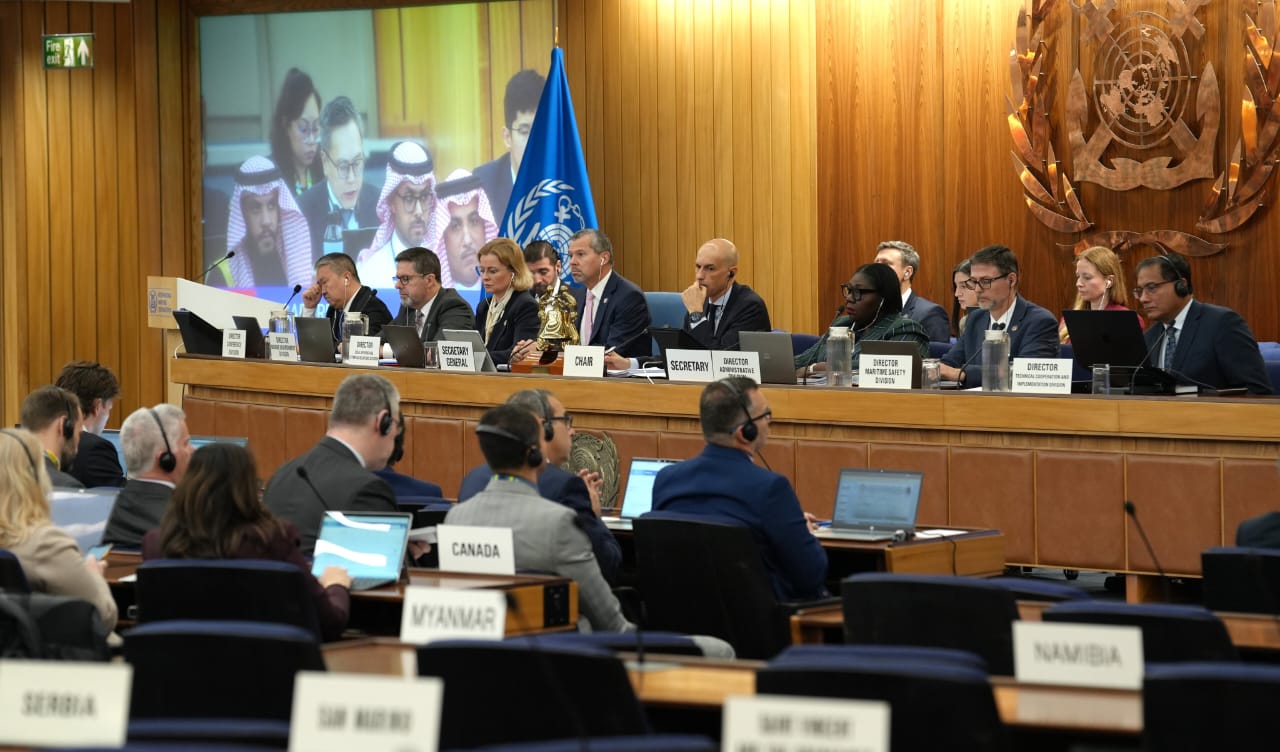
In late November 2025, at the 34th session of the International Maritime Organization (IMO) Assembly in London, Kenya suffered a significant diplomatic and strategic setback. After holding a continuous seat on the IMO Council under Category C since 2001—representing Eastern Africa, the Great Lakes region, and parts of the Western Indian Ocean—the country was voted out for the 2026–2027 biennium. Bangladesh and Denmark also lost Category C seats; Belgium, Nigeria, and South Africa took their places.
The Council is the IMO’s executive organ, responsible under the Assembly for supervising the Organization’s work between sessions. It influences standards on safety, security, environmental protection, and the emerging rules that will shape shipping for decades. Category A seats go to states with the largest interest in providing international shipping services (China, Greece, Italy, Japan, Liberia, Norway, Panama, the Republic of Korea, the UK, and the US). Category B covers those with the largest interest in seaborne trade (Australia, Brazil, Canada, France, Germany, India, the Netherlands, Spain, Sweden, and the UAE). Category C is the competitive open category for states with special maritime interests or those needed to ensure geographic balance—20 seats, elected by secret ballot.
Kenya’s loss means the entire East and Horn of Africa region is without a Council voice for the first time in roughly a quarter-century. Port states including Kenya, Tanzania, and Somalia will now implement rules crafted without their direct input. That matters for Mombasa’s competitiveness, Lamu and LAPSSET ambitions, seafarer welfare, maritime security in the Western Indian Ocean, and the blue economy agenda that successive Kenyan governments have promoted.
Why Kenya Lost
These elections are not pure technical contests. Secret ballots reward sustained relationships, demonstrated value on priority issues, and quiet coalition-building in the corridors long before voting day. Nigeria leveraged its economic weight, oil-driven trade volumes, and positioning on decarbonization. South Africa brought strategic location on Cape shipping routes and credibility on maritime security and sustainability. Both invested diplomatic capital months in advance.
Kenya fielded a high-level delegation led by Mining, Blue Economy and Maritime Affairs Cabinet Secretary Hassan Joho and campaigned on maritime safety, environmental stewardship, blue economy progress, and regional representation. It hosts the IMO Regional Office for Eastern and Southern Africa, the Regional Maritime Rescue Coordination Centre, and related technical centres. Yet the result suggests that reliance on historical tenure and the regional importance of Mombasa proved insufficient against better-prepared rivals. Some observers also pointed to domestic frictions and perceptions of over-regulation or inconsistent engagement as factors that may have eroded confidence among voting states.
The timing sharpened the blow. The IMO is navigating geopolitical tensions, shifting trade patterns, digitalization, and—most urgently—a delayed and contested net-zero framework for shipping. Decarbonization rules will determine compliance costs for ports, influence route economics, and create winners and losers. Without a Council seat, Kenya loses early visibility into regulatory directions, influence over technical assistance programs, and direct networking with Category A and B powers.
This is Kenya’s second recent high-profile setback at the Organization. In 2023 the country lost a hard-fought bid for the Secretary-General post to Panama. Continuous Council membership since 2001 had been a point of pride and a platform for regional advocacy. Its interruption is therefore more than a temporary absence; it is a signal that past performance is no guarantee of future influence.
What the Absence Costs
Council membership delivers practical advantages: early warning of regulatory shifts so that ports, ship operators, and training institutions can prepare; access to capacity-building and technical cooperation; and relationships that facilitate investment and technology transfer. Without it, Kenya and its neighbours risk becoming rule-takers rather than co-shapers. Regional maritime security concerns—piracy risks in the Gulf of Aden corridor, port security coordination, search-and-rescue capacity—will be filtered through non-regional intermediaries. Ambitions for a stronger African voice on an equitable energy transition in shipping and for support to developing coastal states will carry less weight.
For Kenya specifically, the Port of Mombasa’s role as a gateway, the development of Lamu, the growth of a domestic shipping and logistics sector, and seafarer employment all benefit from being present when standards are written. Absence weakens that positioning at a moment when global shipping is undergoing structural change.
How Kenya Can Recapture the Seat
Category C elections occur every two years. The next opportunity is at the 35th Assembly in 2027. Recovery is possible, but it will not come from episodic lobbying in election years. It requires treating maritime diplomacy with the seriousness accorded to trade, security, or climate negotiations.
First, establish permanent, professional maritime diplomatic capacity. Kenya needs dedicated officers who attend every major IMO meeting and technical committee session, not just the high-visibility Assembly. Year-round relationship-building with the full membership—beyond the African group—is essential. Smaller but consistently influential states such as Malta, Singapore, and Cyprus maintain their positions through expertise, reliability, and continuous contribution rather than prestige alone. Kenya should study and adapt those models.
Second, align domestic action with the issues dominating the IMO agenda. Decarbonization is central. Visible progress on green port measures at Mombasa—shore power, alternative-fuel readiness, emissions monitoring—and credible plans for the wider maritime sector would demonstrate that Kenya seeks a seat to add value, not merely to occupy one. Publishing data, sharing regional best practices, and hosting technical workshops would reinforce that message. Concrete delivery on Lamu/LAPSSET maritime components, operational excellence at the Regional Maritime Rescue Coordination Centre, and measurable improvements in port security and seafarer welfare would give campaigners tangible achievements to point to.
Third, rebuild and lead a more coherent Pan-African and Indian Ocean maritime strategy. The simultaneous rise of Nigeria and South Africa while Kenya fell highlights fragmentation. Competition among African states is inevitable, but a coordinated continental approach on core issues—equitable transition, capacity building for developing states, maritime domain awareness in the Indian Ocean—would strengthen every African candidacy and amplify collective influence. Kenya should deepen coalitions with Indian Ocean partners (Mauritius, Seychelles, Madagascar, and others) and work deliberately with other African Council members and aspirants.
Fourth, professionalize the campaign for 2027 from day one. Map voting patterns, cultivate bilateral support well beyond Africa, maintain Cabinet-level visibility between Assemblies, and present Kenya as the reliable voice of Eastern Africa and the Western Indian Ocean rather than a purely national candidate. Hosting and fully supporting IMO regional structures remains an asset; it must be matched by consistent technical participation and political follow-through.
Finally, treat the loss as a governance and foreign-policy lesson rather than a temporary embarrassment. Maritime affairs sit at the intersection of trade, security, environment, and employment. Elevating them within the foreign policy and economic planning machinery—clear lines of responsibility, a sustained budget for engagement, and accountability for results—will serve Kenya whether or not it regains the seat in 2027.
Kenya’s continuous presence on the Council for more than two decades was an achievement. Its interruption is a warning. The Organization’s agenda over the next several years will set the rules for shipping’s energy transition, digitalization, and safety standards. Countries that help write those rules will be better placed to adapt and to attract investment. Those that remain outside will adapt reactively and at higher cost.
The seat is recoverable. Recovery, however, will be earned through sustained professionalism, demonstrable contribution, and strategic patience—not assumed on the basis of history or geography. Kenya’s maritime future, and that of the wider region it has long sought to represent, depends on learning the lesson quickly and acting on it.
Andrew Mwangura is a maritime safety analyst and writer. The views expressed are the author’s own.