


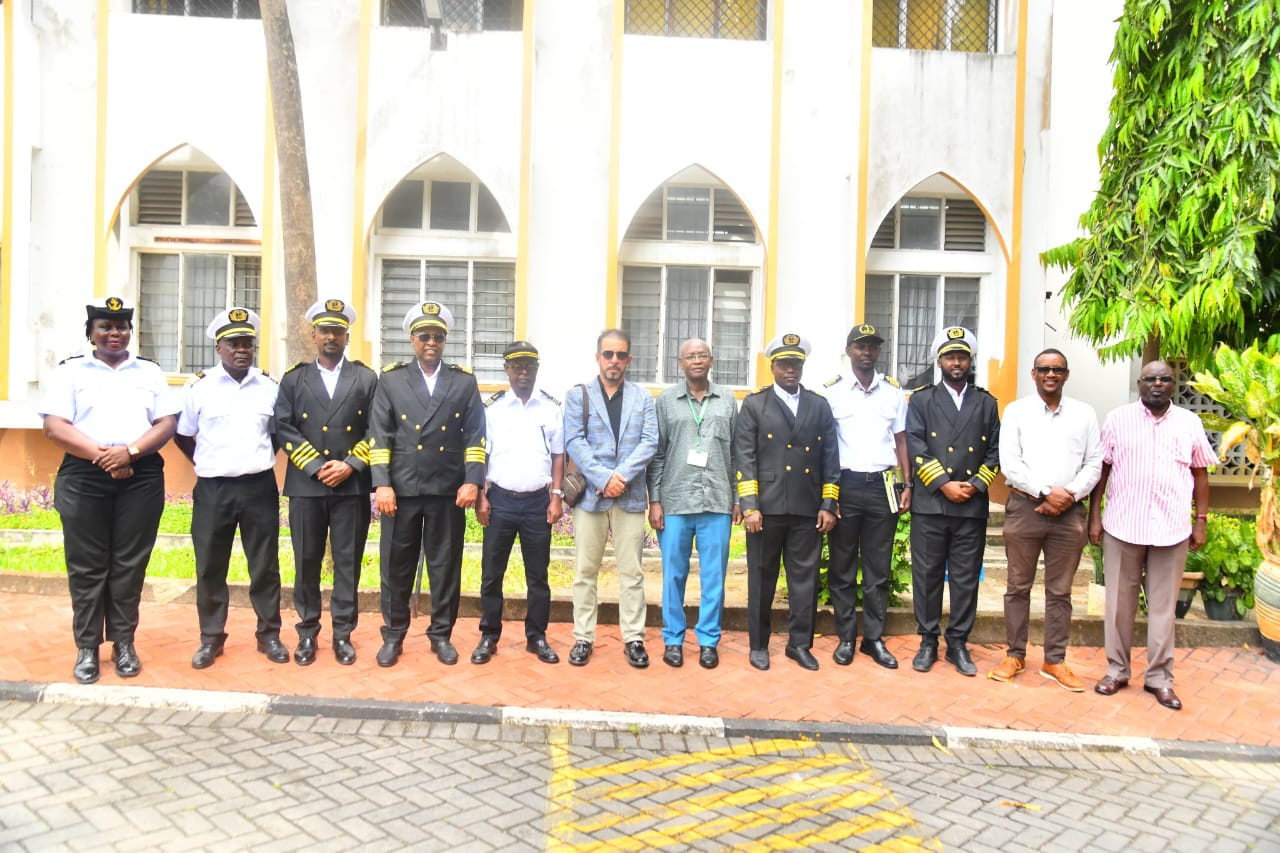
On November 16, 2026, the Technical University of Mombasa (TUM) graduated its second cohort of Marine Pilot Class III trainees drawn from the Mogadishu Port Authority. The event, marked by the familiar pageantry of academic robes and regional partnership statements, is easy to file under “good news from the coast.” That would be a mistake.
This ceremony is not merely another institutional milestone. It is evidence of a deliberate, competence-driven reordering of maritime human capital in the Western Indian Ocean—one with profound implications for safety, sovereignty, trade facilitation, and the credibility of African institutions in a sector long dominated by external expertise.
From First to Second Cohort: Building a Pipeline, Not a One-Off
TUM’s Institute of Maritime and Seafaring Studies (IMSS) recently became the first institution in the region to deliver a competency-based Marine Pilot Class III programme. The curriculum is aligned with the International Maritime Organization (IMO) Resolution A.960, the STCW Convention, SOLAS, ISM, ISPS, and MARPOL standards. Developed with the active participation of practising pilots from the Kenya Ports Authority (KPA), the coursework was tailored to the operational realities of Mogadishu while remaining internationally recognizable.
The second cohort’s graduation confirms that the model is repeatable. A single successful intake can be dismissed as a pilot project; a second demonstrates institutionalization.
The programme is highly practical. It combines classroom instruction, high-fidelity simulation, bridge resource management, confined-water ship handling, and practical exposure to Mombasa’s Vessel Traffic Services and pilotage operations. Graduates leave with skills that translate directly to the berths, channels, and risk profiles of their home port. This is precisely the kind of applied, standards-referenced training that many African maritime administrations have struggled to deliver at scale.
Why Pilotage Matters More Than the Headlines Suggest
Marine pilots are the last line of specialized local knowledge between a foreign-flagged vessel and the physical realities of a port. They carry legal and operational responsibility for the safe movement of ships that may be several hundred meters long—carrying thousands of containers or hazardous cargoes—through waters that shift with tides, siltation, weather, and traffic density.
In ports recovering from prolonged instability or under-investment—Mogadishu being a case in point—competent local pilots are not a luxury. They are a prerequisite for reliable pilotage services, lower insurance premiums, predictable berthing windows, and ultimately, greater confidence among shipping lines and cargo owners.
When pilotage capacity is thin or heavily dependent on expatriates, ports face higher costs, slower turnaround, and persistent vulnerability to knowledge loss. Training Somali pilots in Kenya, under a shared East African framework, addresses both the skills gap and the trust gap. It builds professional networks that outlast any single political cycle.
Regionalism That Works: Kenya as a Maritime Knowledge Hub
Kenya’s ports already serve as a gateway for multiple landlocked economies. Extending that role into specialized maritime education is a logical, high-value progression. TUM’s partnership with the Mogadishu Port Authority and Alport management illustrates a practical form of regional cooperation: one country with established training infrastructure and practising expertise supports another in rebuilding critical operational capacity.
The involvement of KPA pilots in curriculum design and graduation ceremonies further embeds industry relevance and creates pathways for future Class II and Class I progression. This is soft power exercised through competence rather than rhetoric. It strengthens Kenya’s claim to be a regional center of excellence in Maritime Education and Training (MET) while giving Somalia tangible tools to improve the safety and efficiency of its principal commercial port. In a region where infrastructure announcements often outpace institutional capacity, human capital investments of this kind are disproportionately valuable.
Standards, Sovereignty, and the Blue Economy
The blue economy agenda is frequently discussed in terms of fisheries, tourism, and offshore energy. Yet none of those sectors can scale sustainably without safe, efficient ports. Pilotage sits at the intersection of safety regulation, commercial competitiveness, and national capability. By delivering training that meets international benchmarks while remaining responsive to local conditions, TUM and its partners are demonstrating that African institutions can own both the standards and the delivery.
There are longer-term questions worth asking: Can the Class III foundation be expanded systematically into higher classes? Will similar programmes be offered to other regional ports facing pilot shortages? How will the graduates be integrated, mentored, and retained within Mogadishu’s operational structures? And can the model be adapted for other specialized maritime roles—VTS operators, harbor masters, marine surveyors—where East Africa still imports expertise?
A Quiet but Consequential Shift
Ceremonies are easy to celebrate and easier to forget. The more important story is the quiet construction of a regional training architecture that reduces dependence on distant providers, raises the professional baseline for pilotage, and treats maritime skills as a shared regional asset rather than a zero-sum national possession. TUM’s second cohort of Mogadishu pilots is evidence that this architecture is beginning to function.
If East African states continue to invest in such competence pipelines—with the same seriousness they bring to port infrastructure—they will not merely improve individual ports. They will strengthen the safety, reliability, and autonomy of the entire Western Indian Ocean maritime system. That is an outcome worth far more than any single graduation photograph.