


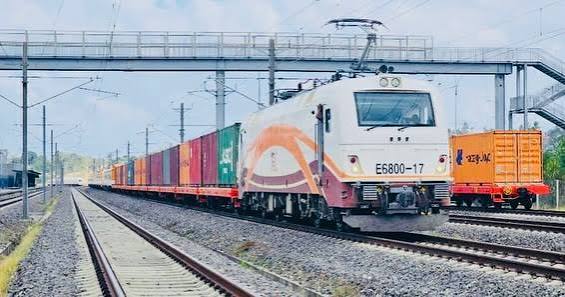
The proposed revival of the Voi–Taveta railway line has raised understandable skepticism with some people arguing that the commercial activities in Taveta town are relatively too little to justify such an investment.
That argument however misses the point. The viability of this railway depends less on Taveta’s local trade and almost entirely on whether the corridor can be transformed into a regional logistics artery linking Kenya, northern Tanzania, Burundi, Rwanda, and the eastern Democratic Republic of Congo.
To understand why this project might work, we must first acknowledge why the original line failed. Taveta’s commercial importance has declined sharply since the late 1970s.
Several structural shifts caused this collapse: the end of traditional sisal and agricultural exports, the deterioration of the old metre-gauge railway, the rise of road transport, falling passenger demand, periodic political and tariff tensions between Kenya and Tanzania, and the concentration of logistics around Namanga and the Port of Dar es Salaam.
Crucially, Taveta and its surrounding county never industrialized. Even government statements admit that freight and passenger traffic had dwindled so much that the line became dormant. That was the old economic model, and it is dead.
However, the current revival is being justified on a completely different foundation. This is no longer a “Taveta railway” in the traditional sense. The Kenyan and Tanzanian governments are marketing it as part of a broader regional chain: a logistics link connecting Mombasa through Voi and across the border at Taveta to Moshi, Arusha, Singida, and eventually Burundi.
It is also intended as a feeder to the Standard Gauge Railway and a tangible expression of East African Community integration. These ambitions change the economics entirely. If freight from Burundi, Rwanda, eastern DRC, northern Tanzania, and inland agricultural zones moves through this corridor, then Taveta itself does not need to generate huge local volumes. Railways around the world succeed as transit corridors, not merely as town-serving lines. This project will live or die on that distinction.
The real strategic asset in this plan is Voi, which is not a border post but a logistics hub. The strongest economic logic for the revival rests on turning Voi into a transshipment centre. Under the proposed model, cargo arrives by SGR from Mombasa, is transferred at Voi, and then moves along the metre-gauge line to the border at Taveta and onward into Tanzania.
Government plans already include a dry port and cargo handling facilities at Voi. In this configuration, the railway’s success hinges less on Taveta’s retail economy and more on port congestion relief, freight diversion from overloaded roads, regional transit trade, and overall logistics efficiency. That is a very different set of variables.
There are also local resources that could help drive demand. Taita Taveta County possesses underexploited deposits of gemstones, limestone, iron ore, and construction materials, alongside horticulture, livestock, and other agricultural products. Bulk commodities are precisely what railways are designed to carry.
Government officials have repeatedly cited mining and agricultural exports as future traffic generators. If industrial-scale mining expands not only in Taita Taveta but also in Arusha, Singida, or western Tanzania, the railway could gain steady freight demand. These are realistic possibilities, not mere fantasies.
Yet serious threats remain. Road transport dominance is the biggest danger. Today, trucking is flexible, faster for small cargo, privately driven, and deeply entrenched. The border post at Taveta–Holili already operates heavily through road freight systems.
Unless governments subsidise rail freight, streamline customs procedures, reduce wagon delays, and guarantee reliability, transporters will continue preferring trucks. This is precisely why many old metre-gauge railways in East Africa collapsed in the first place. The railway cannot succeed simply by existing; it must be cheaper and more reliable than the lorry.
Another structural concern is the track itself. The revived line remains metre gauge rather than standard gauge. This creates cargo transfer inefficiencies, slower speeds, lower axle loads, and compatibility problems with modern freight systems.
Critics argue that Kenya may be investing billions into infrastructure that could eventually struggle against Tanzania’s modernising rail network, upgrades along the Dar es Salaam corridor, and future SGR expansions. That criticism is significant. Public skepticism about Kenya’s broader railway strategy often reflects this worry.
So what is the economic reality today? The line is probably not fully commercially viable yet, at least not immediately. The project currently appears more politically strategic, regionally symbolic, and integration-driven than commercially self-sustaining in the short term. For the railway to become genuinely viable, several things must happen simultaneously. Kenya–Tanzania trade growth must strengthen significantly. Border operations at Taveta–Holili must become efficient and predictable.
Freight guarantees from the Port of Mombasa are critical. Mining and agricultural industrialisation needs to materialise. The dry port at Voi must succeed. Most essential of all, total logistics costs on the railway must fall clearly below those of trucking. Without these conditions, the railway risks becoming underutilised, subsidy-dependent, and politically celebrated but commercially weak.
The old economic logic of the Voi–Taveta railway died decades ago. The new project can only work if it evolves into a genuine regional freight integration corridor rather than relying on Taveta’s local economy alone. Skepticism is therefore economically justified. Taveta trade alone cannot sustain the railway.
Passenger demand alone cannot sustain it. Historical nostalgia cannot sustain it. Its future viability depends entirely on whether East African regional logistics and transit trade are successfully redirected through this corridor at scale. That is a difficult goal, but not an impossible one. The difference between failure and success will be found at Voi, at the border post in Taveta, and along the entire chain from Mombasa to the Great Lakes.