


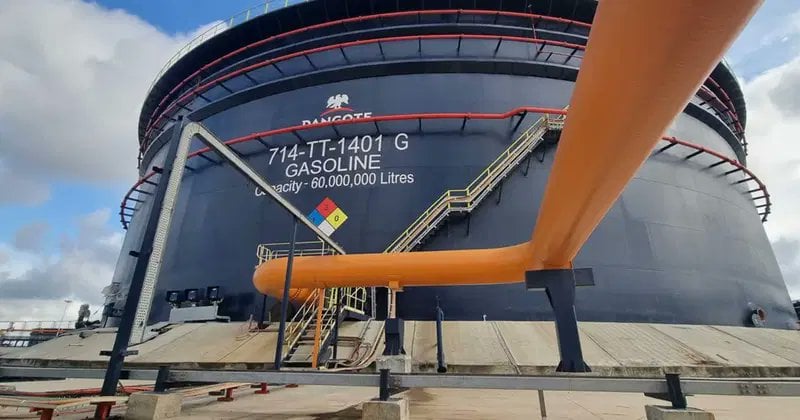
In a development that has sent ripples across East Africa, Aliko Dangote—Africa’s wealthiest industrialist—has signaled a strong preference for building his ambitious 650,000-barrels-per-day (bpd) oil refinery in Mombasa, Kenya, rather than the previously touted site in Tanga, Tanzania.
Less than three weeks after the high-profile announcement at the Africa We Build Summit in Nairobi on April 23, 2026, Dangote cited Mombasa’s deeper port, larger economy, and higher fuel consumption as decisive advantages.
In an interview with the Financial Times published on May 10, 2026, Dangote stated unequivocally: “I’m leaning more towards Mombasa, because Mombasa has a much larger, deeper port.”
He further noted: “Kenyans consume more. It’s a bigger economy.” The interview has since been widely reported by Channels Television, The Kenyan Wall Street, APAnews, among others. Dangote added that crude oil for the refinery could be transported by ship and need not be located near the East African Crude Oil Pipeline terminating at Tanga.
The $15–17 billion project, modeled after his transformative facility in Nigeria, now hinges on Kenyan President William Ruto’s green light. “The ball is in the hands of President Ruto,” Dangote told the FT. “Whatever President Ruto says is what I’ll do.”
This rapid shift is not a diplomatic snub of Tanzania; rather it is a clear-eyed business decision—one that East African leaders should study closely rather than lament.
East Africa currently imports nearly all its refined petroleum products, leaving the region vulnerable to global price shocks, supply disruptions, and massive foreign exchange outflows.
A mega-refinery of this scale could process crude from Uganda, Kenya, South Sudan, and the DRC, slash import dependency, create thousands of direct and indirect jobs, spur ancillary industries, and position East Africa as a regional energy exporter.
Dangote’s track record in Nigeria—where his refinery has begun to reshape fuel markets despite well-documented challenges—lends credibility to the ambition.
Mombasa’s established port handles significantly larger vessels, offers deeper drafts and superior logistics, and integrates seamlessly with existing distribution networks. Kenya’s larger domestic market provides a ready offtake base that reduces commercial risk. These are key considerations for a multi-billion-dollar investment that must deliver returns while navigating volatile oil markets, feedstock uncertainties, and regulatory hurdles.
The Tanga Episode
The initial Tanga announcement that the refinery was earmarked for Tanzania’s Tanga exposed deeper fault lines. President Ruto’s enthusiastic public rollout, alongside Dangote and Uganda’s President Museveni, apparently caught Tanzanian authorities off guard.
President Samia Suluhu Hassan publicly questioned why a major project on Tanzanian soil was announced without proper consultation.
During a joint press briefing in Dar es Salaam on May 4, she stated: “While we were speaking inside, I pressed Ruto and asked him: you went ahead and announced a refinery in Tanga which I wasn’t aware of. He will explain himself why he made that announcement.” This highlighted issues of sovereignty, coordination, and trust within the East African Community.
This episode underscores a recurring African challenge: grand regional integration rhetoric often collides with national interests and execution gaps. Political enthusiasm cannot substitute for thorough feasibility studies, stakeholder alignment, environmental assessments, and ironclad commercial agreements.
Tanga may have offered symbolic balance or pipeline synergies, but ports do not lie—logistics favour Mombasa.
Opportunities and Risks for Kenya
For Kenya, this is a golden opportunity. Hosting the refinery would revitalize Mombasa’s economy, leverage the dormant Kenya Petroleum Refineries Limited site, boost government revenues, and cement the country’s role as a regional hub.
President Ruto should move decisively but wisely: secure clear terms on local content, technology transfer, environmental safeguards, and equitable regional access to refined products. Overpromising or rushing approvals could replicate Nigeria’s early teething problems with the Dangote refinery. Ruto has already indicated that East African governments plan to invest directly alongside private investors “so that when you make the money, we also make the money.”
For Tanzania, the shift is a disappointment but not a disaster. It should serve as a catalyst for improving port infrastructure at Tanga and strengthening policy predictability to attract future mega-investments. Dangote has left the door open, noting he could still build in Tanzania “if they are able to sort themselves out.”
Regional cooperation need not mean every project is shared; complementary strength.