


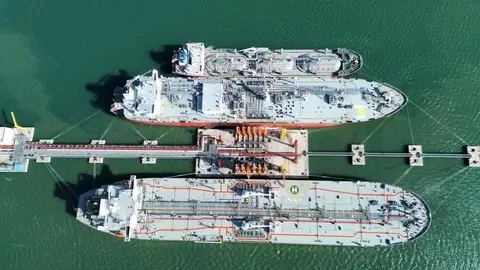
In May 2026, the Kenya Ports Authority launched two ambitious tenders that together represent one of the most serious attempts in recent years to break the cycle of underperformance at Kenya’s ports.
They include Tender No. KPA/218/2025-26/CO for the lease of critical cargo-handling equipment and operating services, and Tender No. KPA/204/2025-26/CO for a framework contract supplying skilled and semi-skilled labor.
They illustrate an important step in the push to modernise operations at Mombasa, Lamu, and even Kisumu, addressing both the hardware deficit and the human capital gap that have long constrained throughput, safety, and competitiveness.
The equipment tender is breathtaking in scale. It seeks multiple Ship-to-Shore gantry cranes—including six for Lamu with advanced specifications capable of handling ultra-large container vessels—dozens of Rubber Tyred Gantry cranes with hybrid diesel-electric technology, terminal tractors, reach stackers, mobile harbor cranes, and marine craft.
The performance demands are equally rigorous: 99% uptime, 35 moves per hour for STS cranes, zero safety incidents, rapid response and repair timelines, and full lifecycle responsibility for maintenance, insurance, and spares resting squarely on the service provider.
Complementing this, the labor tender seeks hundreds of qualified personnel per shift—250 terminal tractor operators, 150 RTG operators, 30 STS gantry operators, 215 forklift operators, tally clerks, signallers, technicians, artisans, and marine crew—operating across three eight-hour shifts, seven days a week.
Each role comes with detailed minimum throughput targets, 100% stacking accuracy requirements, and a zero-incident safety mandate. Staff must hold relevant certifications, demonstrate experience, and undergo continuous training, with payments explicitly linked to key performance indicators and penalties for shortfalls.
Taken together, these documents signal a welcome shift from aspirational planning to enforceable accountability, and KPA is no longer accepting mediocrity in equipment reliability or workforce productivity.
Both tenders demonstrate sophisticated procurement thinking. The equipment lease model avoids massive upfront capital expenditure while transferring operational and maintenance risk to a specialist provider—a pragmatic choice given fiscal constraints and the need for speed. The emphasis on hybrid, lower-emission equipment positions Kenyan ports favourably in an era of decarbonisation pressures from shipping lines and cargo owners.
The labor framework brings necessary structure: clear qualifications, shift coverage, professional conduct rules, safety protocols, and reporting requirements. Linking payment to berth productivity, vessel turnaround, truck turnaround, and zero incidents creates powerful incentives for performance, while localisation elements and compliance with Kenyan labor laws further align the procurements with national developmental goals.
From a mariner’s perspective, the focus on safety—zero incidents, proper PPE, pre-shift inspections, toolbox talks, and qualified operators—is particularly encouraging, because a well-equipped and well-staffed port is fundamentally a safer port for seafarers and shore workers alike.
Despite these strengths, significant implementation risks must be confronted honestly. World-class equipment is only as good as the operators and technicians behind it, so the labor tender must deliver personnel capable of immediately achieving aggressive productivity targets on the new leased assets.
Coordination between the two contracts will be decisive, and equipment data integration with KPA’s Terminal Operating System should receive explicit attention to avoid information-layer bottlenecks. The equipment tender aggregates an unusually broad scope across multiple locations, and few firms may possess the balance sheet, technical expertise, and regional experience to deliver it credibly.
Similarly, the labor tender’s massive per-shift headcount tests the depth of Kenya’s skilled maritime workforce and the contractor’s recruitment and training capacity. High standards on paper mean little without robust monitoring, so KPA and the Public Procurement Regulatory Authority must maintain vigilant post-award oversight, especially on localisation commitments, insurance compliance, and penalty application.
Past procurement controversies in the sector make transparent evaluation essential. Finally, while the tenders emphasise qualifications and experience, Kenya should view this as an opportunity to invest in long-term skills transfer; genuine localisation beyond paper targets will determine whether these contracts build national capacity or create dependency.
Mombasa remains the primary gateway for East Africa’s landlocked economies, and Lamu’s development under LAPSSET could reshape trade patterns. Improved vessel turnaround, lower dwell times, and greener operations will directly reduce logistics costs while strengthening Kenya’s position against regional competitors. These two tenders constitute a serious, technically sound foundation for transformation, yet the ultimate verdict will be written not in the tender documents but in the months following contract award: in actual crane moves per hour, vessel turnaround statistics, and measurable gains in port competitiveness. Kenya’s ports have waited long enough.
The equipment and labour now being procured must deliver the reliable, world-class operations that East Africa’s economies desperately need. Success here would mark a genuine inflection point—moving Kenya’s maritime gateway from perpetual potential to present performance. The port cannot wait. The region is watching.
Andrew Mwangura is Chairman of the Veteran Seafarers Association with deep expertise in East African ports, maritime policy, and Indian Ocean trade.