


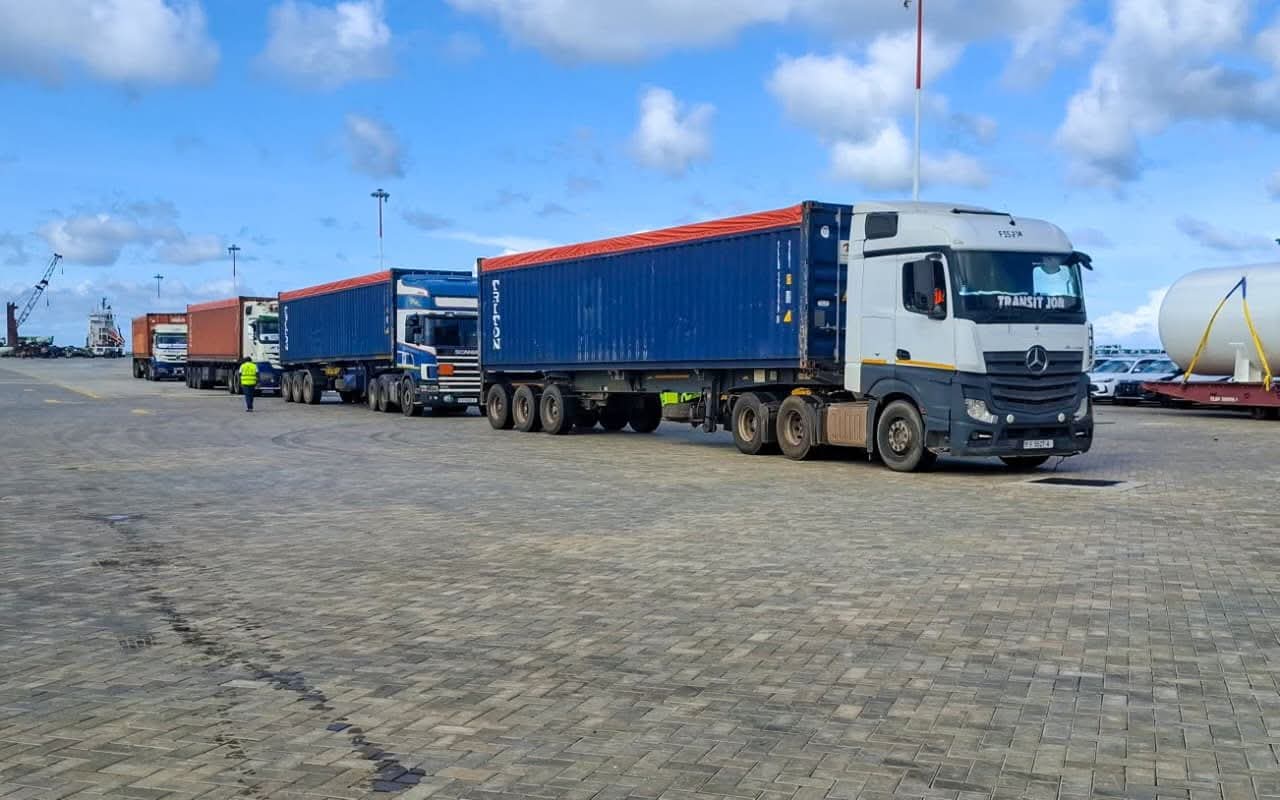
The Port of Mombasa has stood as East Africa’s most strategic commercial lifeline—an engine of regional trade not only for Kenya but also for landlocked economies from Uganda to South Sudan and the Democratic Republic of Congo. This role dates back to many decades.
Its recent efficiency gains, driven by digitization, infrastructure expansion, and institutional reforms, have been widely celebrated. Yet, as the latest developments suggest, those gains now hang in the balance.
The re-entry and proliferation of multiple state agencies within the port ecosystem—reportedly rising from a leaner framework back toward a crowded field—signal a troubling regression.
What was once a coordinated, streamlined clearance process now risks sliding back into a bureaucratic maze. And in maritime logistics, time lost is not just money—it is competitiveness forfeited.
At the heart of the concern lies duplication of roles. When multiple agencies perform overlapping mandates—whether in inspection, clearance, or regulatory compliance—the result is predictable: delays, rent-seeking opportunities, and confusion among port users.
For shipping lines, clearing agents, and cargo owners, this translates into longer dwell times, higher costs, and diminished trust in the system.
This is no abstract concern. The Port of Mombasa has grappled with exactly this problem before. Prior to the consolidation reforms of the past decade, cargo clearance could take several days longer than global benchmarks.
The introduction of the National Electronic Single Window System and the rationalization of agency presence were meant to cure precisely this inefficiency. Reversing that progress now risks undoing years of hard-won institutional learning.
To be clear, regulation is necessary. Ports are high-risk environments requiring oversight on matters ranging from security and customs to health and environmental standards. But regulation must be smart—not excessive. The goal should be coordination, not congestion.
The Kenya Ports Authority (KPA), together with the Kenya Revenue Authority (KRA) and other stakeholders, must resist the temptation to equate more oversight with better governance. In fact, the opposite is often true. The world’s most efficient ports—whether in Singapore, Rotterdam, or Dubai—operate on integrated systems where agencies share data seamlessly rather than duplicating processes physically.
Consider how leading ports in the global north manage this balance. At Rotterdam, just one national customs authority handles clearance, with physical inspections occurring only by exception. Digital data-sharing across agencies is the norm, not a hard-won reform.
In Hamburg, multiple authorities do exist—customs, police, water police, and port authority—but they operate under a single coordination framework with shared risk-assessment platforms. Their presence is sequenced, not simultaneous.
Meanwhile, Antwerp has driven agency consolidation so far that most regulatory checks happen off-dock, allowing the port to function primarily as a logistics engine, not a government outpost.
Across the Atlantic, North American ports offer equally instructive models. At the Ports of Los Angeles and Long Beach—America’s busiest container complex—over a dozen federal, state, and local agencies have jurisdiction, including Customs and Border Protection, the Coast Guard, the Environmental Protection Agency, and agricultural inspectors.
Yet they achieve fluid operations through the Single Window system, where all agencies access the same digital submission without requiring separate physical inspections or duplicate paperwork. The Port of Vancouver, Canada’s largest, operates under the National Maritime Single Window, integrating 17 different regulatory bodies into one seamless digital interface.
Cargo is held only if risk algorithms flag an issue—not because an agency insists on stamping paper at the gate. Even the Port of New York and New Jersey, grappling with ageing infrastructure and unionized labor, has driven average container dwell time below four days by relentlessly pruning agency overlap and mandating digital-first clearance.
These ports do not have fewer regulatory demands than Mombasa. They face stricter environmental rules, more labor protections, and higher security threats. Yet they refuse to let bureaucracy overwhelm velocity. If they can achieve this with colder climates, older infrastructure in some cases, and higher operating costs, there is no excuse for Mombasa to slide backward.
Kenya must ask itself a hard question: Does it want Mombasa to be a regional hub or a bureaucratic bottleneck?
The implications extend beyond the port gates. Regional competitors are not standing still. The Port of Dar es Salaam continues to invest heavily in efficiency and capacity. Lamu Port, still in its infancy, is positioning itself as a modern alternative. Even inland logistics corridors are evolving. If Mombasa loses its edge, cargo will not wait—it will simply find another route.
There is also a labor dimension that cannot be ignored. Increased bureaucracy often breeds operational inefficiencies that strain dockworkers, clearing agents, and logistics personnel. Delays create congestion; congestion creates pressure; and pressure falls hardest on workers at the operational level. A disjointed system is not just bad economics—it is bad labour policy.
What is needed now is not alarmism, but decisive leadership.
First, there must be a clear audit of all agencies currently operating within the port, with a view to eliminating duplication. Each agency’s mandate should be sharply defined, and any overlap resolved through policy—not practice.
Second, the government should recommit to a fully integrated single-window system where documentation, approvals, and inspections are coordinated digitally. Physical presence should be the exception, not the rule.
Third, stakeholder engagement must be prioritized. Port users—shipping lines, freight forwarders, and transporters—are the first to feel the impact of inefficiencies. Their feedback should inform reforms, not follow them.
Finally, there must be political will. Institutional inertia and turf wars are often the biggest obstacles to reform. Without firm direction from the highest levels of government, even the best-designed systems will falter.
Mombasa Port is too important to Kenya—and to the region—to be weighed down by avoidable inefficiencies. The warning signs are already visible. The question now is whether policymakers will act before those fears become reality.
Efficiency, once lost, is far harder to rebuild than to protect.