


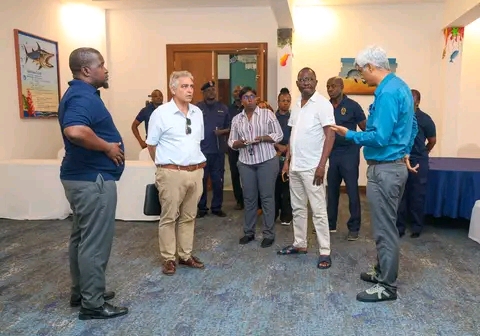
From 9 to 12 June 2026, Mombasa will once again assume its historic role as a crossroads of international maritime engagement when it hosts the IORIS ISC High-Level Summit. The gathering will bring together policymakers, naval leaders, coast guard officials, maritime experts, port executives, and development partners from across the globe to deliberate on the most pressing challenges facing the world’s oceans.
IORIS – the Indo-Pacific Regional Information Sharing and Coordination System – is a multinational maritime cooperation initiative that promotes real-time information exchange, operational coordination, and enhanced maritime domain awareness among agencies and partner nations across the Indo-Pacific region. Its framework has become an increasingly vital tool for supporting collaborative responses to maritime security threats and transnational crimes.
More than 150 senior delegates from over 50 countries are expected to attend the summit at the PrideInn Paradise Beach Resort & Spa, transforming Kenya’s coastal city into a global centre of maritime diplomacy and ocean governance. This event represents far more than a routine conference. It is a strong endorsement of Kenya’s growing stature as a maritime nation and a trusted regional partner in advancing security, trade facilitation, and sustainable blue economy development.
The meticulous preparations undertaken by the Planning Secretariat – comprising the Kenya Coast Guard Service, the Kenya Navy, the Kenya Ports Authority, the Kenya Maritime Authority, Immigration Services, and EU CRIMARIO – underscore the seriousness with which Kenya approaches maritime governance and international cooperation. Their collective efforts have positioned Mombasa to successfully host one of the most significant maritime gatherings on the regional calendar.
The timing of the summit is particularly critical. The Indian Ocean has emerged as one of the world’s most strategically important maritime regions, carrying a substantial proportion of global seaborne trade and energy supplies. Yet these waters continue to face a complex mix of security and governance challenges, including piracy, armed robbery at sea, illegal, unreported and unregulated fishing, narcotics trafficking, human smuggling, marine pollution, and the growing impacts of climate change.
No single nation possesses the resources or jurisdiction to address these challenges alone. Maritime threats increasingly transcend national boundaries, demanding coordinated regional and international responses. It is precisely for this reason that platforms such as IORIS have become indispensable. By enabling agencies to share information in real time, coordinate operations, and build trust across jurisdictions, IORIS strengthens collective maritime security while enhancing regional stability.
Kenya’s selection as host nation is neither accidental nor merely symbolic. Over the past decade, the country has steadily expanded its influence in maritime affairs through strategic investments in port infrastructure, maritime security capabilities, and blue economy initiatives. The modernization and expansion of the Port of Mombasa have strengthened its position as one of Africa’s most important maritime gateways, serving not only Kenya but also neighbouring landlocked countries including Uganda, Rwanda, South Sudan, Burundi, and parts of the Democratic Republic of Congo.
Equally important has been the operationalization of the Kenya Coast Guard Service, which has significantly enhanced Kenya’s ability to monitor, secure, and manage its maritime domain. Through improved surveillance, law enforcement, search and rescue operations, and interagency coordination, Kenya has demonstrated its commitment to safeguarding its maritime interests while contributing to regional security.
Mombasa itself is an especially fitting venue for this summit. For centuries, the city has served as East Africa’s principal maritime gateway, connecting the continent with Asia, the Middle East, and Europe through trade, culture, and diplomacy. Its strategic location on the Western Indian Ocean continues to make it a critical node in regional and global shipping networks.
By welcoming delegates from more than fifty countries, Mombasa will showcase not only Kenya’s hospitality and conference infrastructure but also its maritime capabilities and strategic vision. Delegates will gain firsthand exposure to the country’s port operations, maritime institutions, and ongoing efforts to build a sustainable blue economy.
While maritime security will feature prominently on the summit agenda, discussions are expected to extend well beyond traditional law enforcement concerns. Contemporary maritime governance encompasses a wide range of interconnected issues, including environmental protection, fisheries management, marine conservation, disaster preparedness, digital transformation of maritime operations, and resilience to climate-related risks.
Addressing these challenges requires partnerships founded on trust, transparency, and shared responsibility. The IORIS framework embodies these principles by creating mechanisms through which countries and agencies can cooperate without compromising national sovereignty. For many African coastal states, such collaborative arrangements provide valuable opportunities to strengthen institutional capacity, improve operational effectiveness, and access technical expertise.
Beyond its security and governance dimensions, the summit is also expected to generate important economic and diplomatic dividends. International conferences of this scale support local businesses in the hospitality, tourism, transport, and service sectors while enhancing Kenya’s reputation as a preferred destination for major global events. More importantly, they create opportunities for strategic dialogue that can lead to future investments, technical cooperation, training programs, and capacity-building partnerships.
As delegates arrive in Mombasa this week, they will encounter a city that is not merely hosting a global conversation but actively shaping it. The summit represents an opportunity for Kenya to reaffirm its maritime leadership, strengthen international partnerships, and contribute meaningfully to the pursuit of a safer, more secure, and more sustainable maritime future for the Indian Ocean region and beyond.