


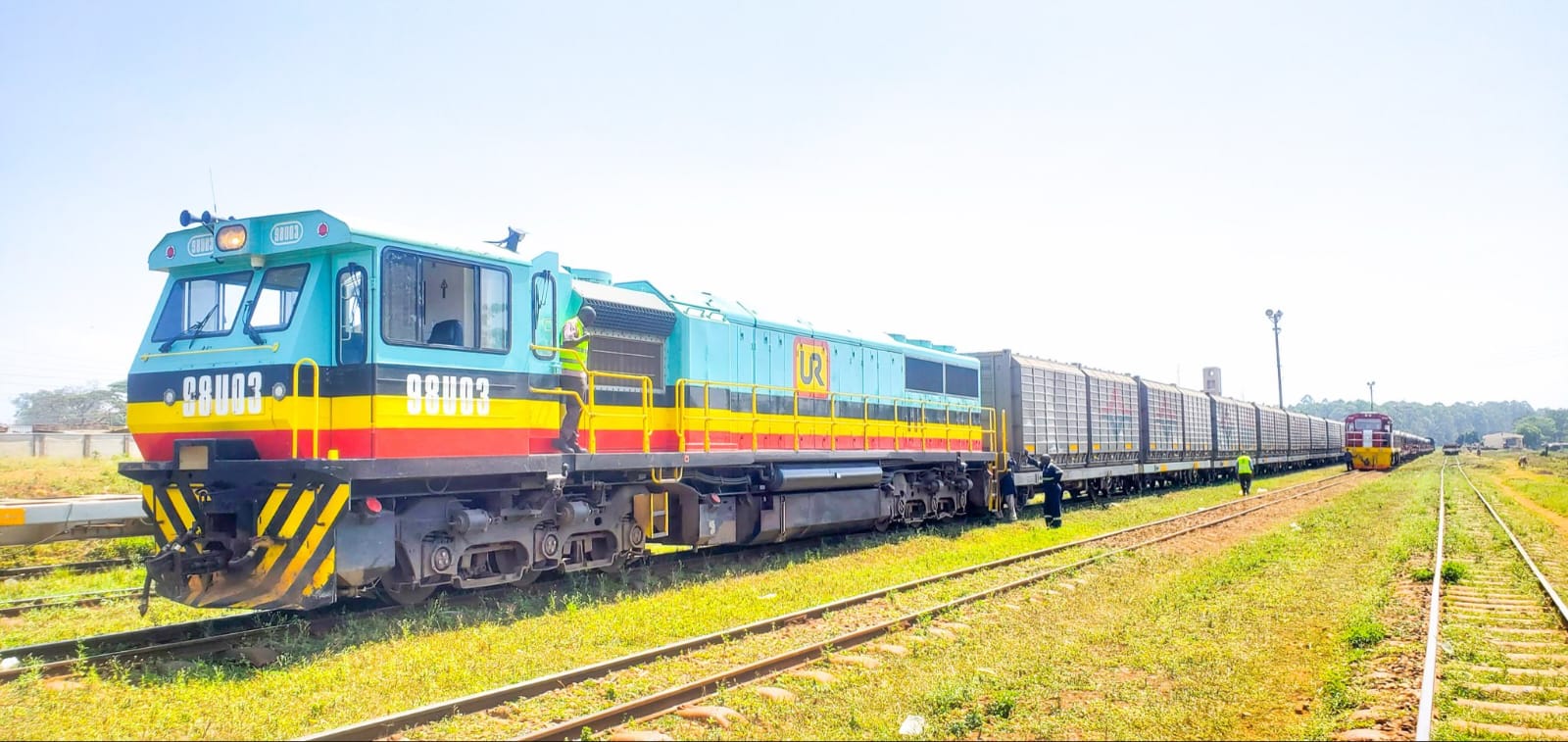
The African Development Bank’s renewed commitment to financing Uganda’s Standard Gauge Railway (SGR) project symbolizes a strategic vote of confidence in East Africa’s long-standing vision of regional integration, economic transformation, and modern transport infrastructure.
For decades, policymakers, economists, port authorities, and transport planners have spoken of the need for a seamless multimodal corridor linking the Indian Ocean to the heart of Africa. The AfDB’s recent pledge to support Uganda’s 326-kilometre Malaba–Kampala SGR section brings that vision significantly closer to reality.
At a time when Africa seeks to deepen intra-continental trade through the African Continental Free Trade Area (AfCFTA), efficient transport infrastructure is no longer a luxury—it is a necessity. The railway corridor connecting Mombasa, Nairobi, Naivasha, Kisumu, Malaba, Kampala, and eventually South Sudan and the Democratic Republic of Congo (DRC) has the potential to become one of Africa’s most vital economic arteries.
The Malaba–Kampala segment represents the critical missing link in the Northern Corridor transport system.
Speaking at the AfDB Annual Meetings in Brazzaville, AfDB Vice President for Regional Development, Integration and Business Delivery, Dr Abdul Kamara, underscored the project’s significance: “The Malaba–Kampala Standard Gauge Railway is aligned with the Bank’s strategic objective of supporting transformative regional infrastructure that accelerates economic integration and sustainable development across Africa.”
Kenya has already invested heavily in its SGR infrastructure, successfully operationalising the Mombasa–Nairobi and Nairobi–Naivasha sections. While these investments have improved domestic cargo movement, their full economic value can only be realised when connected to regional markets beyond Kenya’s borders.
The Uganda SGR project should therefore not be viewed as a standalone national undertaking, but as a regional infrastructure asset whose benefits will be shared across multiple countries.
Boon for Mombasa
One of the greatest beneficiaries of a completed SGR network will be the Port of Mombasa, East Africa’s principal gateway.
The port currently serves Kenya, Uganda, Rwanda, South Sudan, eastern DRC, Burundi, and northern Tanzania. However, growing cargo volumes continue to strain existing road transport systems. A fully integrated SGR corridor would significantly enhance port efficiency by enabling faster cargo evacuation from docks to inland destinations.
Commenting on the strategic importance of rail connectivity to port competitiveness, a senior regional logistics consultant observed: “Ports thrive when supported by efficient hinterland transport systems. The future competitiveness of Mombasa will depend largely on its ability to move cargo swiftly and cost-effectively into regional markets.”
Improved rail connectivity would not only reduce port congestion but also improve vessel turnaround times, strengthening Mombasa’s position as the preferred gateway for East and Central Africa.
Boost for Uganda
Uganda’s decision to prioritise the SGR aligns with its broader development agenda and Tenfold Growth Strategy.
Welcoming AfDB’s support, Mustapha Achidri, Uganda’s Temporary Governor and Assistant Commissioner at the Ministry of Finance, remarked: “The Standard Gauge Railway is a strategic national investment that will lower transport costs, improve trade competitiveness, facilitate industrial growth, and strengthen regional economic integration.”
For a landlocked country, transport costs represent a significant portion of final goods prices. High logistics expenses continue to constrain industrialisation, export competitiveness, and investment attraction. The SGR promises to address these challenges by offering a faster, safer, and more cost-effective mode of transport.
Transport economists estimate that rail can move large cargo volumes at substantially lower costs than long-haul trucking, generating significant savings for businesses across the region.
Unlocking Opportunities for South Sudan and the DRC
Perhaps the most transformative aspect of the project lies beyond Uganda itself. The long-term vision of extending the railway to South Sudan and the DRC could reshape trade patterns across Central Africa.
A regional infrastructure specialist involved in corridor development initiatives recently noted: “The real value of the SGR lies not at national borders but in its ability to connect markets. The railway has the potential to integrate East Africa’s ports with the mineral, agricultural, and consumer markets of Central Africa.”
South Sudan remains heavily dependent on expensive road transport networks vulnerable to weather disruptions and security challenges. A rail connection to Mombasa would provide a more reliable and affordable route to global markets. Similarly, eastern DRC—one of Africa’s most resource-rich regions—urgently needs efficient transport corridors to support exports of minerals, agricultural products, and manufactured goods.
Financing Confidence Sends a Strong Signal
The AfDB’s tentative allocation of USD 650 million sends a powerful signal to investors and development partners.
Large-scale infrastructure projects require confidence, credibility, and long-term commitment. Development finance institutions often play a catalytic role in attracting additional funding from governments, private investors, and international partners.
An infrastructure finance analyst familiar with African transport projects commented: “When institutions such as the African Development Bank commit to strategic infrastructure projects, they reduce investment risk and encourage broader participation by development partners and private financiers.”
The Bank’s endorsement suggests the project has passed rigorous technical, economic, and developmental assessments. Such support will likely enhance investor confidence and accelerate efforts to secure remaining financing.
Urgency for the Kenyan extension
While Uganda appears to be moving steadily toward implementation, attention must now focus on Kenya’s proposed Naivasha–Kisumu–Malaba extension. Without this crucial segment, the regional railway vision remains incomplete.
Speaking during previous regional transport forums, corridor experts have repeatedly emphasised that synchronisation between Kenya and Uganda will be essential. One transport policy advisor summarised the challenge succinctly: “A railway corridor is only as strong as its weakest link. The economic benefits of the SGR will be fully realised only when seamless connectivity is achieved from Mombasa to Kampala and beyond.”
Policymakers in Nairobi must therefore recognise that the economic returns of the original SGR investment will be maximised only when the railway reaches Malaba and connects seamlessly with Uganda’s network.
Beyond economics, the Uganda–Kenya SGR project represents a powerful test case for African integration.
The AfCFTA seeks to create a single continental market, but market integration cannot be achieved through policy frameworks alone. It requires physical infrastructure that enables goods, services, and people to move efficiently across borders.
Maritime and transport stakeholders across the region increasingly view the railway as one of the most important infrastructure projects supporting AfCFTA implementation. A regional trade expert recently remarked: “The success of AfCFTA will ultimately depend on reducing the cost and time of moving goods across Africa. Modern railway systems will be among the most effective tools for achieving that objective.”
The challenge now is translating commitments into construction, coordination into implementation, and vision into reality. If successfully completed, the Uganda–Kenya SGR integration project could become one of the most significant infrastructure achievements in modern African history—linking the Port of Mombasa to the vast markets and resources of Central Africa and bringing the promise of continental integration closer to fruition.
Editorial Remark
“The Uganda–Kenya SGR integration project is not merely about building a railway. It is about forging a regional economic future in which ports, railways, industries, and markets work together to unlock Africa’s vast development potential. The AfDB’s renewed commitment should serve as a catalyst for accelerated implementation and stronger regional cooperation.” — Andrew Mwangura