


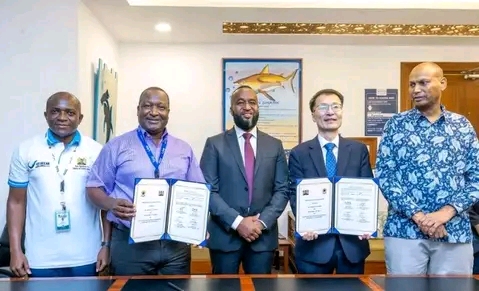
The recent signing of a Memorandum of Understanding (MoU) between Kenya and the Republic of Korea on the mutual recognition of seafarers’ Certificates of Competency is far more than a diplomatic formality—it is a strategic investment in Kenya’s maritime workforce and a decisive step toward establishing the country as a leading maritime nation in Africa.
By mutually recognising each other’s maritime education, training, and certification systems under the International Convention on Standards of Training, Certification and Watchkeeping for Seafarers (STCW), both nations have created a clear pathway for Kenyan officers and ratings to serve aboard Korean-flagged vessels. This is particularly consequential given that South Korea operates one of the world’s largest and most technologically sophisticated shipping fleets.
For Kenya, the implications extend well beyond employment.
First, the agreement validates the quality and credibility of Kenya’s maritime education and certification framework. International recognition by a major maritime nation like Korea signals confidence in the standards upheld by the Kenya Maritime Authority and local training institutions. Such endorsement enhances Kenya’s reputation within the global shipping community and reinforces its position as a regional maritime training hub.
Second, the deal enables meaningful knowledge transfer and skills development. Korean shipping companies are global leaders in maritime technology, vessel management, shipbuilding, digitalisation, and safety systems. Kenyan seafarers serving aboard Korean vessels will gain invaluable exposure to cutting-edge practices and innovations that can later be transferred to the domestic maritime sector.
Third, expanded employment opportunities for Kenyan seafarers will generate substantial foreign exchange earnings. Seafarers rank among the world’s highest remittance earners. Every Kenyan employed on an international vessel contributes not only to their family’s welfare but also to the national economy through remittances, investments, and the repatriation of advanced skills.
Cabinet Secretary for Mining, Blue Economy and Maritime Affairs, Ali Hassan Joho, was therefore right to characterise the agreement as transformative. His observation that the MoU creates jobs, builds skills, and enhances Kenya’s competitiveness in the global shipping industry captures the broader economic potential of maritime labour exportation.
However, while this agreement merits celebration, it must be regarded as a beginning—not an endpoint.
The most formidable challenge confronting Kenya’s maritime sector remains the acute shortage of sea-time training opportunities. Hundreds of maritime graduates continue to wait for mandatory sea service placements required for professional certification. Unless this bottleneck is urgently addressed, the full dividends of international agreements such as this MoU may remain unrealised.
The government must therefore move swiftly to negotiate structured cadetship programs with Korean shipping companies and maritime institutions. Such arrangements would ensure that Kenyan cadets gain the practical sea-going experience essential for developing into competent officers capable of competing in the international labor market.
Additionally, sustained investment in maritime education infrastructure, simulator technology, and instructor development is imperative. Global recognition must be accompanied by continuous quality improvement to maintain compliance with evolving international standards. Complacency would squander the hard-won credibility this agreement represents.
The MoU should also catalyse efforts to pursue similar recognition arrangements with other maritime powers, including Japan, Singapore, Greece, Norway, Denmark, and Germany. Diversifying employment destinations will enhance resilience and expand opportunities for Kenyan seafarers, reducing over-reliance on any single market.
Beyond employment, this agreement reflects a broader strategic partnership between Kenya and Korea in shipping, logistics, port development, maritime technology, and Blue Economy cooperation. Such collaborations are essential if Kenya is to fully leverage its strategic location along the Indian Ocean and establish itself as East Africa’s premier maritime hub.
For too long, Kenya’s maritime potential has remained underutilised despite its extensive coastline, strategic ports, and youthful workforce. The Kenya-Korea seafarers agreement demonstrates what is achievable when international cooperation aligns with national development priorities.
As the world increasingly turns to the oceans for economic growth and sustainable development, Kenya must ensure that its seafarers are not mere spectators but active participants in shaping the future of global maritime commerce.
The signing of this agreement is therefore no bureaucratic exercise. It is a declaration that Kenyan seafarers are ready to compete on the world stage; that Kenya’s maritime institutions have earned international confidence; and that the country’s Blue Economy ambitions are steadily becoming reality.
The task now is to translate this diplomatic success into tangible jobs, meaningful careers, and lasting prosperity for the thousands of Kenyan men and women who have chosen life at sea.
If implemented effectively, this agreement could become one of the most consequential maritime labor partnerships in Kenya’s history—and a model for Africa’s engagement with the global shipping industry.