


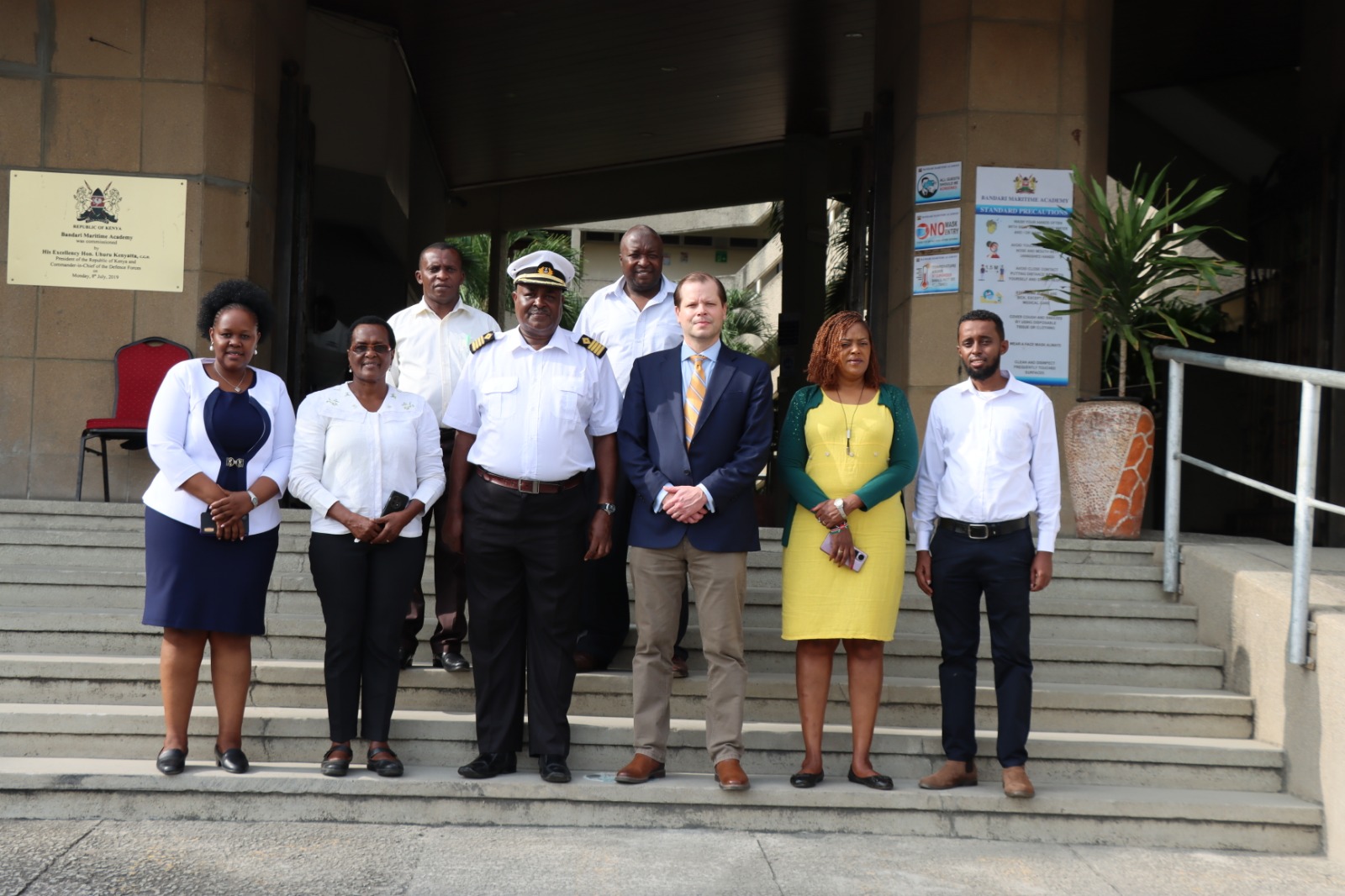
This initiative was not born in a vacuum. It emerged from strategic dialogue between the Government of Kenya, private industry, and maritime training institutions. Central to these talks were Madam Nancy Karigithu, then a key government advisor and staunch champion of Kenya’s maritime agenda, and Dr. Craig Savoyyé of Wilhelmsen, who recognized Kenya’s vast potential as a source of competent maritime manpower.
Bandari Maritime Academy (BMA), the nation’s premier training institution, was designated as the initiative’s anchor. The academy was tasked with supplying a workforce that met international shipping standards, effectively serving as the bridge between local education and global opportunity. The proposal gained significant traction, eventually drawing the support of the Norwegian Embassy and culminating in a high-level meeting at the Kenyatta International Convention Centre (KICC), chaired by Dr. Aligula, Special Programs Advisor in the Office of the President.
The gathering was a convergence of political will, educational capacity, and industry demand. It brought together Madam Karigithu (Office of the President), Chief Marine Engineer Titus Kilonzi (Bandari Maritime Academy), and two senior Wilhelmsen executives—the Global Crewing Manager and the Crewing Manager for Africa. The message was clear: Kenya was ready to sail.
Yet, three years later, a critical question remains unanswered: Where are the 1,000 jobs?
The Employment Gap: A Crisis of Opportunity
Kenya produces hundreds of maritime graduates annually from Bandari Maritime Academy, the Technical University of Mombasa, Jomo Kenyatta University of Agriculture and Technology, and other institutions. Many hold internationally recognized qualifications, yet they struggle to secure sea-time and employment aboard merchant vessels.
The irony is stark. While the global shipping industry faces periodic shortages of qualified seafarers, many Kenyan graduates remain unemployed or underemployed. The issue is not a deficit of talent, but a lack of structured pathways connecting training to tangible employment. The Wilhelmsen initiative was designed to solve precisely this problem.
For young Kenyans and their families, the promise of 1,000 jobs was transformative. It represented not just a paycheck, but access to global careers, foreign exchange earnings, skills transfer, and a pathway out of poverty. Many families invested heavily in maritime education based on the expectation that international opportunities would follow.
Why This Initiative Matters More Than Ever
The global maritime industry is undergoing a generational shift. Thousands of senior seafarers are nearing retirement, while emerging sectors—green shipping, offshore renewable energy, autonomous vessels, and digital maritime operations—are creating unprecedented demand for skilled personnel.
Kenya is strategically positioned to capitalize on this shift. As the gateway to East and Central Africa, it boasts a growing maritime infrastructure network, including the Port of Mombasa, the Lamu Port project, and expanding blue economy investments. However, infrastructure alone does not build maritime power; human capital does.
Nations like the Philippines and India have demonstrated that maritime labour exports can become major economic drivers. Filipino seafarers alone remit billions of dollars annually. There is no reason Kenya cannot replicate this model for East Africa. The Wilhelmsen commitment was a critical first step toward that vision.
Accountability and Transparency Are Non-Negotiable
The passage of time inevitably breeds concern. Young seafarers who heard the promise deserve clarity. If the target of 1,000 jobs has begun to materialize, the maritime community needs transparent reporting on recruitment, deployment, and future projections.
If obstacles have emerged—certification gaps, sea-time limitations, regulatory hurdles, market shifts, or contractual issues—stakeholders must candidly explain them. Without transparency, public confidence in public-private maritime partnerships will erode. The worst outcome would be to allow this significant initiative to fade into obscurity without accountability.
A Model Worth Reviving and Expanding
Regardless of its current status, the concept remains sound and deserves urgent revitalization. The Government of Kenya, Wilhelmsen Ship Management, Bandari Maritime Academy, the Norwegian Embassy, and other maritime stakeholders should reconvene to evaluate progress and chart a clear path forward.
A robust implementation framework could include:
· Annual recruitment targets and public reporting to ensure transparency.
· Dedicated cadetship and sea-time placement programmes to bridge the experience gap.
· Enhanced STCW compliance and specialized training to meet global standards.
· Joint funding mechanisms for cadet sponsorship to reduce financial barriers.
· Strategic partnerships with additional global ship management companies to diversify opportunities.
· Establishment of a National Seafarers Employment Taskforce to coordinate and drive the agenda.
Such measures would transform the initiative from a pledge into a measurable national programme.
The Bigger Picture: Kenya’s Maritime Destiny
The 1,000-seafarer initiative is about more than individual employment contracts. It is a litmus test for Kenya’s ability to convert maritime diplomacy into tangible economic outcomes.
For years, policymakers have championed the Blue Economy as the country’s next frontier of growth. But blue economy ambitions must ultimately be measured by results: jobs created, skills developed, incomes generated, and communities transformed.
The Wilhelmsen commitment offered precisely that opportunity. With Madam Karigithu’s leadership, Dr. Savoyyé’s vision, Bandari Maritime Academy’s training capacity, and the Norwegian Government’s support, the foundation is firmly in place. What is needed now is renewed momentum, stronger implementation mechanisms, and a shared determination to ensure Kenyan seafarers secure their rightful place in the global maritime workforce.
The promise of 1,000 seafarer jobs should not become another footnote in Kenya’s maritime history. It should become a landmark success story—one that demonstrates how visionary partnerships can unlock opportunity, strengthen the blue economy, and position Kenya as Africa’s leading supplier of world-class maritime professionals.
The time for discussions has passed. The time for delivery is now.