


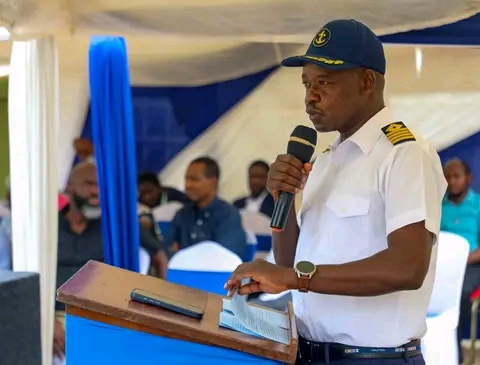
The true strength of a national institution is never fully captured by its annual cargo throughput, its revenue sheets, or the scale of its infrastructure. These are merely the outputs of a more profound asset: the people whose dedication and skill make those achievements possible. When Captain William Ruto, Chief Executive Officer of the Kenya Ports Authority (KPA), recently reaffirmed the Authority’s unwavering commitment to safeguarding the KPA Pension Scheme, he delivered a message that resonates far beyond the realm of retirement benefits. It was a strategic declaration that human capital is—and must remain—the bedrock of Kenya’s maritime economy.
Speaking at the Annual General Meeting of the KPA Pension Scheme (Defined Benefits) at Mbaraki Sports Club, Capt. Ruto articulated a principle that should serve as a guiding light for all public entities: employees are not merely cogs in a machine, but the organization’s greatest asset. Every vessel safely berthed, every container seamlessly cleared, and every logistical milestone achieved is the direct result of a professional workforce whose expertise drives operational excellence.
Crucially, this recognition extended beyond the current payroll. By acknowledging pensioners as the generation that laid the very foundation upon which today’s KPA stands, the Authority demonstrated a rare and commendable respect for institutional memory and continuity. In an age where organizations are often obsessively fixated on quarterly performance metrics, honoring the retired cohort is a hallmark of mature, responsible leadership—one that respects the legacy of national service.
Retirement security, however, is far more than a deferred financial obligation. It is a strategic investment in workforce stability, organizational resilience, and national productivity. When employees are confident that their years of service will culminate in financial dignity, they perform with greater focus and loyalty. Consequently, robust pension systems are not a cost center; they are a catalyst for improved morale, higher staff retention, and sustained operational excellence.
Capt. Ruto’s pledge to collaborate closely with the Scheme’s trustees and stakeholders to ensure its long-term sustainability comes at a critical juncture. Pension funds globally are navigating a perfect storm of economic volatility, inflationary pressures, demographic shifts, and fluctuating investment climates. Navigating these headwinds demands more than good intentions; it requires prudent governance, strategic asset allocation, unwavering transparency, and continuous dialogue between sponsors, trustees, regulators, and members.
The contributions of Omae Nyarandi further underscored the irreplaceable value of institutional partnership. His acknowledgment of KPA’s steadfast support highlights a collaborative synergy between the Scheme’s sponsor and its trustees that is vital for financial resilience. Such cooperation ensures that the promises made to workers today remain financially deliverable tomorrow.
Equally heartening was the active participation of representatives from the Retirement Benefits Authority, alongside KPA Board Directors including Ahmed Ali Mukthar, Emmanuel Kibet, and Daniel Muriungi. Their presence was a clear signal that sound governance, regulatory oversight, and accountability are non-negotiable pillars in protecting retirement savings. Pension schemes only thrive where transparency and compliance are treated as sacred duties.
The AGM itself served as a vital governance forum, allowing members to review performance, confront challenges, and explore strategies to enhance the welfare of both current contributors and those who have already retired. Such gatherings are essential, as they strengthen stakeholder confidence by ensuring that members remain informed and have a voice in decisions that shape their financial futures.
However, the implications of this discussion extend far beyond the gates of the Port of Mombasa. As Kenya accelerates its investments in modern ports, logistics corridors, and the expansive Blue Economy, workforce welfare must be elevated to a central pillar of national development strategy. Sustainable infrastructure cannot exist without sustainable institutions, and sustainable institutions are built on the security, motivation, and respect afforded to their employees.
Kenya’s ambition to solidify its status as the premier maritime and logistics hub in Eastern Africa hinges not solely on cranes, terminals, or digital systems. It rests equally on the confidence of the people who operate them. Retirement security is a fundamental component of that confidence—the invisible steel in the scaffolding of our economic future.
Ultimately, KPA’s renewed commitment to its Pension Scheme is a testament to financial prudence and enlightened leadership. It proves that the Authority understands a fundamental truth: institutional success is inseparable from the welfare of its people. By protecting the retirement security of both its current and former employees, KPA is investing in organizational durability, preserving public trust, and reinforcing the very foundations upon which Kenya’s maritime future will be built.
In the final analysis, a pension is never simply a gratuity earned after decades of service; it is a sacred promise. Institutions that honor that promise do more than enrich their retirees—they fortify their reputation, enhance their governance, and deepen their contribution to national progress. KPA’s steadfast support for its Pension Scheme is therefore an investment in people, and by extension, a vital investment in Kenya’s long-term economic prosperity.