


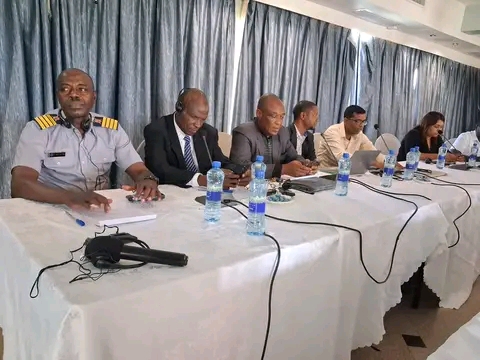
This is precisely why the recent engagement in Dar es Salaam, where Kenya Coast Guard Service Director of Human Resource and Administration Henry Wafula, MBS, joined regional maritime leaders, is not merely diplomatic routine—it is a strategic imperative. The Western Indian Ocean Maritime Security Workshop, which brought together Border Control and Operations Coordination Committee (BCOCC) focal points from Kenya, Tanzania, Seychelles, Mauritius, Comoros, and Mozambique, represents a critical pivot from reactive patrolling to proactive regional governance .
The forum’s reaffirmation of coordinated action and institutional partnerships is welcome, but it must be backed by tangible operational capability. The threats we face—illicit trafficking, illegal fishing, piracy, and the erosion of a rules-based maritime order—do not respect national boundaries. They require what analysts call a “rules-based order,” grounded in frameworks like the United Nations Convention on the Law of the Sea (UNCLOS), to ensure predictability and the peaceful resolution of disputes . This is not abstract idealism; it is the bedrock of economic security for a nation like Kenya, whose ports and sea lanes are arteries of national prosperity.
Kenya has demonstrated its commitment through the formation of the BCOCC, which has successfully broken down silos between government agencies with border mandates that previously operated in isolation . The multi-agency operation that intercepted the narcotics-laden vessel is a testament to what effective information sharing can achieve. Yet, this is just the beginning. The sustainability of maritime security requires more than episodic operations; it demands sustained investment in maritime domain awareness, interoperability, and legal capacity-building.
The Western Indian Ocean is increasingly a theatre of geopolitical contestation and great-power rivalry, where major powers are expanding their presence and pursuing competing visions . In this context, regional solidarity is not a luxury; it is a shield. By strengthening the operational capabilities of states like Kenya, Tanzania, and Seychelles, and enhancing their ability to act in concert, we are building a resilient architecture that can withstand external pressures and internal threats alike.
The forum in Dar es Salaam rightly emphasized the importance of a rules-based maritime order. This must translate into concrete action—from harmonizing legal frameworks for prosecuting maritime crimes to improving intelligence-sharing protocols. The region cannot afford to be passive.
For Kenya, the message is clear: Our maritime destiny cannot be left to chance. The engagement of leaders like Mr. Wafula in these regional dialogues is a vital step. But it must be matched by political will, resource allocation, and a relentless pursuit of operational excellence. The ocean is our future, and our future must be secured, not by one nation alone, but through the collective strength of a united Western Indian Ocean community.