


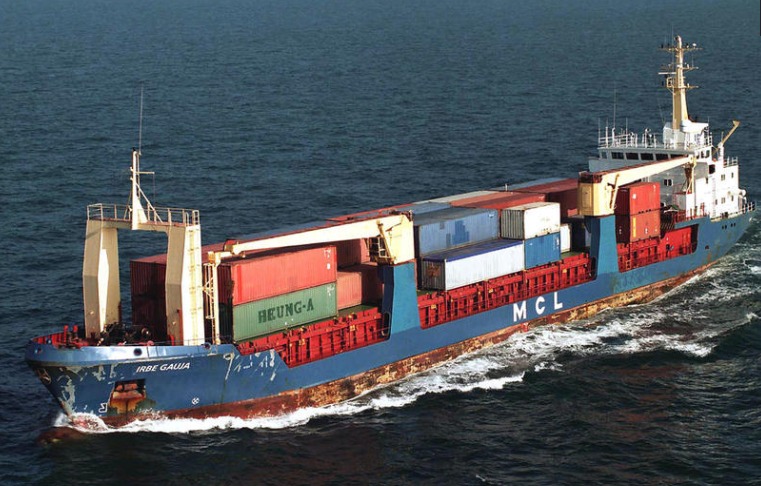
For nearly two months, the rusting hull of the MV Dan has marred the idyllic shoreline of Nyali Beach near Mombasa—transforming one of Kenya’s most cherished coastal gems into an unwelcome monument to the perils of ageing vessels and shadowy shipping practices. Launched in 1985 as the Soviet-era Irbe Gauja, the ship now lies stubbornly embedded in Kenyan sand, raising a question that extends far beyond any single salvage operation: who bears ultimate responsibility when an obsolete vessel becomes a coastal hazard?
The facts of the grounding are clear. In mid-May 2026, the Tanzanian-flagged general cargo ship encountered difficulties while sailing from Tanzania and drifted ashore on Kenya’s northern coastline. Fortunately, no major oil spill or significant marine pollution has been reported. The Kenya Maritime Authority (KMA), working alongside the vessel’s owners and salvage experts, has coordinated plans to refloat the ship during favourable spring tides expected in mid-July 2026.
The professionalism displayed by the KMA deserves commendation. The Authority acted swiftly to safeguard the marine environment, monitor the vessel’s condition, coordinate salvage logistics, and maintain public transparency. The absence of a significant pollution incident speaks volumes about Kenya’s emergency preparedness and the dedication of its response teams on the ground.
Yet the real story begins where the salvage operation ends.
The grounding of the MV Dan exposes a chronic weakness in global shipping governance: the troubling opacity surrounding vessel ownership and corporate accountability. International shipping databases identify the owner as SLA Maritime Co.—sometimes listed as SLM Maritime—a Turkish-owned firm. Leading maritime publications have consistently reported this affiliation. However, tracing the beneficial ownership—the individuals who ultimately control and profit from the enterprise—proves far more elusive.
This is no isolated anomaly.
Across the global shipping industry, thousands of ageing vessels operate through labyrinthine structures involving shell companies, single-purpose corporate entities, and flags of convenience. Ships are routinely bought, renamed, reflagged, and transferred between jurisdictions with minimal public disclosure. While such arrangements may be commercially lawful, they systematically obscure accountability when accidents occur.
The MV Dan exemplifies this reality perfectly. Over four decades, it has cycled through multiple names, ownership structures, and flag states. Today, it sails under the Tanzanian flag while ownership interests reach far beyond East Africa. When vessels with convoluted corporate pedigrees become stranded, pollute marine ecosystems, or demand costly emergency interventions, determining legal and financial responsibility becomes unnecessarily—and dangerously—complicated.
For coastal states like Kenya, this should be a matter of strategic urgency.
Kenya has invested heavily in positioning the Port of Mombasa as the premier maritime gateway for Eastern and Central Africa, while simultaneously championing a sustainable Blue Economy. Marine tourism, fisheries, coastal ecosystems, and maritime trade collectively contribute billions of shillings to the national economy. These assets deserve robust protection from risks posed by ageing vessels whose ownership and financial liability remain frustratingly opaque.
The grounding of MV Dan therefore presents an important policy opportunity.
Kenya should strengthen requirements for vessels entering its waters by demanding greater transparency in beneficial ownership, adequate insurance coverage, and demonstrable financial capacity to meet salvage, wreck removal, and environmental restoration costs. Port State Control inspections must pay heightened attention to ageing ships operating under flags of convenience. At the regional level, the Indian Ocean maritime community should harmonise standards for vessel accountability and liability.
This incident also reinforces the imperative of implementing international conventions on wreck removal, pollution liability, and compulsory insurance. Effective enforcement ensures that the financial burden of maritime accidents falls on shipowners—not on taxpayers or coastal communities.
Ultimately, the successful refloating of MV Dan will close one operational chapter. It must not close the policy conversation.
This ageing vessel has become more than a stranded cargo ship. It is a symbol of the governance deficits that persist in international shipping. Its presence on Nyali Beach reminds us that maritime safety is not measured solely by pollution prevention or salvage success. It is equally measured by transparency, accountability, and the certainty that those who profit from global shipping bear full responsibility for the risks they create.
As the MV Dan prepares to depart Kenya’s shores, policymakers should seize this moment to fortify the country’s maritime regulatory framework. The next ageing vessel may not leave our coastline without inflicting far greater environmental, economic, and reputational damage.
Kenya cannot afford to learn that lesson the hard way.