


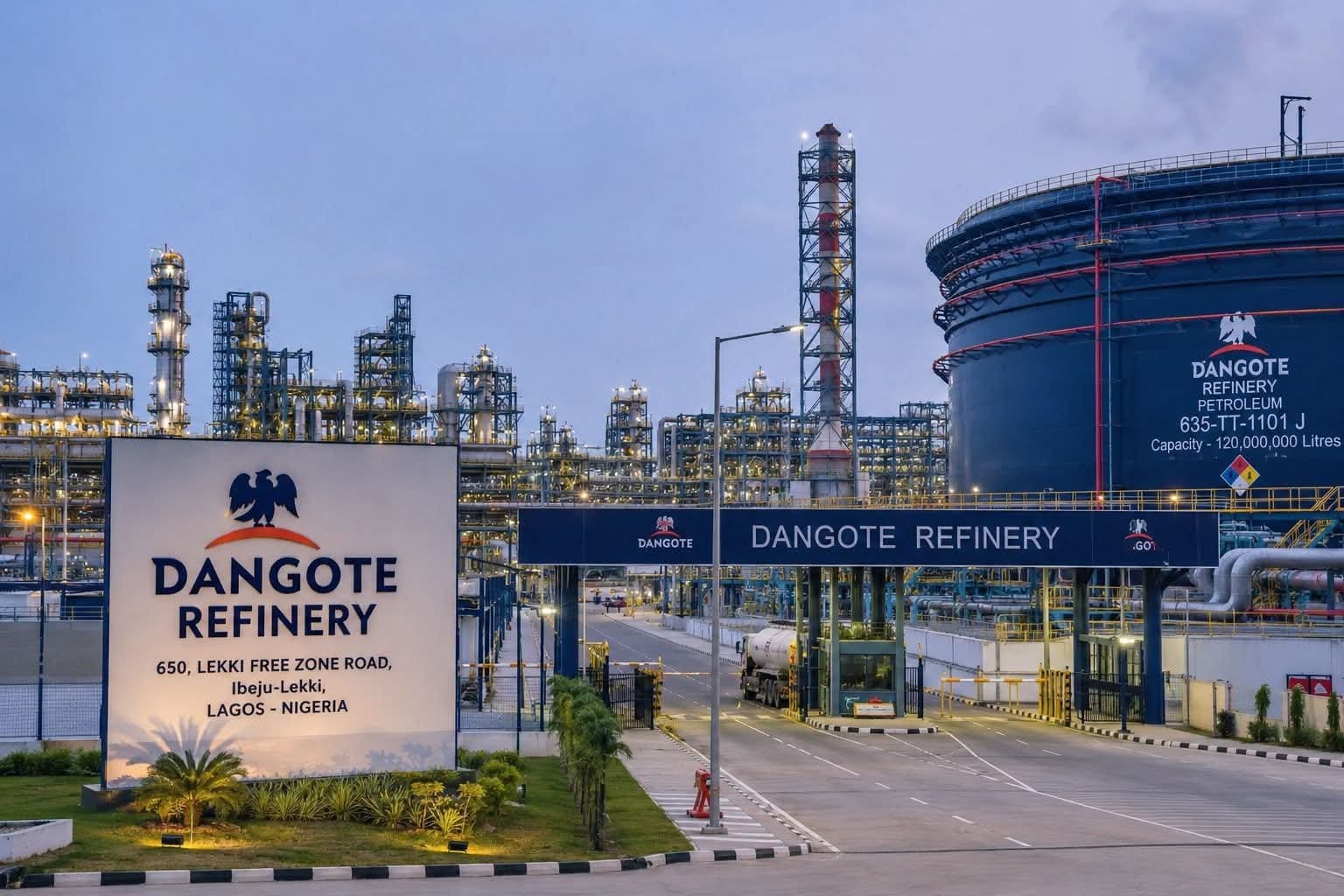
Aliko Dangote has set a date. On September 30, 2026, Africa’s richest man will break ground on a 700,000-barrel-per-day oil refinery in Lamu, Kenya. The ceremony will mark far more than a construction start—it signals that private African capital is finally prepared to challenge the continent’s chronic dependence on imported refined fuels.
The ambition is staggering. Cost estimates have settled around $16 billion, down from earlier projections of $17–20 billion. The Lamu plant will exceed the current Dangote Refinery in Lagos (650,000 bpd) and position itself as East Africa’s largest refining complex—and the continent’s second-largest. Construction is expected to span three to four years. Dangote has offered East African governments a combined 30 percent equity stake, with Kenya reportedly allocated 10 percent valued at roughly $500 million. The financing structure—approximately 70 percent debt and 30 percent equity—will draw on internal cash flows, bonds, and proceeds from the group’s planned Nigerian refinery IPO.
For Kenya and the wider region, the strategic logic is irrefutable. East Africa currently imports nearly all its refined petroleum products, hemorrhaging hundreds of millions of dollars monthly while remaining exposed to global supply shocks, shipping disruptions, and price volatility. Regional crude production—from Uganda’s developing fields, South Sudan, and potential Kenyan output—could feed the plant, with estimates suggesting more than 600,000 barrels per day available from the region alone. Surplus capacity beyond local demand of roughly 450,000 bpd would enable exports, transforming a vulnerability into a strategic asset.
Lamu’s selection over alternatives such as Tanzania’s Tanga was driven by its deep-water port, alignment with the Lamu Port–South Sudan–Ethiopia Transport (LAPSSET) corridor, and Kenya’s political commitment under President William Ruto. The government has appointed a high-level committee led by the Deputy President and allocated seed capital. Projections of 60,000 direct and indirect jobs underscore the developmental stakes for a historically marginalized coastal county.
This is classic Dangote: replicate a proven model at continental scale. The Lagos refinery, despite cost overruns and delayed startup, demonstrated that large-scale private refining is possible in Africa when capital, political will, and technical learning converge. Lessons from that project—faster execution, better cost control—are being applied here, according to Dangote himself. Combined with the planned expansion of the Nigerian plant to 1.4 million bpd, the group’s total capacity would approach 2.1 million barrels per day—a transformative footprint.
Yet ambition alone does not guarantee success. Mega-projects in Africa have a long history of slipping timelines, escalating costs, and under-delivering on promised regional integration. Securing reliable crude feedstock requires stable production and transit agreements across multiple countries whose political and security environments differ sharply. South Sudan’s output, for example, remains vulnerable to conflict and infrastructure constraints. Debt financing at 70 percent introduces interest-rate and currency risks in an era of elevated global rates. Kenya’s fiscal position and the broader East African Community’s ability to coordinate offtake and tariff policies will be severely tested.
Environmental and social considerations in Lamu cannot be brushed aside. The county is a UNESCO World Heritage site with sensitive marine ecosystems, fishing communities, and a history of contested large-scale infrastructure. The LAPSSET corridor itself has faced land, conservation, and community grievances. A refinery of this scale will require rigorous environmental impact management, transparent benefit-sharing, and credible local content provisions if it is to avoid becoming another source of coastal tension. Dangote’s track record on community engagement and emissions standards will face closer scrutiny outside Nigeria.
Geopolitically, the project occupies a fascinating intersection. It reduces reliance on refined products from the Gulf and Asia at a time when energy security has returned to the forefront of policy. It also positions Kenya as a refining hub, potentially altering regional trade dynamics and giving Nairobi leverage in East African energy diplomacy. Tanzania’s disappointment at losing the site is real; how that friction is managed will matter for future cross-border energy projects.
The broader African context is equally important. For decades, the continent has exported crude and imported finished products, leaking value at every stage. Dangote’s dual-refinery strategy—West Africa and East Africa—challenges that pattern with private capital rather than solely state or Chinese-led infrastructure. If both plants operate near capacity with competitive pricing and reliable supply, they could force a structural shift in African petroleum markets. Success would strengthen the case for African industrial policy that prioritizes downstream processing. Failure or chronic underutilization would reinforce skepticism about the continent’s ability to execute complex energy projects at scale.
September 30 will be a ceremonial moment. The real test begins afterward: whether soil tests translate into steel, whether equity partners deliver capital on time, whether crude flows match design assumptions, and whether refined products reach consumers at prices that justify the investment. Dangote has proven he can build in Nigeria under difficult conditions. Lamu will test whether that model travels, and whether East African governments can create the policy stability and regional coordination required for a project of this magnitude to deliver on its promise of energy sovereignty.
The groundbreaking is welcome. Delivery will determine whether it becomes a genuine inflection point or another ambitious announcement that recedes into the long list of Africa’s unfinished industrial dreams.