


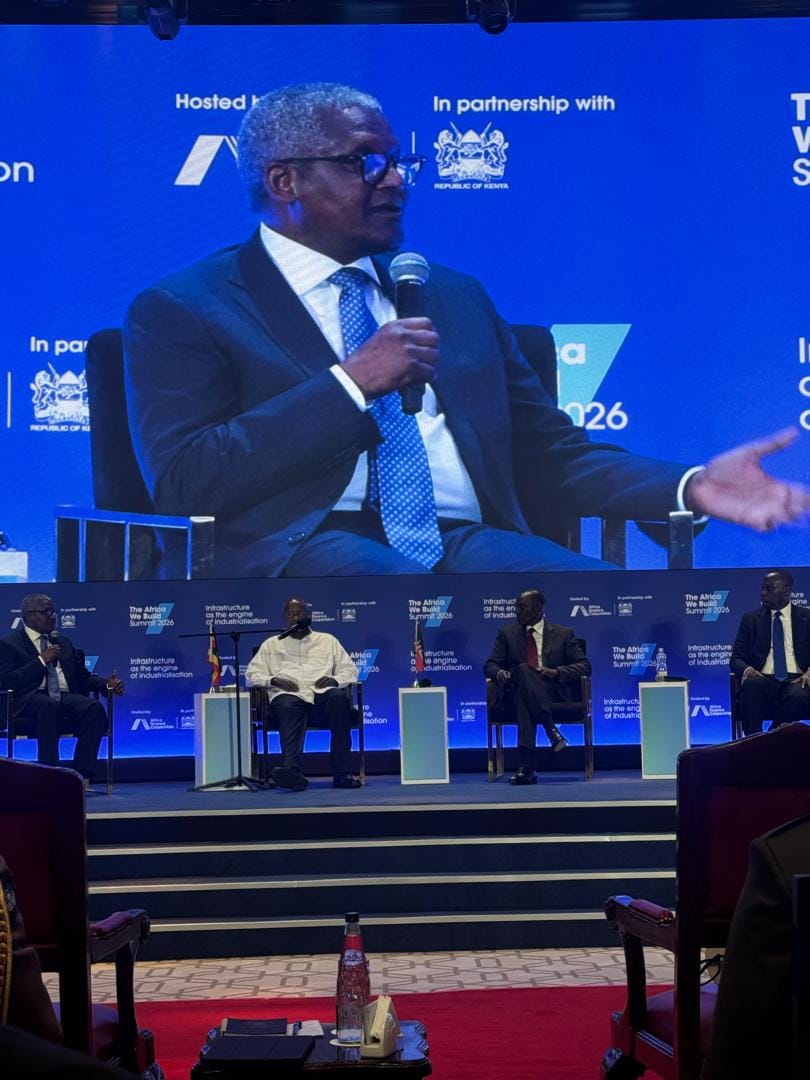
Dangote breaks ground on 30 September. The ceremony is the easy part.
On 30 September, Aliko Dangote will break ground on a 700,000-barrel-per-day oil refinery at Lamu. Africa’s richest man has built at this scale before, and the symbolism is difficult to overstate: private African capital—rather than aid or a foreign state—moving decisively to end East Africa’s chronic dependence on imported fuel. The ceremony will deserve the applause it receives. But it is the easy part. Whether Lamu becomes a genuine turning point, or joins the long list of Africa’s unfinished industrial dreams, will be decided in the years after the cameras leave.
Consider first what sets Lamu apart from Dangote’s flagship plant in Lagos. The Lekki refinery, at 650,000 barrels a day, was built to make a single nation self-sufficient. Lamu, at 700,000 barrels a day and costed at roughly US$16 billion, is conceived from the outset as a regional hub—intended to supply Kenya, Uganda, South Sudan, Tanzania, Rwanda, and the eastern DRC. Its decisive advantage is geography. Lamu’s natural deep-water harbour, with eighteen-metre drafts, can receive fully laden crude tankers of up to two million barrels—vessels far too large for Mombasa. That single fact underpins the entire proposition and finally gives the long-dormant LAPSSET corridor a reason to exist.
The gains, if delivered, are real. For Kenya, the refinery promises relief from a punishing refined-fuel import bill and the foreign exchange it drains, substantial tax revenue, a return on the country’s ten-per-cent equity stake, and—the true prize—a repositioning of Kenya as the region’s energy and logistics hub. But we must be honest with the public about what this is, and what it is not. It is strategic positioning; it is not a promise of cheaper fuel at the pump. Crude remains globally priced, and Nigeria’s own experience since Lekki opened is instructive: local refining did not lower prices there, and it will not automatically lower them here. To sell this project as cheap petrol is to guarantee public disappointment.
For Lamu County itself, the numbers are striking—an estimated 60,000 direct and indirect jobs, and the prospect of transforming a historically marginalised coast. Yet this is also the tier most exposed to failure. Lamu is a UNESCO World Heritage site, with fragile marine ecosystems, established fishing communities, and a long memory of contested infrastructure and land grievances along the LAPSSET route. Without rigorous environmental management, transparent benefit-sharing, and credible local-content rules, the refinery risks becoming an enclave of value that bypasses the very county that hosts it. Whether Lamu gains, or merely hosts, will be decided by execution on precisely these points.
For the wider region, the promise is larger still: reduced reliance on refined imports from the Gulf and Asia, alternative trade routes for landlocked Ethiopia and South Sudan, and a measure of collective energy security under the African Continental Free Trade Area. The offer of regional equity to Ethiopia and Rwanda alongside Kenya turns consumers into part-owners. But this is precisely where the burden shifts from Dangote to us. The refinery is his to build; its success is the region’s to enable.
What, then, is required of the partner states? Capital delivered on time, not merely pledged. Binding crude-supply and transit agreements. Firm commitments to buy the refined product. A harmonised regional tariff regime with protection against the dumping of cheap imported fuel—a condition Dangote has stated plainly, and one he is presently fighting to secure in Nigeria. And, not least, a home-grown technical workforce. As my colleague Andrew Mwangura has argued repeatedly in the Maritime Business Review, the region has too long imported the expertise it ought to be cultivating; a project of this magnitude must train Kenyans and East Africans to run it, not fly in specialists to do so. It will take, in his words, “political courage, sustained financial commitment, and regional ownership.”
Which brings us to the question everyone asks quietly: is it viable, and will Dangote really refine our oil here? Technically, yes—Lagos proves the model can be built and run in African conditions. Commercially, the answer is less settled, resting on crude costs, refining margins, secured buyers, anti-dumping protection, and a debt-heavy financing structure. And on feedstock, candour is owed: at least at first, Dangote will import crude and refine it at Lamu. The vision of processing our own regional oil is real but medium-term. South Sudan’s output is hostage to conflict and to pipelines not yet built; Uganda’s crude currently flows the other way, toward Tanzania’s coast; Kenya’s Turkana fields are not yet in commercial production. The eighteen-metre harbour was chosen precisely so the plant need not wait for them—just as Lekki imports crude despite Nigeria’s own reserves.
None of this is cause for cynicism. It is cause for clear eyes. The groundbreaking on 30 September is genuinely welcome. But a refinery is not delivered by a ceremony. It is delivered by feedstock that flows, partners who pay, policies that hold, and communities that share in the gains. Kenya has been handed a regional prize. Whether we earn it is now up to us.
Harry Arigi is a maritime consultant and MIHR. He comments on regional trade, maritime logistics, safety, pension, and development policy.