


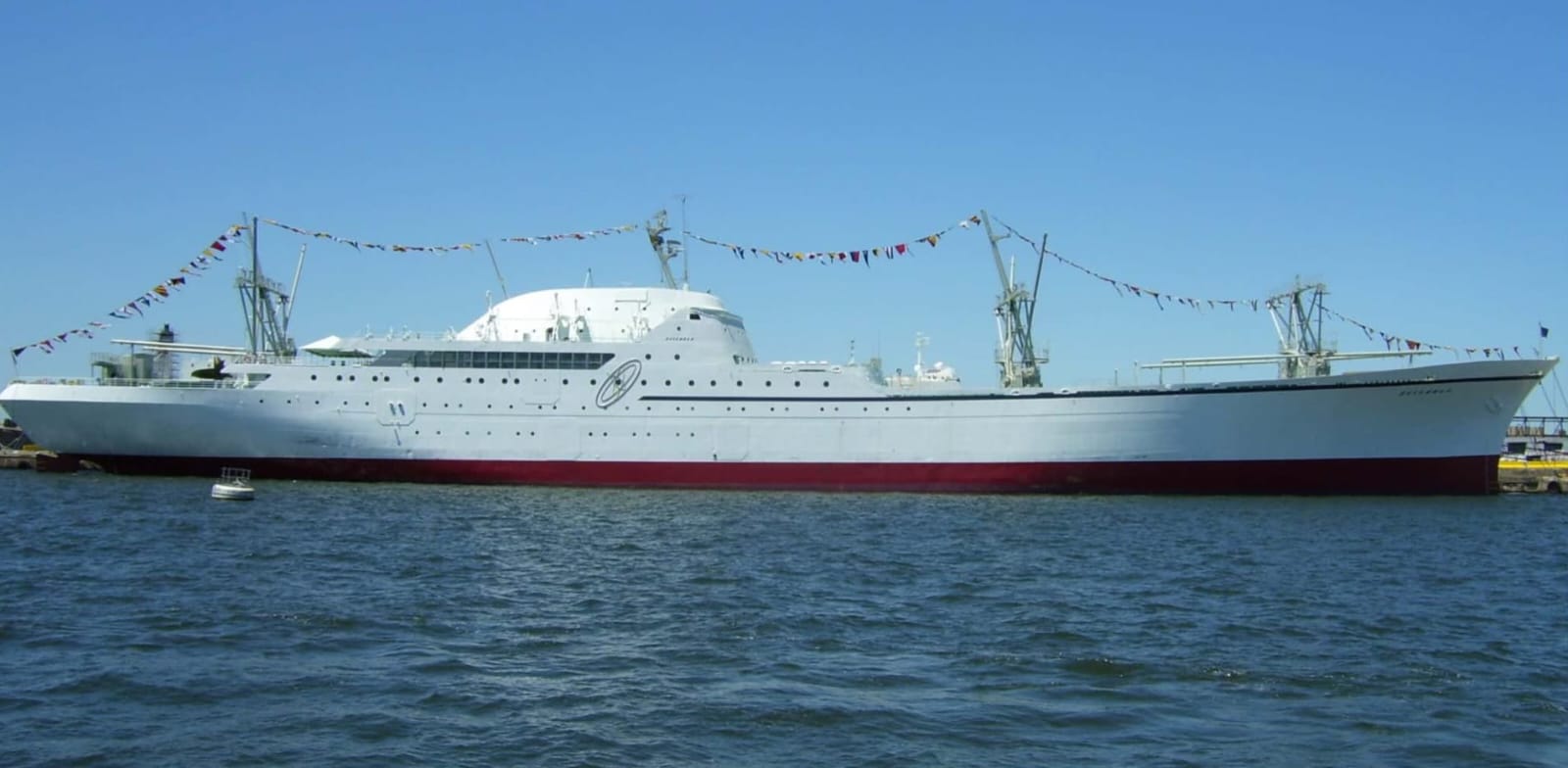
The nuclear-powered merchant ship is no longer a relic of Cold War ambition. It is a coming reality, and the global maritime industry—particularly Africa—must begin preparing now.
The United States is once again turning to the atom, not to build a prestige project, but to fundamentally change the rules of commercial shipping. With the U.S. Maritime Administration (MARAD) signing a cooperation agreement with Core Power to develop a framework for nuclear-powered vessels, and construction targeted to begin as early as 2028, this initiative is a direct challenge to China’s dominance of global shipbuilding. However, this is not a battle over cheaper ships. As MARAD Administrator Stephen Carmel has admitted, “They are the masters of low cost.” Instead, the American strategy is to compete through technological disruption, changing the terms of engagement entirely.
This is not America’s first nuclear gamble at sea. The NS Savannah, launched in 1962, was a technological triumph but a commercial disaster, proving that superior engineering does not guarantee market viability. The new push, however, is built on a different generation of technology—Molten Salt Reactors (MSRs)—and a radically different economic calculation. MSRs operate at lower pressures, allowing for lighter, more flexible systems. More importantly, proponents argue that nuclear propulsion could offer higher speeds, increased cargo capacity, and complete insulation from volatile fuel prices. The ship would no longer be a fuel-consuming asset, but a long-term, multi-decade investment in transportation capacity.
For shipowners, maritime unions, and African policymakers, dismissing this as another ambitious American science project would be a profound strategic error. The consequences of success would ripple far beyond U.S. shipyards.
The challenges, however, are monumental. A nuclear ship cannot simply sail because its reactor works. It requires a complete ecosystem: licensing, insurance, port acceptance, and international liability frameworks. The insurance question alone is a potential showstopper, as commercial shipping relies on global risk-sharing arrangements that are ill-equipped to handle nuclear liabilities. Ports, too, will need entirely new regulatory systems, emergency-response protocols, and security arrangements before they can receive such vessels.
This is where maritime unions must become central to the conversation. Nuclear shipping must not become another technological transformation imposed on workers after the key decisions have been made. If nuclear propulsion becomes commercially viable, seafarers will require new skills and certifications. For unions, the objective should not be resistance, but proactive engagement to ensure that technological progress creates decent employment rather than displacement. Training must begin now, not after new standards are set without them.
African maritime administrations have an equally urgent stake in this future. The continent has invested heavily in ports and maritime education, but much of its planning remains anchored in the era of conventional shipping. The emergence of nuclear vessels could affect everything from bunkering and ship repair to the competitiveness of major hubs like Kenya, Tanzania, Djibouti, and South Africa. These are not abstract questions. If the technology succeeds, nuclear-powered vessels will eventually call at African ports. The question is whether those ports will be prepared, or caught unprepared.
Crucially, the U.S. is not alone. Classification societies such as the American Bureau of Shipping and Lloyd’s Register have already granted Approval in Principle to nuclear concepts developed with South Korean and Japanese partners. This indicates that nuclear propulsion is moving from historical curiosity to serious research and development on a global scale.
The technology may still fail. Regulatory barriers, insurance costs, and public opposition could prove insurmountable. The Savannah is a sobering reminder that bold technology can still be defeated by market forces. However, dismissing the current push would be equally dangerous.
The real significance of the American initiative is not whether a nuclear ship sails by 2028. It is that a major maritime power believes technology can fundamentally alter the competitive balance of global shipping. China has built its advantage through scale and cost. America is responding with disruption. If that strategy succeeds, the consequences will be profound: new financing models, new cargo flows, new port requirements, and new workforce demands. It will create opportunities for early movers and leave behind those who wait until the future has already arrived.
For Africa, the choice is therefore not whether to embrace nuclear shipping tomorrow. The choice is whether to understand it today. Containerisation changed the industry. Automation changed it. Digitalisation changed it. The transition to cleaner fuels is already changing it. Nuclear propulsion may or may not become the next revolution. But if it does, the nations, unions, and professionals that began preparing early will be in a far stronger position than those who dismissed it as someone else’s experiment.
America is betting it can change the rules of maritime competition through technology.
The rest of the world—and Africa in particular—must ask itself a simple question: Will we help shape that new future, or will we once again wait for it to arrive at our ports before we begin preparing?