


In energy markets, price is only half the story. The other half is the cost of moving barrels across oceans. Argus Media’s recent infographic, Why Tanker Freight Rates Move, crystallizes a truth that traders, refiners, and risk managers have lived through in real time: when sanctions bite, chokepoints tighten, or cargoes are forced onto longer routes, freight rates do not adjust politely. They jump.
The difference between reacting to those jumps and anticipating them is measured in dollars per barrel—sometimes the difference between a profitable arbitrage and a loss.
The Transmission Mechanism: From Shock to Benchmark
Argus maps a clear chain. A geopolitical event—sanctions, conflict near a strait, or the threat of closure—does not immediately change the physical volume of oil that needs to be shipped. Instead, it changes how that oil moves. Voyages lengthen. Tankers become dislocated. Available compliant tonnage shrinks. The result shows up in benchmarks such as the Argus Clean Tanker Index (ACTI) and its crude counterpart.
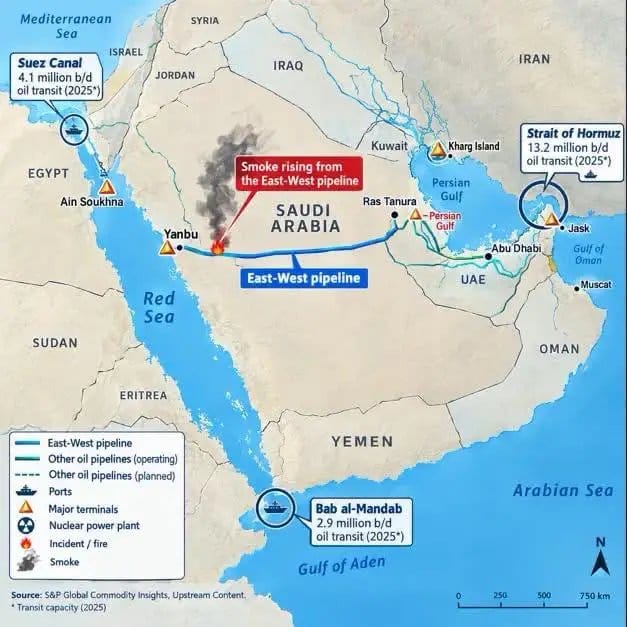
Consider the arithmetic of distance. A typical Middle East–Asia voyage measured in days can stretch dramatically when vessels must avoid the Strait of Hormuz or the Bab el-Mandeb. Argus highlights five critical chokepoints: Hormuz, Suez, Panama, Bab el-Mandeb, and the Turkish Straits. Rerouting around the Cape of Good Hope can turn a roughly five-day transit into a 44-day haul. That multiplies tonne-miles, ties up ships for longer, and reduces effective fleet supply—even if the headline number of tankers stays the same.
Tonne-mile growth is often treated as a straightforward proxy for stronger freight demand. Argus correctly warns that this is incomplete. When barrels are shut in by sanctions or conflict, demand for shipping can fall. When the same barrels simply take a longer route, effective supply of ships tightens and rates rise. Reading the direction of the market requires distinguishing the two.
Hormuz as the Stress Test
The 2026 Middle East tensions have provided a live laboratory. Disruptions around the Strait of Hormuz—through which roughly one-fifth of seaborne crude traditionally flows—have driven tanker earnings to historic extremes. Very Large Crude Carriers (VLCCs) on key routes have seen daily rates spike into the hundreds of thousands of dollars, with some fixtures reflecting premiums that push the cost of moving crude from the Americas to Asia toward $20–25 per barrel in extreme moments.
War-risk premiums, higher insurance costs, and the practical necessity of ship-to-ship transfers outside the most contested waters have layered additional expenses on top of pure voyage costs. The market has also seen a bifurcation: mainstream compliant tonnage commands scarcity premiums while portions of the fleet operate under heightened risk or in restricted trades. The net effect is that headline fleet size overstates available capacity for many charterers.
This is not merely a Middle East story. Longer-haul alternatives from the Atlantic Basin to Asia and the dislocation of ships away from traditional loading zones have tightened other basins as well. Clean product markets and even adjacent dry bulk routes have felt secondary effects as vessels are drawn into higher-paying crude trades or as logistics chains adjust.
Why Anticipation Matters More Than Reaction
Freight is a derived demand market with limited short-term elasticity of supply. Newbuilds take years. Scrapping decisions are slow. The fleet cannot expand overnight. Therefore the first response to a chokepoint shock is almost always a sharp rise in rates for the remaining available ships, followed by gradual repositioning and, eventually, new trading patterns.
Argus’s framing is useful precisely because it treats freight as a risk factor that can be mapped rather than a residual that is simply absorbed. Traders who understand which chokepoints matter most for their specific grades, which vessel classes are most constrained, and how tonne-mile increases interact with shut-in volumes can position before the next move in the ACTI or individual route assessments. Those who wait for the rate spike to appear on their screens are already behind.
The broader implication is structural. Repeated disruptions around Hormuz, the Red Sea, and other passages are teaching the market that longer, more expensive, and more complex logistics may become a semi-permanent feature rather than temporary anomalies. Pipeline bypasses, alternative loading points (such as Gulf of Oman transfers), and greater reliance on Atlantic Basin or other non-Middle East barrels all become part of the risk calculus. National oil companies’ growing role in fleet ownership and the aging of the global tanker fleet further complicate the supply side.
The Policy and Market Reality
Policymakers and commercial participants face the same constraint: geography is stubborn. No amount of diplomatic signaling instantly restores the shortest, cheapest sea route. Sanctions regimes that remove barrels or vessels from the mainstream market create parallel fleets and opacity that further fragment capacity. Insurance markets price the residual risk into every voyage.
For refiners and consumers, the delivered cost of crude increasingly includes a freight component that can rival or exceed traditional quality differentials. For shipowners, periods of extreme earnings are interspersed with the risk of sudden reopening and rate collapse. For price-reporting agencies and risk managers, the task is to maintain transparent, high-frequency benchmarks that capture these dynamics in dollars per barrel rather than opaque Worldscale percentages alone.
Argus’s infographic does not claim to predict the next crisis. It does something more practical: it lays out the transmission belt so that market participants can see where the next shock is likely to register first. In a world where geopolitical risk is no longer an occasional overlay but a persistent feature of energy trade, that clarity is valuable.
Tanker freight rates move because distance, time, and risk are not free. When those variables change overnight, the market prices them with corresponding speed. The participants who internalize the chain of causation—from chokepoint to voyage length to vessel dislocation to benchmark—will be better positioned than those who treat freight as an afterthought. In today’s energy markets, that distinction is measured in real money.