


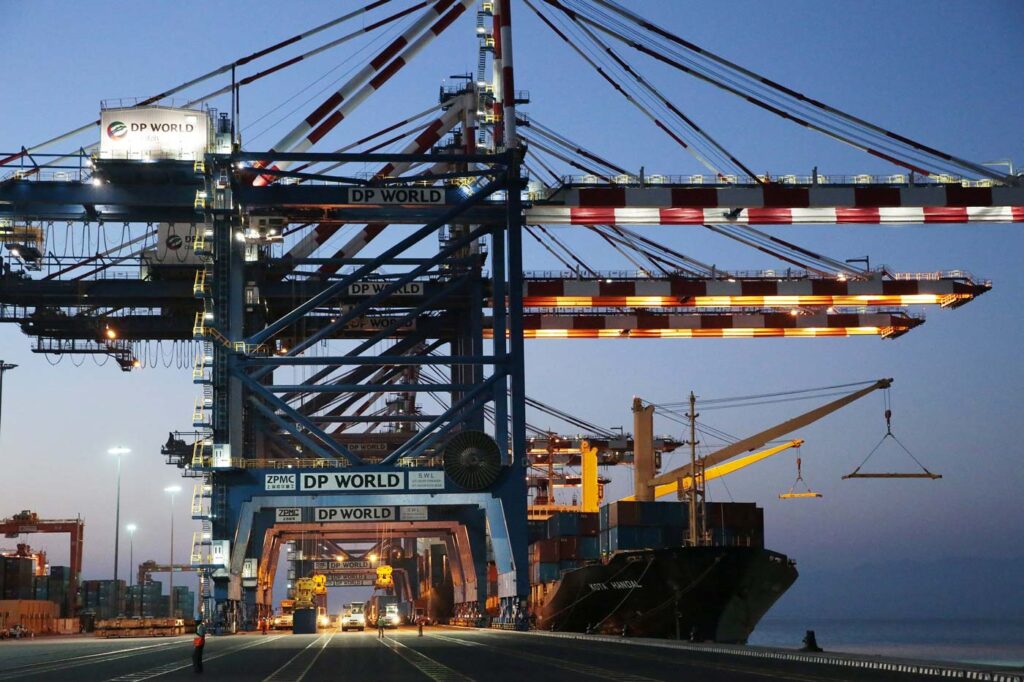
When Eritrean Foreign Minister Osman Saleh accused the United Arab Emirates of pursuing “port imperialism” across Africa, he gave voice to a grievance long simmering along the Red Sea and in the Horn of Africa. “The UAE has port facilities everywhere in the region, and African countries have to ask why,” Saleh told Middle East Eye. “Is it just for economics? No.”
Asmara, he added, has rejected Emirati efforts to deepen its footprint—both commercial and military—on Eritrean soil. These included a proposal for DP World to manage Eritrean ports and an earlier request for a shared UAE-Israeli military presence on an island in the Dahlak Archipelago.
The language is deliberately sharp. It frames Abu Dhabi’s growing network of port concessions, free zones, and logistics corridors not as ordinary foreign investment, but as a systematic project of strategic control. The charge lands at a moment when the Horn is already fractured by overlapping rivalries: Ethiopia’s quest for Red Sea access, Sudan’s civil war, Somalia’s sovereignty disputes with Somaliland and Puntland, and intensifying competition among Gulf states, Israel, Egypt, Türkiye, China, and Western powers for influence over the world’s most critical maritime chokepoints.
From Commercial Logistics to Strategic Architecture
UAE operators DP World and AD Ports Group now hold stakes in or manage facilities across Egypt, Tanzania, Somaliland (Berbera), Puntland (Bosaso), Senegal, Mozambique, Angola, and the Democratic Republic of Congo. DP World’s African portfolio alone stretches from Dakar and Ndayane in Senegal to Maputo, Dar es Salaam, and the contentious Berbera terminal. AD Ports has pursued terminals in Egypt, Congo, and Angola, and previously sought a $6 billion Red Sea port development in Sudan that Khartoum later cancelled.
These are not isolated commercial deals. They form part of a deliberate effort to position the UAE as a global logistics hub linking Asia, Africa, and Europe, while securing access to African resources—gold, minerals, agricultural produce—and projecting power along critical sea lanes. The same infrastructure that moves containers can host naval vessels, drones, and intelligence assets. The UAE’s former base at Eritrea’s Assab port, used extensively for the Yemen campaign, illustrated this dual-use logic. When relations with Asmara cooled, operations shifted toward facilities in Somaliland and Puntland that combine commercial terminals with military-capable runways and docks.
Critics, including Eritrean officials and analysts writing in outlets such as the Financial Times and New Internationalist, describe this as the construction of a system rather than a portfolio: long-term concessions that create dependence, route trade through Dubai and Abu Dhabi, and give Abu Dhabi leverage over coastal states’ economic and security choices. Gold flows, mineral offtake agreements, and support for preferred political or military actors—notably the Rapid Support Forces in Sudan—reinforce the pattern.
Eritrea’s Refusal and the Regional Backlash
Eritrea’s stance is consistent with its long-standing insistence on sovereignty and non-alignment. Having hosted the Assab facility during the height of the Yemen war, Asmara later declined further Emirati hub ambitions. Saleh’s comments underscore a broader rejection of any foreign power establishing a permanent “hub” on Eritrean territory. The reported rejection of a joint UAE-Israeli island base years before the Abraham Accords is particularly revealing: it shows that concerns about external military presence predated the formal normalisation of UAE-Israel ties and were rooted in a desire to avoid becoming a platform for extra-regional agendas.
Similar pushback has occurred elsewhere. Djibouti terminated DP World’s Doraleh concession in 2018, triggering prolonged legal battles. Sudan cancelled the AD Ports-linked Abu Amama project amid accusations of Emirati support for the RSF. Somalia’s federal government has moved to annul security and commercial arrangements involving UAE-linked facilities in Berbera and Bosaso, citing interference in its sovereignty—even as local authorities in Somaliland and Puntland have pursued closer ties. These disputes demonstrate that African governments are not passive recipients; they retain agency and are prepared to reverse deals when strategic costs become too high.
The Geopolitics of the Red Sea and Horn
The port strategy cannot be separated from the wider realignment of the Red Sea arena. The UAE has cultivated close ties with Ethiopia, supplying drones and other systems and supporting Addis Ababa’s regional ambitions. Eritrea, by contrast, has drawn closer to Egypt, Saudi Arabia, and the Sudanese Armed Forces. Israel’s recognition of Somaliland and reported interest in facilities there further complicates the map, feeding Eritrean perceptions of a UAE-Israel-Ethiopia axis. Saleh’s reference to Ethiopian Prime Minister Abiy Ahmed’s “two waters” strategy—from the Nile to the Red Sea—captures the anxiety that landlocked Ethiopia, backed by Gulf and Israeli partners, could eventually pressure Eritrea’s coastline.
Control of ports and adjacent airfields offers influence over Bab el-Mandeb and the Gulf of Aden, routes through which a significant share of global trade and energy still passes. In an era of Houthi attacks, great-power competition, and supply-chain reconfiguration, such influence is invaluable. Yet it also risks turning African coastal states into arenas for external rivalries rather than masters of their own maritime destinies.
Investment or Imperialism? The Contested Framing
Defenders of UAE policy argue that Africa desperately needs port modernisation. Many African terminals suffer from congestion, high costs, and underinvestment. Long-term concessions bring capital, technology, management expertise, and connectivity to global shipping networks. DP World and AD Ports point to capacity expansions, job creation, and logistics corridors that benefit hinterland economies, including Ethiopia’s via Berbera. From this perspective, accusations of “imperialism” overlook African agency in negotiating deals and the commercial logic of integrating African trade into efficient global supply chains.
The counter-argument is that the terms and strategic overlay matter. Thirty-year concessions, exclusive rights, dual-use facilities, and the intertwining of commercial operators with state security policy create asymmetric relationships. When port operators are instruments of a highly centralised foreign policy that also backs specific factions in civil wars and cultivates recognition for breakaway entities, the line between investment and influence-building blurs. Eritrea’s language of “port imperialism” deliberately evokes older patterns of coastal control by external powers—British, French, Ottoman—updated for an age of logistics empires rather than formal colonies.
African states face a genuine dilemma. Capital and expertise are scarce; rejecting all external involvement would leave ports underdeveloped. Accepting deals without robust safeguards on sovereignty, local content, transparency, and exit clauses risks long-term dependency. The pattern of cancellations in Djibouti, Sudan, and Somalia suggests that governments are learning to recalibrate when the strategic price rises.
What Comes Next
Saleh’s intervention is unlikely to reverse the UAE’s African maritime presence, but it crystallises a growing debate. As Gulf capital, Chinese infrastructure, Turkish security partnerships, and Western development finance compete across the continent, African governments will increasingly demand clearer terms and greater control. For the UAE, the challenge is to demonstrate that its port network delivers mutual benefit rather than hierarchical influence—particularly as relations with Saudi Arabia remain strained and its regional partners face domestic and international scrutiny.
The Red Sea and Horn of Africa are too strategically vital, and African sovereignty too hard-won, for external powers to treat coastal infrastructure as a private domain. Eritrea’s accusation forces a necessary conversation: when does commercial presence become strategic dominance, and who decides? African states that ask that question—and act on the answers—will shape the next chapter of the continent’s maritime history far more than any single investor.