


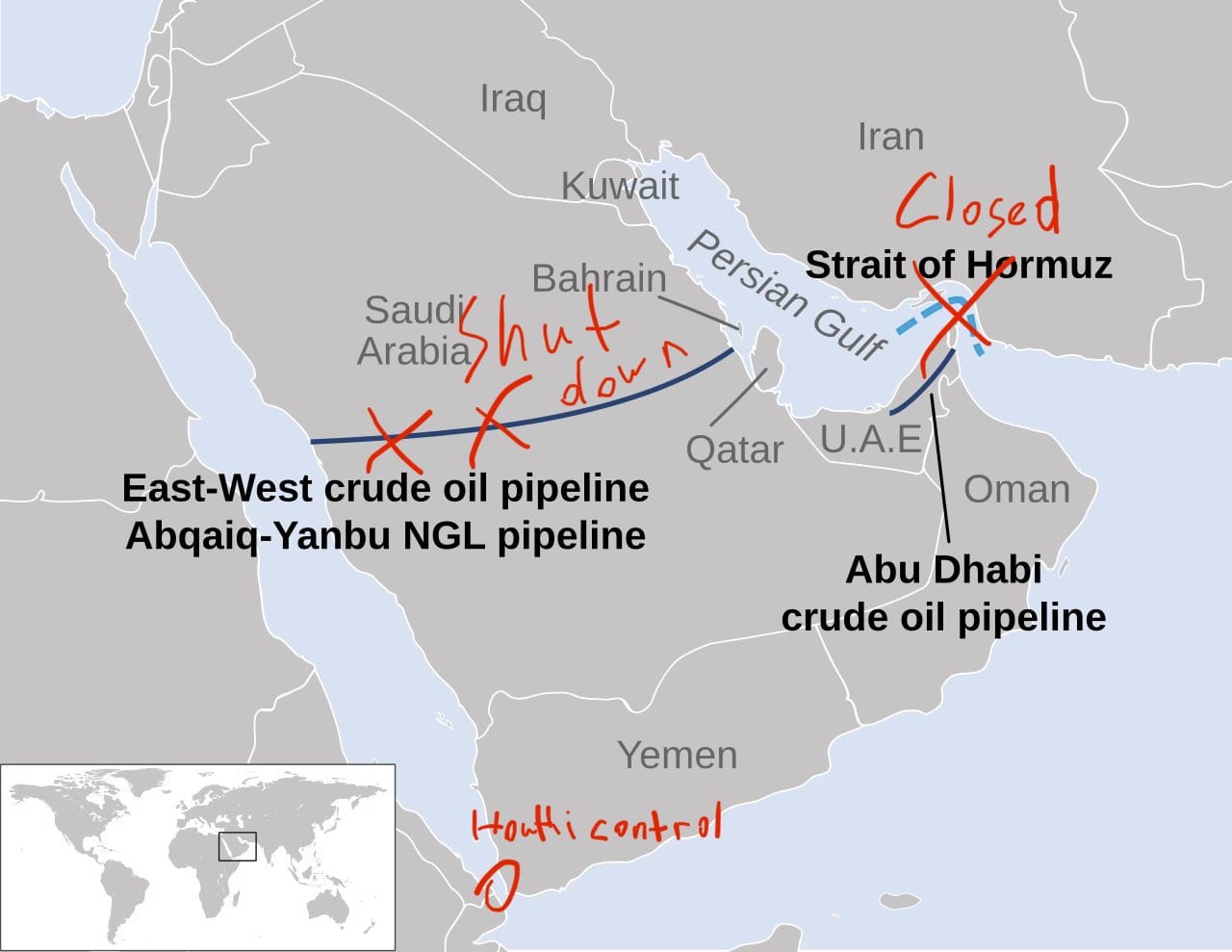
Nic Robertson’s recent CNN report captures a pivotal escalation in the Red Sea: the Iran-backed Houthis’ rapid seizure of the port of Mocha and Perim Island in the Bab al-Mandab Strait. In a matter of hours, they forced out Yemeni government forces, securing a commanding position over one of the world’s narrowest and most critical shipping arteries. As Robertson notes, this gives the Houthis—and by extension Tehran—the ability to fire on vessels, mine waterways, and effectively throttle traffic through the strait, mirroring Iran’s longstanding leverage over the Strait of Hormuz. With Hormuz already severely constrained by the ongoing US-Iran conflict, the dual threat now looms large. For East Africa’s business community, the prospect of both routes effectively closed is not abstract geopolitics. It is an existential supply-chain shock.
The Bab al-Mandab and the Red Sea-Suez corridor normally handle a significant share of global container trade and energy flows. When ships must divert around the Cape of Good Hope, voyages lengthen by ten to fourteen days or more, fuel consumption rises sharply, vessel availability tightens, and war-risk insurance premiums soar. East African economies—Kenya, Tanzania, Uganda, Rwanda, Ethiopia, and their neighbours—sit at the receiving end of these costs with thin buffers.
Fuel is the first and most immediate pressure point. Countries served by Mombasa and Dar es Salaam rely heavily on refined petroleum products from the Gulf. These imports power transport networks that stretch inland to landlocked Uganda, Rwanda, Burundi, South Sudan, and the eastern Democratic Republic of Congo. A simultaneous closure or severe restriction of Hormuz and the Red Sea would spike landed fuel prices, raise logistics costs across the board, and feed directly into higher prices for food, manufactured goods, and agricultural inputs. Fertilizer shipments—critical for the region’s farming seasons—would face the same bottlenecks, threatening yields and food security in economies already vulnerable to inflation.
Importers of wheat, machinery, pharmaceuticals, electronics, and consumer goods would confront longer lead times and elevated freight rates. East Africa’s dependence on Black Sea and European grain routed through the Red Sea has already proven fragile in earlier disruptions; dual chokepoint failure would amplify shortages and price spikes. Horticultural exporters in Kenya and Ethiopia—flowers, vegetables, coffee, tea—would see their competitiveness erode as higher shipping costs and delays make just-in-time deliveries to European and Asian markets less reliable. Time-sensitive perishables suffer most.
Landlocked Ethiopia illustrates the extreme vulnerability. More than ninety percent of its trade volume moves through Djibouti, whose port sits at the mouth of the Bab al-Mandab. Persistent disruption there cascades into higher costs for fuel, fertilizer, manufacturing inputs, and exports of coffee, flowers, and textiles that generate scarce foreign exchange. Similar pressures hit Uganda and Rwanda via Mombasa. Even coastal ports face secondary effects: congestion from delayed vessels, reduced throughput, and elevated storage and demurrage charges that businesses ultimately absorb.
The macroeconomic transmission is clear. Higher import bills strain foreign-exchange reserves and currencies. Inflation rises, squeezing household purchasing power and corporate margins. Manufacturing that depends on imported intermediate goods slows. Retailers face thinner inventories and higher prices. Small and medium enterprises, which dominate East African commerce, have the least capacity to absorb or hedge these shocks. Growth forecasts for the sub-region have already been revised downward in earlier phases of the crisis; sustained dual closure would deepen the hit.
Some ports and corridors have temporarily benefited from rerouting—Lamu in Kenya, for instance, has seen volume spikes as vessels seek alternatives—but these gains are uneven and insufficient to offset the broader costs. They do not replace reliable, cost-effective access to Gulf energy or Asian-European container trades. Insurance and freight markets have already priced in elevated risk; full closure of both straits would push those premiums higher still.
Robertson’s analysis correctly frames the Houthi advance as “joined-up thinking from Tehran,” creating dual pressure points on energy and trade at a moment of high regional tension. For East African businesses, the lesson is structural. Over-reliance on two distant chokepoints, limited strategic fuel and fertilizer reserves, underdeveloped alternative corridors, and thin fiscal space leave the region exposed. Diversifying import sources, accelerating investments in alternative ports and inland corridors (including Berbera, Lamu, and improved road-rail links), building modest strategic stocks, and strengthening regional coordination on energy and logistics are no longer optional policy debates. They are urgent commercial necessities.
The video ends with oil prices already reacting. If both the Strait of Hormuz and the Red Sea effectively close to commercial shipping, East Africa’s business community will not merely face higher costs. It will confront a prolonged period of uncertainty, eroded margins, and constrained growth. The geopolitical contest may be distant, but its economic consequences will arrive promptly at every warehouse, factory gate, and market stall from Mombasa to Kampala.
Andrew Mwangura is a maritime security analyst. He writes on piracy, transnational organized crime, and the political economy of Africa.