


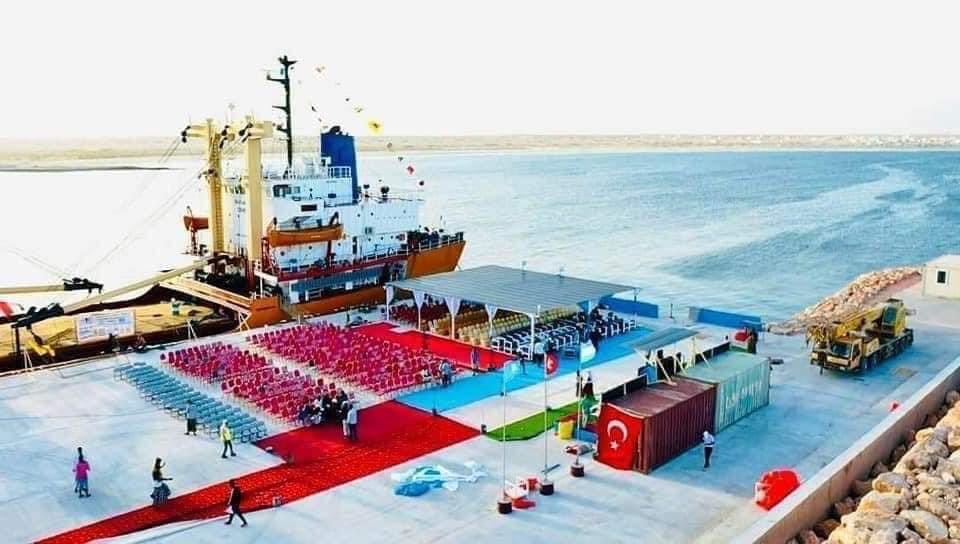
In mid-September 2026, the International Maritime Organization convened a four-day Port Security and Inter-Agency Coordination Workshop in Bosaso, Puntland. The gathering of port operators, government officials, and security agencies produced a draft roadmap and Terms of Reference for a Multi-Agency Port Security Advisory Committee. Its aim is straightforward: enable better information sharing, clearer division of responsibilities, and faster joint responses to security incidents while advancing Somalia’s implementation of the International Ship and Port Facility Security (ISPS) Code.
On paper, this looks like another capacity-building exercise in a long series of international technical assistance programmes. In reality, it is a necessary response to structural weaknesses that have left one of Somalia’s most important commercial gateways vulnerable at a moment when regional maritime threats are rising again.
Bosaso’s Strategic Weight
Bosaso sits on the Gulf of Aden and functions as Puntland’s primary commercial port and fiscal engine. Livestock, fish, and general cargo flow through it to Gulf markets; customs revenues have historically accounted for a substantial share of the state’s domestic income. The port’s location places it astride one of the world’s critical shipping lanes, where commercial traffic, fishing fleets, and illicit networks intersect. That geography makes effective port security more than a local administrative matter—it is a regional public good.
The ISPS Code, adopted under the SOLAS Convention after the September 11 attacks, established a global baseline for ship and port facility security. It requires risk assessments, security plans, designated officers, and cooperation among governments, port authorities, and industry. Somalia has long struggled to translate these requirements into consistent practice on the ground. Earlier IMO workshops in Bosaso and Berbera in 2024 and 2025 focused on port facility security assessments, committee formation, and whole-of-government approaches. The September 2026 workshop built directly on that foundation by moving from training toward an institutional mechanism.
The Coordination Deficit
The core problem the workshop targeted is fragmentation. Multiple agencies—port administration, customs, immigration, maritime police, and other security forces—share responsibility for protecting the facility and responding to incidents. Without formal structures for information exchange and joint decision-making, responses become delayed, incomplete, or contradictory. In a high-threat environment, those gaps are exploitable.
The proposed Multi-Agency Port Security Advisory Committee is designed to close them. By creating a standing platform with defined roles and a clear roadmap, authorities can move from ad hoc cooperation to routine coordination. This is not bureaucratic theatre. Effective ISPS implementation depends less on individual agency competence than on the ability of those agencies to function as a coherent system when a vessel arrives with anomalous cargo, intelligence flags a smuggling attempt, or an armed group probes the perimeter.
A Worsening Threat Landscape
The timing is not coincidental. After more than a decade of relative suppression, Somali piracy has re-emerged in 2026. Multiple commercial vessels have been hijacked, with crews held for ransom; suspicious approaches and attacks have increased across the Gulf of Aden and Somali Basin. Analysts link the uptick to diverted international naval attention toward Red Sea and Persian Gulf crises, opportunistic exploitation of security gaps, and possible diffusion of tactics and equipment. Armed robbery, smuggling, and organised maritime crime continue alongside the piracy resurgence.
Bosaso’s exposure is both direct and indirect. A poorly coordinated port becomes a potential node for illicit flows that finance or enable offshore threats. Conversely, visible improvements in port security and inter-agency responsiveness can deter opportunistic actors and reassure commercial operators whose vessels call there. Security is an enabler of maritime economic development, not an alternative to it. Without credible protection of the facility and the approaches, investment, trade volumes, and revenue remain constrained.
Beyond the Workshop: Implementation Risks
A draft Terms of Reference and roadmap are useful only if they are acted upon. Several risks stand out. First is political and institutional will. Puntland’s relations with the federal government in Mogadishu have been strained, and competing security structures have occasionally clashed even within the region. Sustaining a multi-agency committee will require consistent leadership from Puntland authorities and buy-in from all relevant institutions.
Second is resources and continuity. International partners—IMO under the EU-funded Regional Programme for Maritime Security in the Red Sea Area, UNODC, EUCAP, and others—have provided training, tabletop exercises, and technical support. Local ownership must eventually replace external facilitation. That means embedding the committee in domestic budgets, procedures, and accountability mechanisms rather than treating it as a project deliverable.
Third is integration with broader maritime governance. Port-level coordination is necessary but insufficient. Somalia still needs functional national maritime security committees, risk registers, and strategies that link federal and member-state efforts. Parallel work on information-sharing platforms and whole-of-government approaches is underway; the Bosaso initiative should feed into, rather than operate in isolation from, those processes.
Why This Matters Beyond Puntland
For African maritime stakeholders, Bosaso offers a test case. Many African ports face similar coordination challenges amid rising illicit maritime activity. Successful institutionalisation of a multi-agency advisory structure, grounded in the ISPS framework and adapted to local conditions, would demonstrate that capacity-building can move beyond workshops into durable operational improvements. Failure would reinforce the perception that technical assistance produces paper outcomes while underlying governance and security deficits persist.
The Gulf of Aden and western Indian Ocean remain critical arteries of global trade. Somalia’s ability to secure its ports and adjacent waters affects not only its own revenue and stability but also the risk calculus of shipping companies, insurers, and navies operating in the region. Incremental progress on inter-agency coordination in Bosaso will not eliminate piracy or organised crime. It can, however, reduce the ease with which those threats exploit institutional seams.
The African Maritime Council’s highlighting of the workshop is therefore more than institutional cheerleading. It correctly identifies a practical step toward better maritime governance. The real test begins now: whether the draft roadmap becomes an operating committee that meets regularly, shares information, clarifies responsibilities, and responds decisively when incidents occur. In the current security environment, that difference is not academic.