


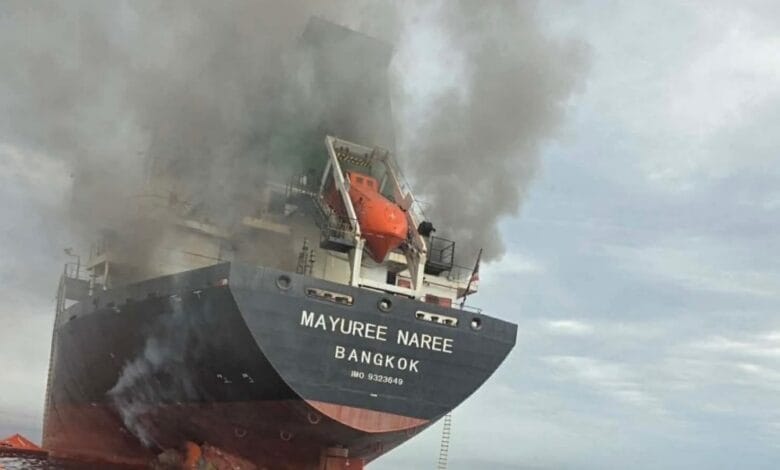
The confirmation by Kenya’s Energy and Petroleum Regulatory Authority (EPRA) that two fuel tankers bound for the country were struck by drones in the Strait of Hormuz is more than a logistical setback. It is a stark illustration of how distant geopolitical fractures can instantly threaten the energy security of an import-dependent nation. The details delivered by EPRA Director General Edward Mwirigi Kinyua to Parliament—engines immobilized, cargo intact, and a potential 60-day transfer delay—crystallize a larger truth: Kenya’s fuel supply chain remains perilously exposed to conflicts over which Nairobi has almost no influence.
The Incident and Its Immediate Context
According to Kinyua and parallel briefings from the Ministry of Energy, the two vessels—carrying petroleum products under Kenya’s government-to-government (G-to-G) arrangement with Saudi Arabia—were targeted amid escalating tensions between Iran and Saudi Arabia. The strikes damaged propulsion systems, leaving the tankers unable to proceed under their own power. The petroleum products themselves were reported safe, but transferring the cargo to alternative vessels is expected to take roughly two months.
This is not an isolated event. Throughout 2026, the Strait of Hormuz and adjacent waters have seen repeated attacks on commercial shipping—drones, missiles, projectiles, and mines—linked to the wider regional conflict that intensified after U.S.-Israeli actions against Iran earlier in the year. Saudi-linked vessels have featured among the targets. Kenya’s reliance on Saudi supply routes places its imports squarely in the path of this risk.
Notably, authorities have not released the vessels’ names, flags, IMO numbers, or precise loading ports. In an era of near-real-time AIS tracking and maritime security reporting by organizations such as UKMTO, the absence of public identifiers is striking. It may reflect commercial sensitivity, ongoing security assessments, or a deliberate choice to avoid escalating diplomatic tensions. Whatever the reason, it leaves independent verification incomplete and fuels public skepticism in Kenya, where fuel price increases effective mid-October had already heightened scrutiny of official explanations.
Kenya’s Structural Exposure
Kenya imports virtually all its refined petroleum. Domestic stocks provide a buffer—roughly three to four weeks for key products according to recent EPRA statements—but the system is designed around predictable arrivals, not prolonged diversions or complex cargo transfers. The G-to-G framework with Saudi Arabia was intended to stabilize volumes and pricing. Instead, it has concentrated risk on a single geopolitical axis that is now under immense pressure.
The economic implications are straightforward. Even if current stocks prevent immediate shortages, delayed cargoes raise the probability of tighter supply later in the year, particularly as northern-hemisphere winter demand begins to influence global product markets. Importers forced to source from alternative hubs such as Singapore typically face higher costs, which then flow directly to pump prices. The recent increases in petrol, diesel, and especially kerosene have already strained households and transport operators. Further upward pressure would compound inflation and erode purchasing power at a politically sensitive moment.
There is also a credibility dimension. When regulators appear before Parliament to explain price rises and simultaneously disclose that two supply vessels have been immobilized, the public reasonably connects the two. Transparency about vessel identities and the precise status of replacement cargoes would strengthen, not weaken, institutional trust.
The Wider Maritime and Strategic Picture
The Strait of Hormuz remains a critical chokepoint through which a substantial share of global oil and product trade normally flows. Repeated attacks have already forced diversions, elevated insurance premiums, and prompted some operators to avoid the waterway or use alternative routes. For African importers such as Kenya, the Cape of Good Hope route or Red Sea loading points (Yanbu, Jizan) become more attractive—but they add time, cost, and their own security variables.
This episode also highlights the asymmetry of modern maritime conflict. Commercial tankers, often crewed by third-country nationals and flying flags of convenience, have become soft targets in contests between state actors. Deterrence is imperfect, attribution is frequently contested, and the economic pain is distributed far beyond the primary parties. Kenya, with no blue-water navy and limited leverage over Gulf security arrangements, is a classic secondary victim.
What Should Be Done
First, Kenyan authorities should prioritize full transparency within security constraints. Naming the vessels and providing verified status updates would allow independent maritime analysts to track progress and reduce speculation. Second, the government should accelerate the diversification of supply sources and routes—deeper engagement with alternative Gulf and non-Gulf suppliers, strategic stockpile expansion, and contingency contracts that can be activated quickly. Third, regional African coordination on energy security deserves more attention. Shared stock arrangements or joint chartering could dilute individual exposure.
Internationally, the pattern of attacks on commercial shipping demands clearer norms and more effective enforcement mechanisms. Freedom of navigation is not an abstract principle when it determines whether fuel reaches Mombasa on schedule. States with the capacity to protect sea lanes carry a corresponding responsibility; those that target commercial vessels must face credible costs.
Conclusion
Two immobilized tankers do not by themselves threaten Kenya’s energy system. But they reveal how thin the margin of safety has become. In a world where great-power and regional rivalries routinely spill into commercial sea lanes, energy-importing countries cannot treat supply security as a purely commercial matter. It is a strategic vulnerability that requires deliberate, sustained attention—stockpiles, diversified contracts, route resilience, and honest public communication.
The drones that struck those vessels in the Strait of Hormuz were aimed at one set of adversaries. Their effects will be felt at petrol stations from Mombasa to Busia. That is the new geography of risk. Kenya ignores it at its peril.