


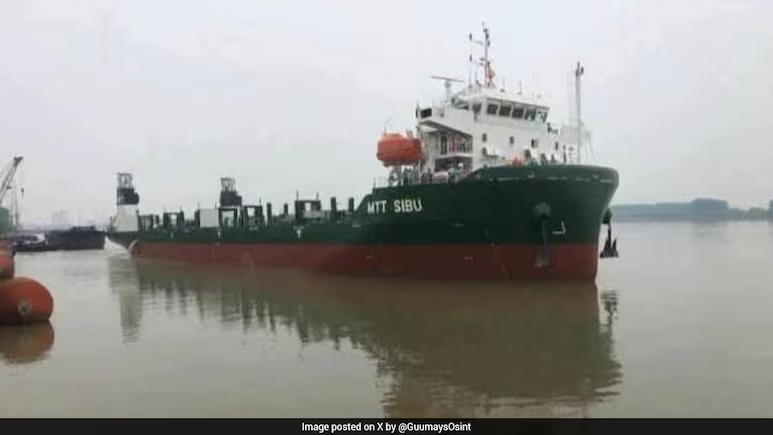
Five seafarers are dead. A hijacked tanker, under U.S. sanctions, has been recovered after five months in pirate hands. The waters off Somalia have once again become a theater of lethal risk. The late-September recovery of the Palau-flagged tanker Honour 25 by Puntland Maritime Police Force (PMPF) marks the first confirmed crew fatalities at the hands of Somali pirates in over a decade. Three Pakistanis, one Indian, and one Myanmar national were killed; four others were wounded. Sixteen suspected pirates were detained. Days earlier, the same force freed the U.S.-sanctioned Sibu 1.
These operations illuminate a sharper, more complex threat than the simple headline “piracy is back” can capture.
The Honour 25 was seized on 21 April 2026, about 30 nautical miles off Puntland, with 17 crew members on board. For over five months, they endured deteriorating conditions—short rations, unsafe water, and intermittent gunfire between rival pirate groups. Puntland authorities state the five crew members were killed before the recovery operation began. Other accounts, citing surviving crew and welfare organizations, describe an exchange of fire as forces closed in. This discrepancy is not trivial. It underscores a contested information environment where official statements, local reporting, and external claims diverge on sequence, motive, and accountability. For operators and insurers, distinguishing confirmed fact from reported claim is not academic—it is operationally vital.
The Sibu 1 case adds another layer. Seized in August about 136 nautical miles east of Al Mukalla, Yemen, this Eritrean-flagged tanker was under U.S. Treasury sanctions for its alleged role in Iran’s shadow fleet. Its AIS distress message—“PIRATE ONBOARD HELP”—and subsequent recovery by the PMPF demonstrate both the geographic reach of pirate action groups and the acute vulnerabilities of vessels with opaque ownership, AIS anomalies, and sanctions exposure. Sanctions status is not a proven cause of targeting; it is, however, part of a wider risk profile that can render a vessel more attractive or less protected.
The pattern is clear. EUNAVFOR’s Operation Atalanta recorded multiple incidents through the spring and summer of 2026, with several vessels held inside Somali territorial waters. The threat has reasserted itself along the Somali coast and into the Gulf of Aden, where captured vessels are held in territorial waters, constraining the options for international naval forces. Hijacked ships can also serve as motherships, extending operational reach and raising the strategic stakes of any recovery.
Several structural factors explain this resurgence. Regional instability linked to the broader Iran-related conflict, combined with elevated oil prices, has increased the attractiveness of tankers. Weather windows, the availability of captured dhows as motherships, and persistent onshore pirate networks have restored a capability that international naval presence largely suppressed after the 2008–2012 peak. As international deployments shift focus toward the Red Sea and Persian Gulf, Puntland’s maritime police have taken a more assertive role in territorial waters.
The result is a bifurcated picture: relatively effective containment farther offshore, but persistent and lethal risk closer to the Somali coast and the approaches to Bab el-Mandeb. These theaters cannot be assessed in isolation. Routing, naval posture, and threat reporting in one area cascade into the others.
For commercial operators, the operative questions have changed. It is no longer sufficient to ask if piracy has returned. The relevant inquiries are more granular and actionable:
· Vessel Risk Profile: Does this vessel’s sanctions status, ownership opacity, AIS behavior, prior dark activity, cargo, flag, and routing justify heightened precautions, armed security, or route adjustment?
· Crew Readiness: Are crews rigorously applying the latest Best Management Practices, including citadel readiness and rapid reporting?
· Insurance Posture: Have war-risk underwriters and hull insurers reassessed the specific voyage and vessel characteristics?
· Indicator Awareness: What indicators—AIS anomalies, suspicious approaches, changes in pirate holding patterns, or contested recovery narratives—signal that risk is escalating or shifting geographically?
· Contingency Planning: What is the plan if a vessel is boarded and held inside territorial waters where external intervention is limited?
The deaths aboard Honour 25 are a grim reminder that the human cost remains real even when recovery operations succeed. The first confirmed fatalities in more than a decade should concentrate minds among shipowners, charterers, insurers, and flag states. Puntland’s successive recoveries demonstrate that regional forces can act decisively, but they also highlight the limits of relying solely on international naval presence when the decisive terrain is inside territorial waters.
Maritime security in the western Indian Ocean has always been a function of capability, opportunity, and political economy. The current cycle shows that opportunity has returned for determined pirate groups, that certain vessel profiles are more exposed, and that recovery success does not erase underlying drivers. Operators who treat the threat as a binary “back or not” risk will miss the practical distinctions that now determine whether a voyage ends in safe arrival or prolonged captivity—or worse.
The pattern is visible. The indicators are measurable. The question is whether the industry will treat them as such.