


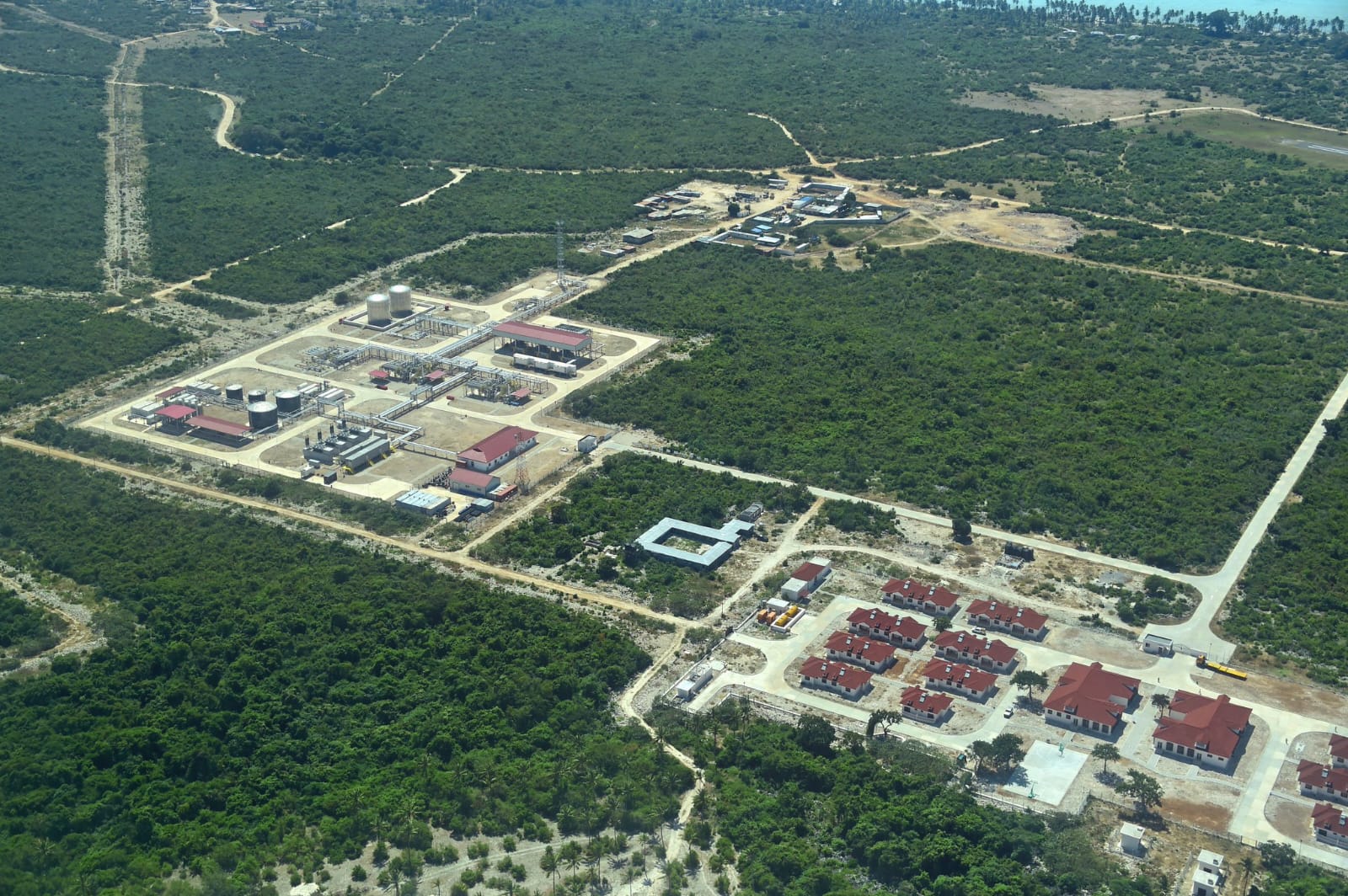
Tanzania’s Fair Competition Commission has blocked Taifa Gas, controlled by billionaire Rostam Aziz, from taking a 49 percent stake in the operator of the Songo Songo gas field. The decision, issued without public reasons on October 5 and confirmed by Orca Energy Group days later, arrives at a moment of acute pressure: the field’s 25-year development licence expired on October 10, the state is pushing new terms that the current operator has rejected as uneconomic, and the asset supplies roughly half of the country’s natural gas. What looked like a clean transfer of a critical national resource into domestic hands has become a case study in the tensions between local capital, regulatory opacity, and the practical requirements of keeping gas flowing.
Songo Songo is not a peripheral asset. Located off Tanzania’s southern coast, it was the country’s first major natural gas development. Its output travels more than 200 kilometres by pipeline to Dar es Salaam, feeding power stations and factories. Orca has reported that the field accounts for about 54 percent of daily gas production and holds proved and probable reserves of 293 billion cubic feet. Continuity matters for electricity generation, industrial activity, and government revenue. Any prolonged disruption carries immediate economic costs.
The April 2026 deal was structured as a near-total exit by Canadian-listed Orca. Taifa Gas would take 49 percent of the Mauritian holding company that owns PanAfrican Energy Tanzania; Dubai-based Amber Energy Investment would take 51 percent. The purchase price was a nominal $10. Orca’s rationale was blunt: once tax claims, licence uncertainty, and other contingent liabilities were accounted for, the assets had no material residual value. Aziz framed the transaction as a “pivotal moment,” arguing that greater Tanzanian ownership would deepen industrial capacity and keep more profits at home. For a businessman who built his fortune first in telecommunications—selling large stakes in Vodacom Tanzania for hundreds of millions of dollars—and later expanded into LPG distribution, mining services, and, more recently, a controlling position in East Africa’s largest media group, the upstream gas move represented a logical next step in consolidating influence over strategic domestic resources.
The Fair Competition Commission’s prohibition changes the calculus. Orca has said the sale agreement has not been terminated and that it is seeking further information while assessing options. No detailed public explanation has emerged from the regulator or from Taifa Gas. Parallel to the merger block, the energy ministry issued a notice of intention on October 1 to extend the licence to the state-owned Tanzania Petroleum Development Corporation and PanAfrican Energy Tanzania on new terms. PanAfrican Energy rejected those terms on October 9 as commercially and fiscally unacceptable. It intends to keep gas flowing during the statutory window but plans to cease operating the facilities by late November unless a handover is arranged. The sequence leaves Tanzania staring at a possible operational cliff with no clear private or mixed ownership path immediately available.
This episode sits inside a longer pattern. Orca had already filed arbitration claims at ICSID in 2025 over licence delays and subsidised gas pricing directives. Foreign operators have repeatedly cited regulatory unpredictability, shifting fiscal terms, and protracted disputes as reasons for caution or exit. At the same time, successive Tanzanian governments have emphasised local content, greater domestic participation in extractives, and the retention of value within the country. Aziz’s bid appeared to align with the second impulse. Blocking it without transparent reasoning risks reinforcing the perception that even well-capitalised local players face opaque hurdles when the stakes involve core energy infrastructure.
The consequences run in several directions. First, energy security: Songo Songo’s contribution to the grid and to industry is large enough that any gap in production or transition planning will be felt quickly. Relying on a rapid state-led takeover assumes that TPDC and partners such as Songas can assume full operational responsibility without interruption—an assumption that requires competent execution and adequate technical capacity. Second, the investment climate: a nominal-dollar exit by a long-standing operator, followed by a blocked domestic successor deal and rejected licence terms, sends a clear signal about residual risk. Capital that might otherwise flow into Tanzanian upstream or midstream projects will price that risk higher or simply go elsewhere in East Africa. Third, the politics of local capital: Aziz is no ordinary investor. A former CCM parliamentarian and national treasurer who has maintained relationships across administrations, he embodies the intersection of political proximity and private wealth. If even such a figure cannot close a deal structured as increased Tanzanian ownership, questions arise about whether the barriers are truly competition-related or reflect deeper preferences about control of strategic assets.
None of this means the regulator was necessarily wrong on the merits. Competition authorities exist to prevent undue concentration and protect markets. Without the FCC’s reasoning, however, it is impossible to distinguish between legitimate antitrust concerns, broader industrial policy, or simple process failure. Opacity in a decision of this magnitude undermines both the credibility of the competition regime and the government’s stated goal of mobilising domestic capital into the resource sector.
Tanzania’s gas story is larger than one field and one blocked transaction. The country holds substantial reserves and has long aspired to use gas as a foundation for industrialisation and power reliability. Realising that aspiration requires a regulatory environment that can attract and retain operators—local or foreign—who will invest in maintenance, expansion, and new discoveries. It also requires credible mechanisms for orderly transitions when licences expire or owners change. The current combination of a rejected licence offer, a prohibited merger, and an approaching operational deadline does not look like such a mechanism.
Rostam Aziz’s ambition to move from LPG distribution into upstream gas was commercially rational and politically resonant. The Fair Competition Commission’s block, arriving precisely as the licence clock ran out, has turned a potential demonstration of successful local ownership into a cautionary illustration of unresolved tensions. Tanzania can still organise a stable transition that keeps gas flowing and preserves optionality for future private participation. Doing so will require clearer rules, faster decisions, and less reliance on last-minute notices and unexplained prohibitions. Resource nationalism without competent execution is not sovereignty; it is simply higher risk for everyone who depends on the resource.