


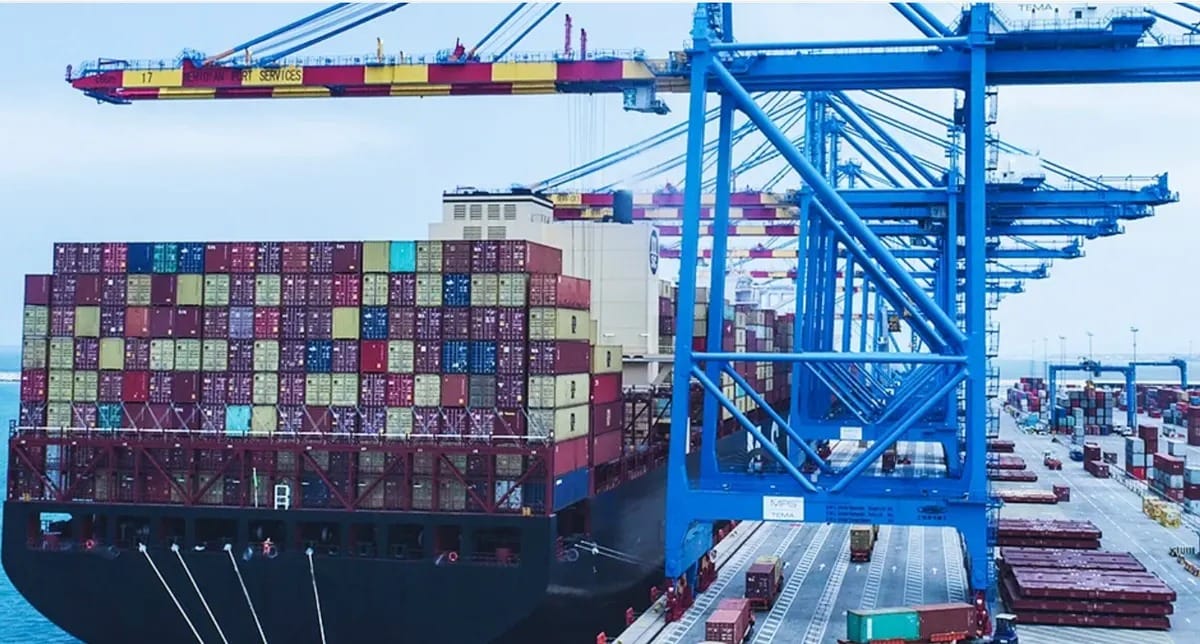
On 10 November 2026, President John Dramani Mahama cut the sod for two projects at the Port of Takoradi that together exceed US$235 million. The first is Berth 19, a US$98.41 million, 300-metre quay financed entirely from the Ghana Ports and Harbours Authority’s own resources and designed to accommodate vessels of up to 75,000 deadweight tonnes. The second is Project Shiprite, a US$137 million integrated ship-repair and floating dry-dock facility operating under a 25-year concession to Prime Meridian Docks Ghana Limited, backed by a blend of Ghanaian institutional capital, African development-finance institutions and the UK-linked Private Infrastructure Development Group.
These are not isolated ribbon-cuttings. They represent a deliberate strategy of reinvesting port profits into higher-value maritime services, reducing Ghana’s dependence on distant foreign yards, and positioning Takoradi as a logistics and maintenance hub for the Gulf of Guinea.
From Tema’s Success to Takoradi’s Expansion
The financial foundation is clear. Since the Meridian Port Services terminal at Tema began operations, GPHA has earned approximately US$421 million (nearly GH¢5 billion). That revenue stream has given the authority the balance-sheet strength to fund Berth 19 without new sovereign borrowing or external concessional loans. Recent SIGA reports show GPHA remaining one of Ghana’s most profitable state-owned enterprises, with net profit rising to GH¢2.82 billion in 2025 and a healthy share of earnings still flowing from its stake in MPS.
This is the virtuous cycle policymakers often promise but rarely deliver: a public-private partnership at one port generates cash that is reinvested in capacity at another. Berth 19 targets the dry-bulk terminal’s constraints. Takoradi already handles manganese, bauxite and imported clinker for the cement industry; the new berth, combined with earlier dredging that deepened the channel to around 16 metres, should allow larger vessels and higher throughput. Completion is projected in 26 months.
Filling a Critical Regional Gap
Project Shiprite addresses a different, equally strategic gap. Vessels operating along the West African coast—including oil-service vessels and cargo ships—currently sail 10 to 14 days to yards in Walvis Bay, Namibia, or Las Palmas, Spain, for mandatory dry-docking and repairs. A modern facility at Takoradi capable of handling ships up to 200 metres will cut voyage times, fuel costs and emissions while retaining foreign exchange inside the region. Officials project roughly 430 direct jobs in the first phase, with further opportunities in skills transfer and local supply chains. The project is scheduled for completion in a notably ambitious 18 months.
The UK–Ghana Growth Partnership provided important political and financial scaffolding. Shiprite was highlighted when the partnership was signed in London earlier in 2026; British firms are expected to contribute technical expertise and training, including efforts to increase women’s participation in skilled maritime trades. This is practical economic diplomacy rather than pure aid.
Broader Economic Logic and Remaining Risks
Both projects sit inside a larger vision of a more competitive Western Region logistics corridor. President Mahama has linked the port works to the Western Rail Line, particularly the first phase toward Nyinahin that would unlock bauxite and other minerals. If rail and port investments move in parallel, Takoradi can become a genuine mineral-export and industrial-import gateway rather than a secondary facility to Tema.
The risks are real. Construction timelines in Ghana’s infrastructure sector have a habit of slipping. Local-content and technology-transfer commitments must be monitored rigorously so that the jobs and skills promised materialise rather than remaining on paper. Competition from existing and planned facilities in neighbouring countries will test whether Takoradi can attract sufficient repair volume at competitive rates. And while self-financing from GPHA is a strength, it also means the authority’s capital budget is concentrated; any sharp downturn in container or bulk volumes could constrain future investments.
Yet the direction of travel is sound. Ghana is moving beyond simply handling more cargo toward capturing higher-value maritime services. Retaining repair work that currently leaves the region, accommodating larger bulk carriers, and recycling port profits into new capacity are the practical ingredients of a more resilient maritime economy.
The true test will not be the sod-cutting photographs but the commissioning ceremonies in 18 and 26 months’ time, the number of vessels that choose Takoradi for dry-docking, and the measurable increase in bulk throughput. If those metrics improve, November 2026 will be remembered as the moment Ghana began converting its ports from national gateways into regional maritime assets.
Andrew Mwangura is a maritime analyst and the editor of the Maritime Business Review.