


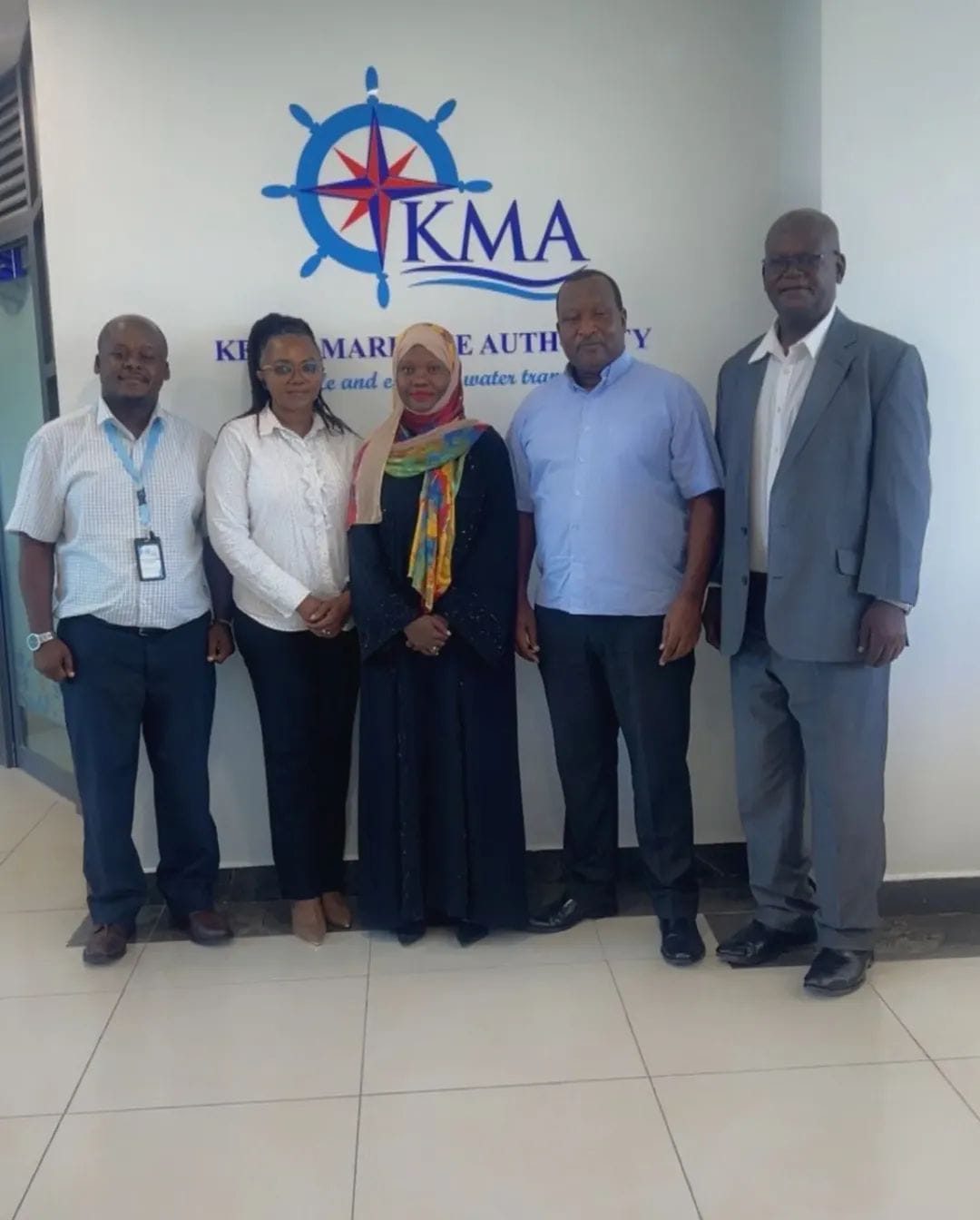
Officials of the Seafarers’ Wages Council and the Kenya Maritime Authority (KMA) engaged each other recently marking a significant step towards amicable and progressive resolutions of matters that affect welfare of about 16,000 Kenyan seafarers.
The meeting addressed various issues of mutual interest to the two government agencies including Seafarers Identification Documents (SID), job opportunities, and training alongside other issues relating to labour welfare issues that fall within regulatory mandate of the KMA.
Representing Seafarers’ Wages Council included its Chairman Mr Mwinyi Jahazi, and SUK was the Secretary General Ms Hathie S. Ramadhan, who is also a Wages Council member. They held the meeting on March 24, 2026.
They were hosted by the KMA Managing Director Mr Justus Nyarangi together with Engineer Fredrick Luke Samba, an Acting Director and Ms Josephine Mabuti Nthia, a Deputy Director.
The KMA assured the officials that SID roll out would begin in July 2026.
The rare meeting is notable, as it marks a new way of constructive engagement among the three parties in a cordial environment all stakeholders in the Wages Council are engage with the KMA address issues pertaining wages regulations and policies.
The Kenya Maritime Authority (KMA), as the state’s principal regulator, carries the mandate to enforce standards, ensure compliance, and position Kenya within the global maritime framework.
On the other hand, the Kenya Seafarers Wages Council and the Seafarers Union of Kenya (SUK) represent the lived realities of up to 16,000 seafarers whose welfare is too often treated as secondary to commercial priorities. When these actors engage directly, the conversation moves beyond abstract policy into the realm of practical impact.
The presence of Hathie S. Ramadhan adds a particularly significant and refreshing dimension to this engagement. It also underscores the growing and important role of women in maritime leadership, a sector traditionally dominated by men but increasingly shaped by diverse and capable voices.
SUK and the Wages Council officials described the meeting as “encouraging” and promised to hold similar engagements with the KMA and any other relevant agencies or stakeholders in future especially at a time that Kenya is struggling to place more of its seafarers on jobs and train more as part of the blue economy policy blueprint.
Kenya’s maritime sector stands at a pivotal moment. The country’s ambitions to strengthen its position as a regional shipping and logistics hub cannot be realized without addressing the structural issues that affect its workforce—issues such as fair wage determination, compliance with international labor standards, and the creation of sustainable career pathways for seafarers.
The bilateral concerns referenced in the meeting are likely as complex as they are urgent. Wage frameworks, for instance, are not simply economic instruments; they are indicators of how a nation values its maritime labor. Inconsistent or inadequate wage structures can undermine morale, reduce competitiveness, and expose seafarers to exploitation in the global labor market.
For too long, Kenya’s maritime governance has suffered from a lack of sustained, institutionalized dialogue. Engagements have often been reactive, triggered by crises or external pressures rather than driven by a proactive agenda.
There is also a broader institutional implication worth considering. Regulatory bodies like the Kenya Maritime Authority operate within a complex ecosystem that balances national interests, international obligations, and industry dynamics. In such an environment, there can be a tendency to prioritize technical and administrative concerns over human considerations.
Leadership will be critical in determining whether this engagement translates into meaningful change. Figures such as Mwinyi Jahazi and Justus Nyarangi have the authority to shape institutional behaviour and set the tone for collaboration. Their willingness to engage is commendable, but it must be accompanied by a commitment to action.
As Kenya continues to advance its maritime ambitions, the need for cohesive and inclusive governance becomes increasingly apparent. Infrastructure investments, port expansions, and shipping partnerships are all vital, but they must be complemented by a strong focus on human capital.
Seafarers are not just participants in the maritime economy; they are its foundation. Their welfare, rights, and opportunities must therefore be central to any serious policy agenda.